

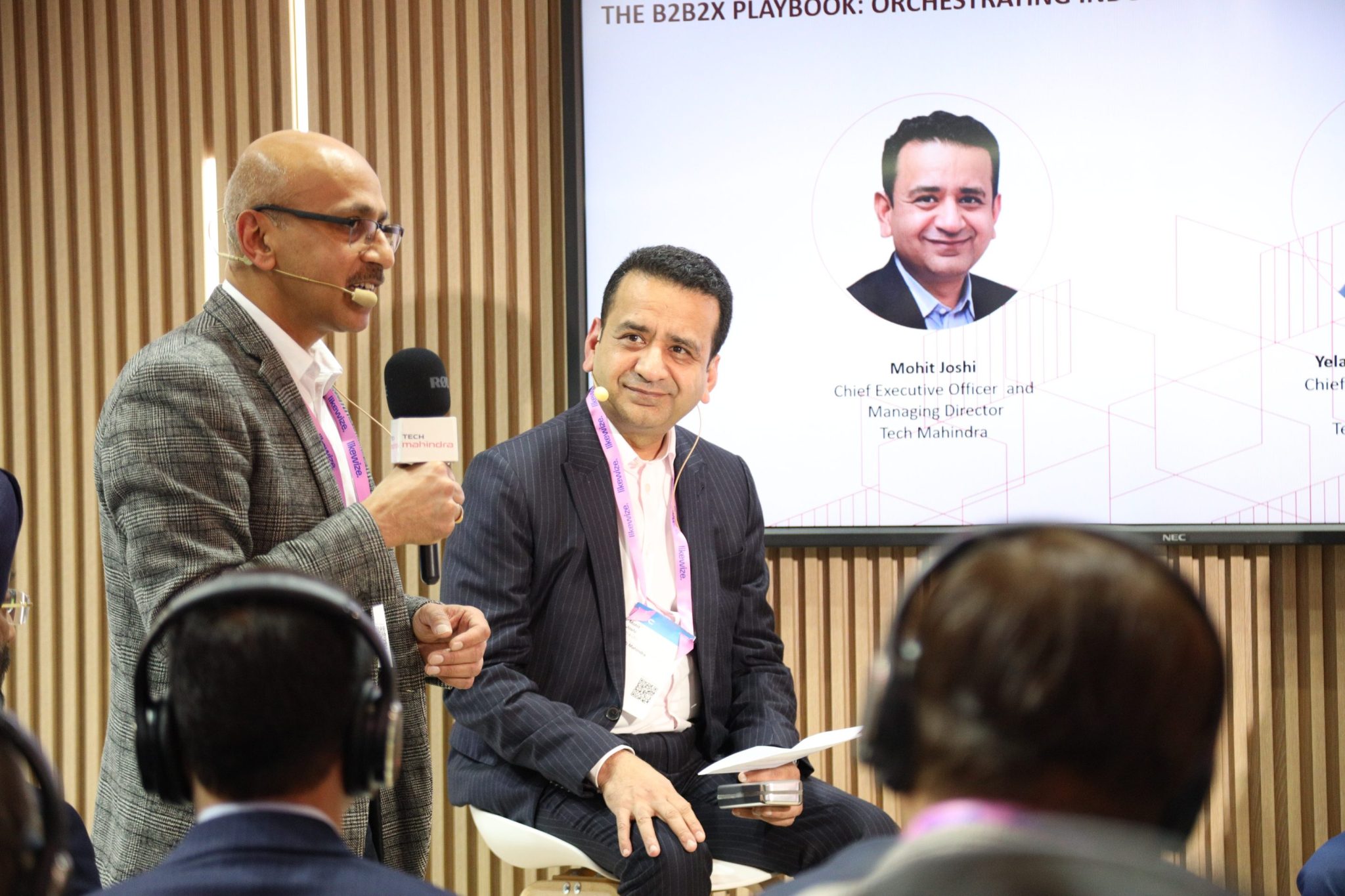
“What torments of grief you’ve endured from evils that never arrived,” wrote Ralph Waldo Emerson, the 19th-century American philosopher and writer. Millions of workers are feeling similar. How many jobs will artificial intelligence destroy? And are we all worrying unnecessarily?
“The demand for human labor will not go away,” Mohit Joshi, the chief executive of the Indian information technology giant, Tech Mahindra, tells me. The world is entering an era of technology complexity and new business opportunities. The changes are likely to increase demand for ‘humans in the lead’, even though the job specifications will be radically different.
Joshi has data and historical precedent to back up his assertion. In the 1990s, many companies, spooked by the threat of the Millennium Bug, invested heavily in technology updates as a protective measure. The bug—linked to the New Year date change from the 20th century to the 21st—never materialized, leading to predictions that tech spending would fall back to 20th century levels. It went in the opposite direction and the ‘trend to spend’ continued.
“The demand for human labor will not go away.”
Mohit Joshi chief executive of Tech Mahindra
Similar momentum is apparent in 2026 when it comes to the effects of artificial intelligence on workforces. “We think the productivity gains will not result in immediate headcount impacts,” Joshi says. “There is a lot of investment that will need to happen over the next couple of years to drive simplification, modernization and optimization. And, especially on the data side, investment will be required beyond the three to five years that it will take to modernize and simplify systems.”
“In the best case beyond that, I feel the complexity of organizations will increase dramatically. And, if the AI premise gets realized fully, the economic growth is going to be so much more significant. It should create more opportunity, because you will have a much larger landscape.”
Elon Musk talks of an era of abundance, ushered in by an applied AI revolution where a robot can do your shopping and energy comes from space. The journalist Ezra Klein has written a book of the same name, Abundance, arguing that governments have a key role to play in ending the age of scarcity. Products and services will change so radically that demand for employees will increase.
“My own advice to my teams is that there will always be somebody who’s a winner,” Joshi says. “And my sense is that the people who are winning will have a few attributes. The first is that they will be fast, because there’s a gigantic premium for speed. You need to be able to pivot very quickly.”
“The second is curiosity. And the final thing is, at a time of great change, leaders will need a degree of empathy and kindness to be able to carry teams along with them.”
The ‘waterfall method’ of change is well known to business leaders—a sequential plan where projects are strictly defined and work is often driven through divisional silos with little opportunity for re-assessment. Most now lean towards the ‘agile method’, a more flexible approach to project management which encourages working between teams across the business.
How to build AI into the agile process is the key question. “What can you do to drive productivity and efficiency in your business?” Joshi says. “What is it that you should be doing to drive revenue in your business? Because productivity is nice, but revenue is really the most important piece.”
“…at a time of great change, leaders will need a degree of empathy and kindness to be able to carry teams along with them.”
Mohit Joshi
Return on AI investment is the key metric boards will want to see. “It’s very clear that organizations are going to get a lot flatter,” Joshi says. “You will have people at the top who will have a lot more in terms of span of control. You will have maybe a bulging middle instead of the traditional pyramid that we’ve had.” Employees with five to ten years’ experience will become ever more valuable.
Not everything is digital. Joshi laughs as we notice that we both write with pens on paper (it helps me think more clearly). He encourages his children to read physical books, with a small pocket-money boost for each one completed.
“What I tell my kids, almost obsessively, is that the ability to read and write well will never go away. So read as widely as you can early in life, because you will never again get this opportunity of unbroken periods of time where you can read, nor will your memory ever be as good to absorb as much as you can today. Learn to speak and write beautifully, and I think everything else will fall into place.”

This story was originally featured on Fortune.com