

Despite the consternation around the K-shaped economy, Goldman Sachs’ chief U.S. economist is of the opinion that rumors of consumers’ demise have been greatly exaggerated.
In the past year, particularly amid households clamoring for relief amid affordability challenges, many economists had speculated that a “K” shape was emerging in the data: High-earning households were continuing to thrive, while those on the lower end were diverging, with their fortunes steadily declining.
Goldman Sachs’ David Mericle suggests this reading has perhaps been exaggerated. But later in 2026, he believes, the phenomenon will be more identifiable.
In December, the Goldman team wrote that “price inflation faced by consumers of different income levels has been fairly similar over the past year” and that real income has evolved similarly across various points on the income spectrum. Weak spending at stores serving low-income households, the team added, has likely dramatically fallen because of changes to immigration policy, as opposed to remaining low-income households faring worse than the average.
This is starkly at odds with the outlook shared by the likes of Mark Zandi, chief economist at Moody’s Analytics. Roughly half of American states were effectively in a recession last year, Zandi told Fortune, with consumers on the lower end of the income spectrum “hanging on by their fingertips.”
Jack Manley, a global market strategist at J.P. Morgan Asset Management, told Fortune in an exclusive interview that he didn’t disagree with the take that immigration policy may be a factor contributing to a K-shape in the data.
However, he highlighted that the divergence between the haves and the have-nots has been growing over a longer period of time, particularly in relation to a core component of the American Dream: homes.
“You break down CPI [consumer price index] inflation, where the pressure is, where things are easing off, and the signs there suggest to me that rich people are doing great; poor people aren’t doing very well at all,” he explained. “How do I see that? You look at the shelter component of CPI, which is both indirectly and directly a measure of rent rather than home prices. Shelter has long been a thorn in the side of the inflationary outlook for a very long time.
“That shelter inflation is coming from the fact that the housing stock is in short supply. People cannot afford to buy homes, so they’re forced into the rental market instead. There are a lot of people out there who can no longer afford perhaps the most quintessential component of the American Dream, which is property ownership. So they’re being forced to rent, and it’s showing up in prices.”
Outlook for 2026
Where Goldman can align with the K-shape outlook is in its view of 2026. The factors that have helped consumers keep their heads above water in the face of tariff price rises and oil inflation, to name a few—such as the One Big Beautiful Bill Act and tax refunds—aren’t frequent boosts to spending.
“What originally appeared to be a solid year for consumer spending has quickly become more challenging,” wrote Mericle’s colleagues Ronnie Walker, Alec Phillips, and Joseph Briggs in a note earlier this week.
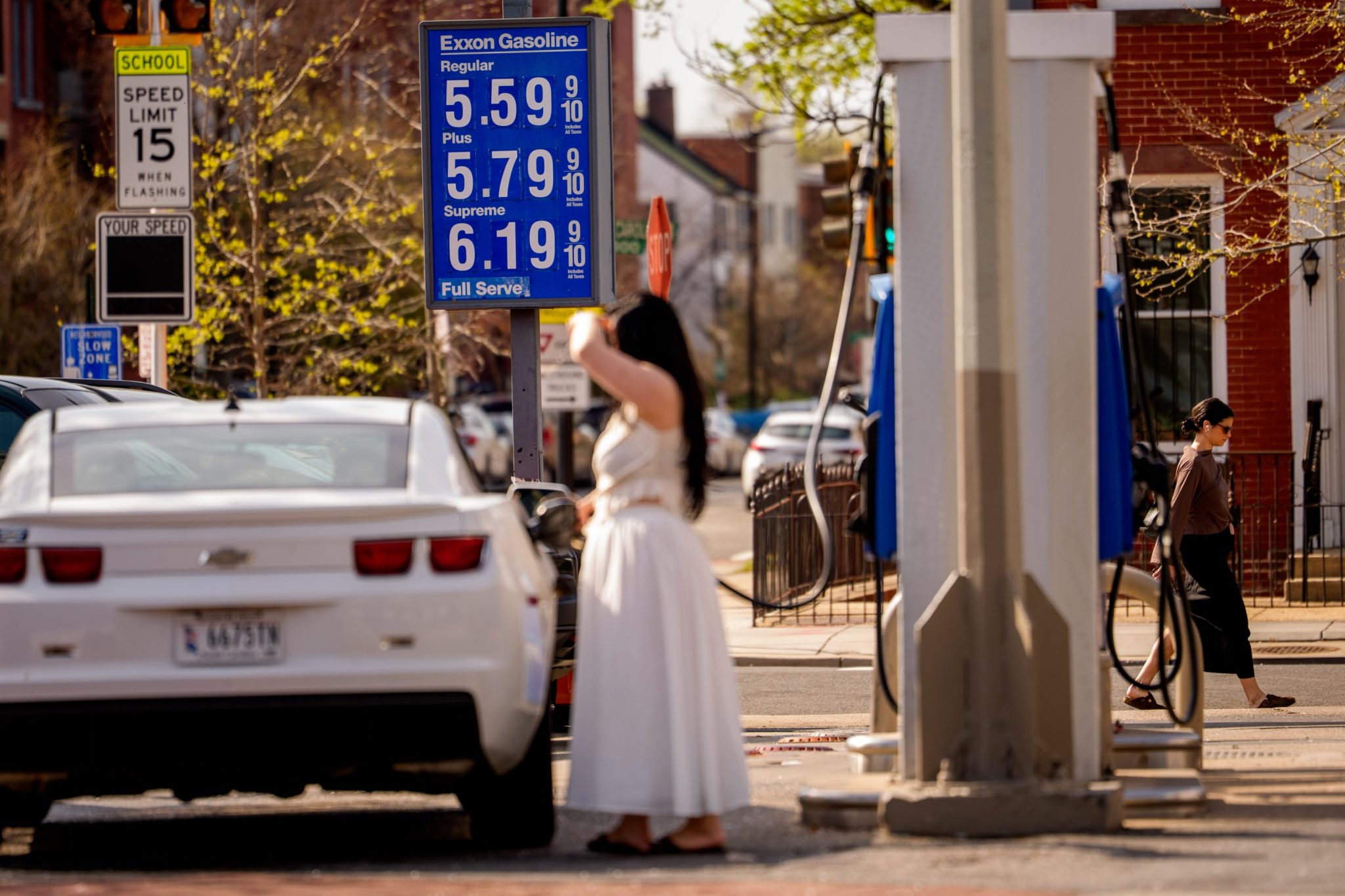
“Higher gasoline prices disproportionately weigh on the spending of households in the lowest income quintile—who spend roughly four times as much on gasoline as a share of after-tax income compared with those in the top quintile—and spending on discretionary categories, such as restaurants.”
The trio forecast weak consumption growth over the coming months, leading to a 1% decline in headline retail sales.
“We continue to expect underperformance for the bottom income quintile, reflecting tepid job growth, cuts to Medicaid and SNAP benefits, and now greater exposure to the increase in gasoline prices,” the Goldman economists added. “We expect notably firmer income growth among middle and higher income quintiles, which are less exposed to the oil shock and accrue greater benefit from last year’s fiscal package.”
This story was originally featured on Fortune.com