

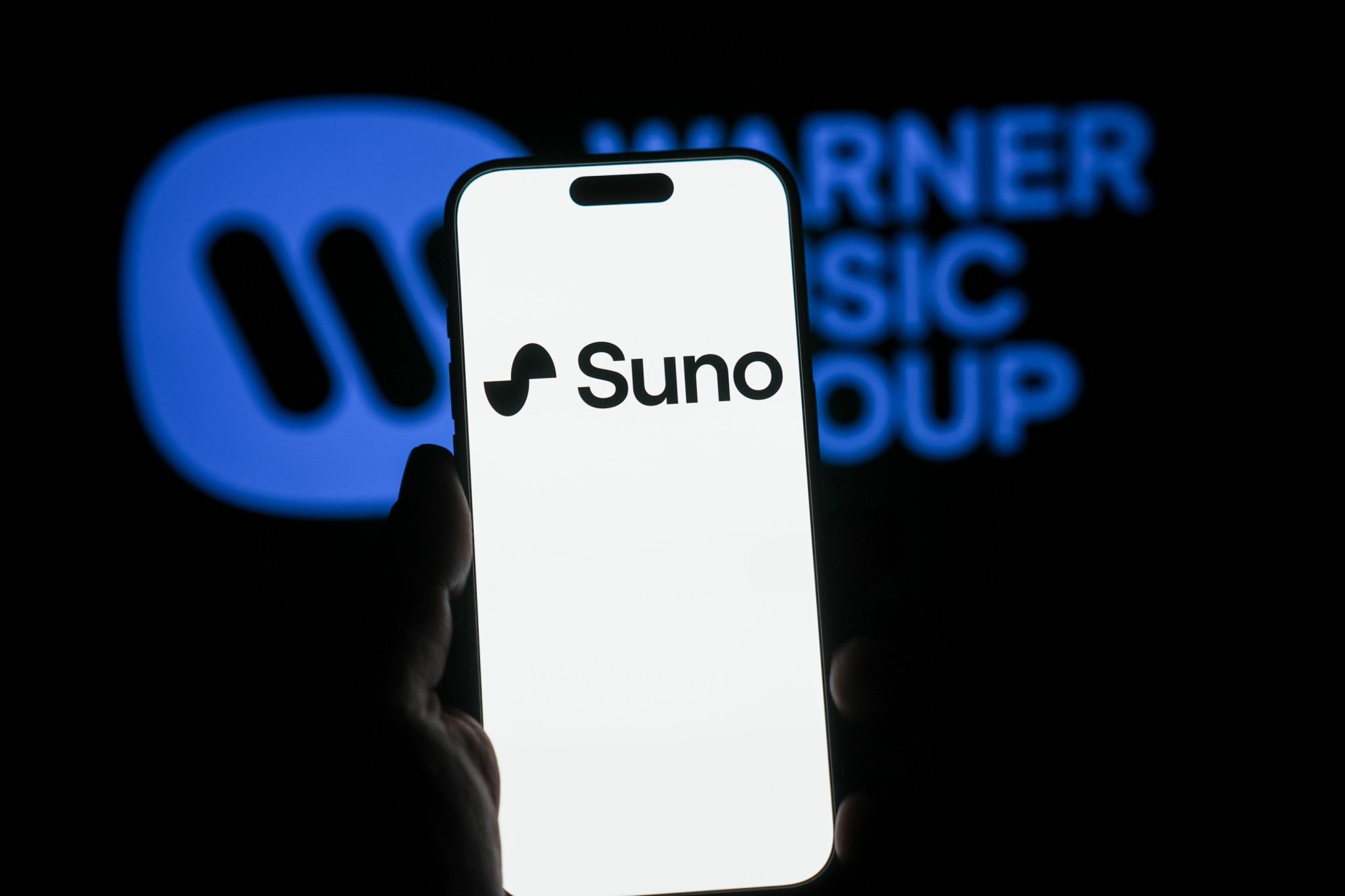
Amy Wu Martin creates AI-generated songs for her son on Suno.
She’s not famous or getting paid. She just likes it. That, in a nutshell, is why she led Menlo Ventures into a $250 million fundraise last fall, then re-upped in a $400 million round in June at a $5.4 billion valuation—more than doubling Suno’s value in seven months.
Suno (for the uninitiated) is a text-to-music platform: type a prompt, get a complete song back in seconds. No instruments, no music theory, no production skills required. It has over 100 million lifetime users, 2 million paying subscribers, and $300 million in ARR. It’s been publicly available for less than three years.
Wu Martin’s thesis on Suno is about what happens when the cost of creating something drops to zero. “Because the effort and cost of creation has come down so much with AI tools, the payoff for that creation has fundamentally changed,” she told me. “Before, you needed to be paid, made, or laid in order to become a content creator. Now I can one-shot something super easy and actually enjoy that for myself.”
She calls it “single-player creation and consumption”—making something just for the joy of making it, with no audience required and no career on the line. Think of it as the difference between cooking dinner for yourself versus trying to become a chef.
But the path forward for platforms like Suno could spell disaster for their financial model. The music industry’s trade group sued Suno in June 2024 on behalf of Sony, Universal, and Warner, alleging Suno built its AI by training on copyrighted recordings it never paid for or licensed. Warner settled the suit in November 2025 and Suno acquired Songkick, Warner’s concert-discovery app, as part of the deal. Sony and Universal are still in court—and in the weeks before Suno’s latest round closed, UMG and Sony filed to add over 61,000 more songs to their complaint because they claimed court-ordered evidence disclosure revealed Suno had trained on “millions” of their tracks. Suno has since asked the court to block that amendment. Germany’s music rights organization has its own pending ruling, now delayed to July 31.
When I pressed Wu Martin on what happens if Suno loses in court and gets forced to pay the music industry a cut of Suno’s 7 million daily generated tracks (a model that Udio, its main rival, reportedly agreed to), she declined to engage. “There’s just a lot of conversations in the works,” she said.
That answer won’t satisfy everyone. But Wu Martin is betting that the behavior she’s watching in real time—a company she says has grown 4x since Menlo’s investment—is more durable than the legal uncertainty swirling around it. “Consumer always lags in a technology wave,” she said. “The technology has to be very mature. We’re still early on the behavioral change wave for Suno, but I’m just seeing it in real time.”
See you Monday,
Lily Mae Lazarus
X: @LilyMaeLazarus
Email: lily.lazarus@fortune.com
Submit a deal for the Term Sheet newsletter here.
Joey Abrams curated the deals section of today’s newsletter. Subscribe here.
This story was originally featured on Fortune.com