

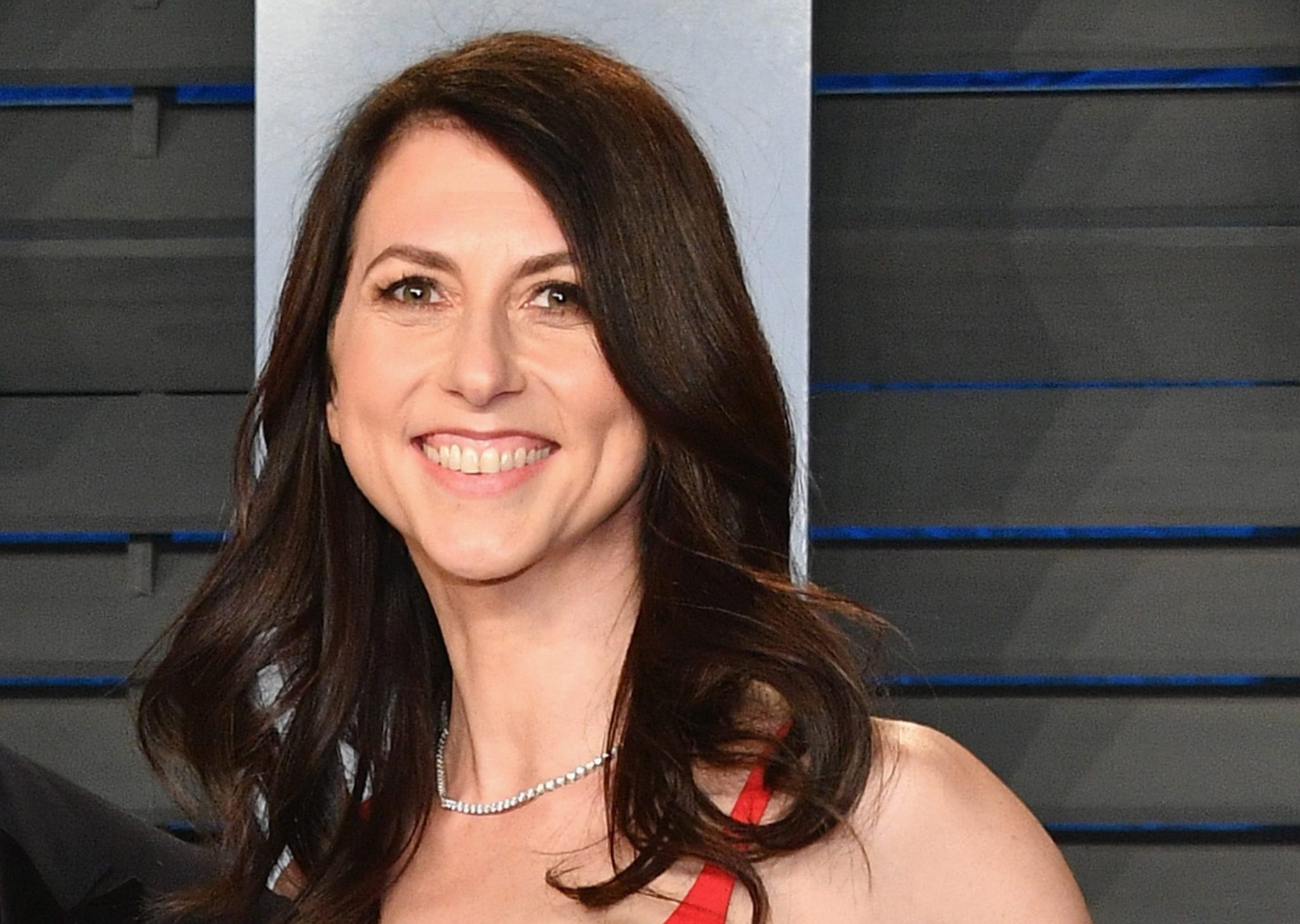
MacKenzie Scott has wowed just about everyone with her approach to philanthropy. (Except for Elon Musk, who implied the billionaire philanthropist makes the world a worse place).
The fascination with Scott doesn’t just have to do with the amount the novelist and ex-wife of Amazon founder Jeff Bezos has given away—more than $26 billion—but also the pace at which she’s doled it out. She’s given away that sum of money in just a matter of a few years, which steers heavily away from how billionaires usually give away their fortunes.
Indeed, families with more than $500 million in assets gave away about 1.2% of those assets in 2017, according to research from the Bridgespan Group, a global consulting firm for nonprofits and philanthropy. When Bridgespan ran the numbers again for 2023, the figure was essentially unchanged, even though those fortunes had been compounding at rates at or above the S&P 500’s long-run average of roughly 9%.
In other words, while the absolute dollars in giving grew, the share of wealth stood still. That’s the pattern Bridgespan cofounder Jeffrey Bradach has coined as “slow philanthropy.” In an essay adapted from Bridgespan’s research and published by Stanford Social Innovation Review on Thursday, he argues the giving of many ultra-wealthy people lags far behind the aspirations they express. These plans are sometimes laid out by signing Giving Pledge letters, but other research has shown they often don’t follow through.
The Institute for Policy Studies (IPS) argues the Giving Pledge is “unfulfilled, unfulfillable, and not our ticket to a fairer, better future.”
“Three-quarters of the original U.S. Giving Pledgers who are still alive remain billionaires today,” according to IPS. “They have collectively gotten far wealthier since they signed, while just eight of 22 deceased Pledgers fulfilled their pledges.”
Active philanthropists like Melinda French Gates have grilled her fellow billionaires about how they’re not living up to their promises.
“Have they given enough? No,” French Gates said in an interview with Wired published in late 2025.
But French Gates has recently praised Scott for her pace and approach to philanthropic giving, telling Fortune’s Most Powerful Women Editor Emma Hinchliffe that actions often speak louder than words when it comes to charity.
“I look back at the giving MacKenzie [Scott] has done in the last year,” French Gates said. “Look at what she has said about historically Black colleges in the United States and the importance of them. People are maybe not always speaking about their grant-making, but boy, they are doing it behind the scenes.”
Bradach also directly highlighted Scott as the odd woman out, but in a good way, calling her the “most generous individual philanthropist of this century.” And what sets Scott apart, according to Bradach, is how she thinks about it.
Why billionaire philanthropy usually moves slowly
Bradach identifies a few reasons why billionaire philanthropy tends to move slowly. One is that failure feels worse in philanthropy than in investing.
“While a for-profit investor might celebrate a portfolio of ten investments that had two ‘home runs,’ five average performers, and three underperformers, donors rarely think about their philanthropy this way,” he said.
So often they’ll fixate on overhead and waste. They struggle to delegate, with some major donors insisting on personally approving every grant even when they have professional staff to help. Many underestimate how much money a nonprofit can actually put to work.
But Scott is once again an outlier here. Scott practices “trust-based philanthropy,” Anne Marie Dougherty, CEO of the Bob Woodruff Foundation, previously told Fortune. This means Scott has little oversight in how funds are used, a practice called unrestricted giving.
“Unlike traditional funding processes that often involve lengthy applications, specific restrictions, and reporting requirements, her style empowers organizations like ours to determine how best to direct funds quickly and innovatively to address pressing issues,” Noni Ramos, CEO of Housing Trust Silicon Valley, told Fortune in late 2024, when her organization received a $30 million gift from Scott.
But for other philanthropists, extensive overhead often means a tendency to delay.
“Every nonprofit seeking support from a philanthropist is not just competing with other nonprofits, but with a donor’s option to leave the money in the bank—and maybe give later,” Bradach wrote. “In the absence of a forcing function, delay is costless to the donor and easy to rationalize.”
Speeding up billionaire philanthropy is no easy task. The pathways where philanthropic money already flows freely (bequests, donor-advised funds, and the Giving Pledge) all share one feature: They separate the decision to commit from the decision of where the money ultimately goes, lowering the hurdle to acting on impulse. Charitable bequests, he notes, hit a record $62 billion in 2025, outpacing growth in giving by living donors.
“Bequests sidestep many of the internal frictions that slow philanthropy,” he wrote.
For Bradach, the deeper fix for “slow philanthropy” is a shift in mindset, reviving what he calls “the gift,” a way of giving rooted in generosity and moral obligation rather than metrics and ROI. Scott, he notes, is the rare billionaire who calls her fortune something to be given, not managed.
“My approach to philanthropy will continue to be thoughtful. It will take time and effort and care,” Scott wrote in her Giving Pledge letter signed in 2019. “But I won’t wait. And I will keep at it until the safe is empty.”
This story was originally featured on Fortune.com