

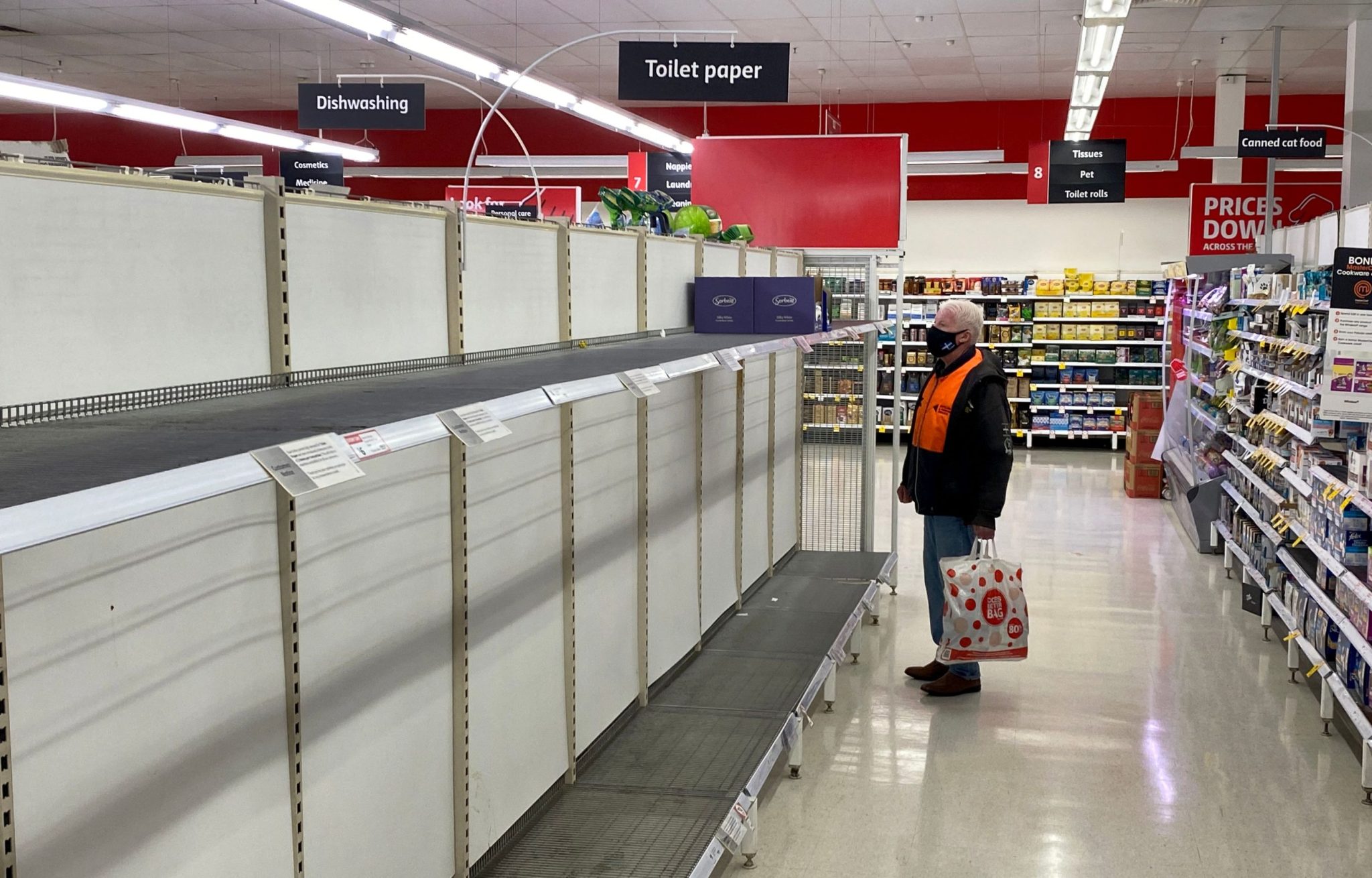
It seems like so long ago, but in the not-so-distant past, all of us were roaming the supermarket aisles for the last roll of TP, cursing at those who began stockpiling the rolls, and blaming the relative who brought a bidet back from Japan for not bringing one back for you as well. While the days of reaching for the last TP under a “limit one roll per customer” sign shoddily taped to the rack may be over, the thought of a shortage possibly returning to haunt the same president six years later isn’t far-fetched.
After trade talks between the U.S. and Canada broke down in late August, Washington imposed a 50% tariff on roughly $20 billion of Canadian goods under a section of the Tariff Act of 1930—a Depression-era law that lets the president retaliate against countries seen as discriminating against U.S. commerce. In response, Canadian Prime Minister Mark Carney vowed to match the US “dollar for dollar,” and unveiled retaliatory tariffs on close to 900 American products, set to take effect next week, on Sept. 8. Chief among them? Toilet paper and paper products.
“Canada will match those tariffs dollar for dollar,” Carney said two weeks ago. “Because we were attacked. Like, you’re at war when you get attacked.”
Paper goods are among the hardest hit. Canada’s retaliation puts a 25% duty on U.S. toilet paper and facial tissue, and a 50% duty on paper towels, napkins, and raw wood pulp. Canada is also charging 50% on American dairy products (except cheese, which gets 25%) and 25% on American fish and seafood, including frozen lobster. It’s in response to U.S. tariffs, including a 25% tariff on Canadian cars and auto parts—and Trump is now threatening to double that to 50% if no deal is reached by Jan. 1, 2027.
A Covid-era toilet paper shortage
On March 12, 2020, U.S. toilet paper sales surged 734% compared with the same day the year before, making it the top-selling grocery item that day. By the time the panic subsided, roughly 70% of the world’s grocery stores had run out of toilet paper at some point. Shelves that normally held Charmin and Cottonelle sat bare for weeks as retailers imposed purchase limits, and bamboo-paper startups saw Amazon sales jump more than 5,000% month over month as shoppers hunted for anything they could find. Researchers who studied the episode afterward found no actual break in production. Mills kept running. Hoarding, not a supply failure, created nearly all of it.
Eight months later, due to a confluence of the COVID-19 pandemic and his administration’s handling of the virus, President Donald Trump lost the presidency to Joe Biden. Toilet paper didn’t decide that election, but it became a small symbol of an economy that felt like it was slipping out of a president’s control, just as voters decided whether to give him another term.
Americans make up just 4% of the world’s population but use more than 20% of the world’s tissue supply, burning through an average of 141 rolls a year. Six years after the pandemic, Trump is again facing affordability and kitchen table prices, just as the midterms campaign season kicks into high gear.
The toilet paper supplier and tariffs
Trade talks between the US and Canada broke down in late August 2026. In response, Washington imposed a 50% tariff on roughly $20 billion (C$27.6 billion) of Canadian goods under Section 338 of the Tariff Act of 1930—a Depression-era law that lets the president retaliate against countries seen as discriminating against US commerce. Canadian Prime Minister Mark Carney vowed to match the US “dollar for dollar,” and Ottawa unveiled retaliatory tariffs on close to 900 American products, set to take effect September 8.
Paper goods are among the hardest hit. Canada’s retaliation puts a 25% duty on US toilet paper and facial tissue, and a 50% duty on paper towels, napkins, and raw wood pulp. The dispute doesn’t stop at paper: Canada is also charging 50% on American dairy products (except cheese, which gets 25%) and 25% on American fish and seafood, including frozen lobster, a move that drew criticism from Maine Senator Susan Collins. The US, for its part, has also placed a 25% tariff on Canadian cars and auto parts, with Trump threatening to double that to 50% if no deal is reached by January 1, 2027. To soften the blow at home, Ottawa announced a C$7.5 billion relief package for small and medium Canadian businesses hurt by the standoff.
Americans make up just 4% of the world’s population but use more than 20% of the world’s tissue supply, burning through an average of 141 rolls a year—the highest rate globally, just ahead of Germany’s 134.
In 2024, Canada supplied $328 million worth of toilet paper to the country, more than any other country, just as retailers like Costco source much of their private-label paper stock from Canadian mills. The supply chain complicates this as American factories rely on northern bleached softwood kraft pulp, or NBSK, harvested from Canadian forests, which makes up roughly 30% of a standard American toilet paper roll and close to half of U.S. paper towel production. U.S. mills buy about 2 million tons of Canadian NBSK a year.
Procter & Gamble, which makes Charmin, said tariffs are creating a roughly $0.25-per-share earnings headwind and is raising prices on a chunk of its lineup. Americans are paying 96% of the cost of Trump’s tariffs, and Federal Reserve research showed tariffs are now seeing “full pass-through” to consumer prices.
The American Forest & Paper Association, which did not respond to Fortune’s requests for comment, argues that any shortages would be localized rather than become national. It’s still urging consumers not to stock up ahead of the September 8 deadline.
All of this is posing a problem for Trump: Ahead of the midterms, his economic standing has slipped further than the White House would like. Just 39% of Americans approve of his job performance, and only 30% approve of his handling of inflation, with a 31% plurality naming inflation and prices their top concern — 17 points ahead of the next issue, jobs and the economy. Even Marc Short, who served in Trump’s first administration, said it’s hard to argue his tariffs aren’t contributing to the affordability problem. Goldman Sachs research found that the cost of living is voters’ top issue at a higher share than heading into the 2024 election.
This story was originally featured on Fortune.com