

A fast-growing San Francisco startup called TRM Labs, which built its business helping law enforcement track crypto crooks, notched a $1 billion valuation after raising a $70 million Series C funding round in September. Barely six months later, the company has raised an add-on to that round that the company says has resulted in investors doubling its valuation in response to its fast-growing AI business.
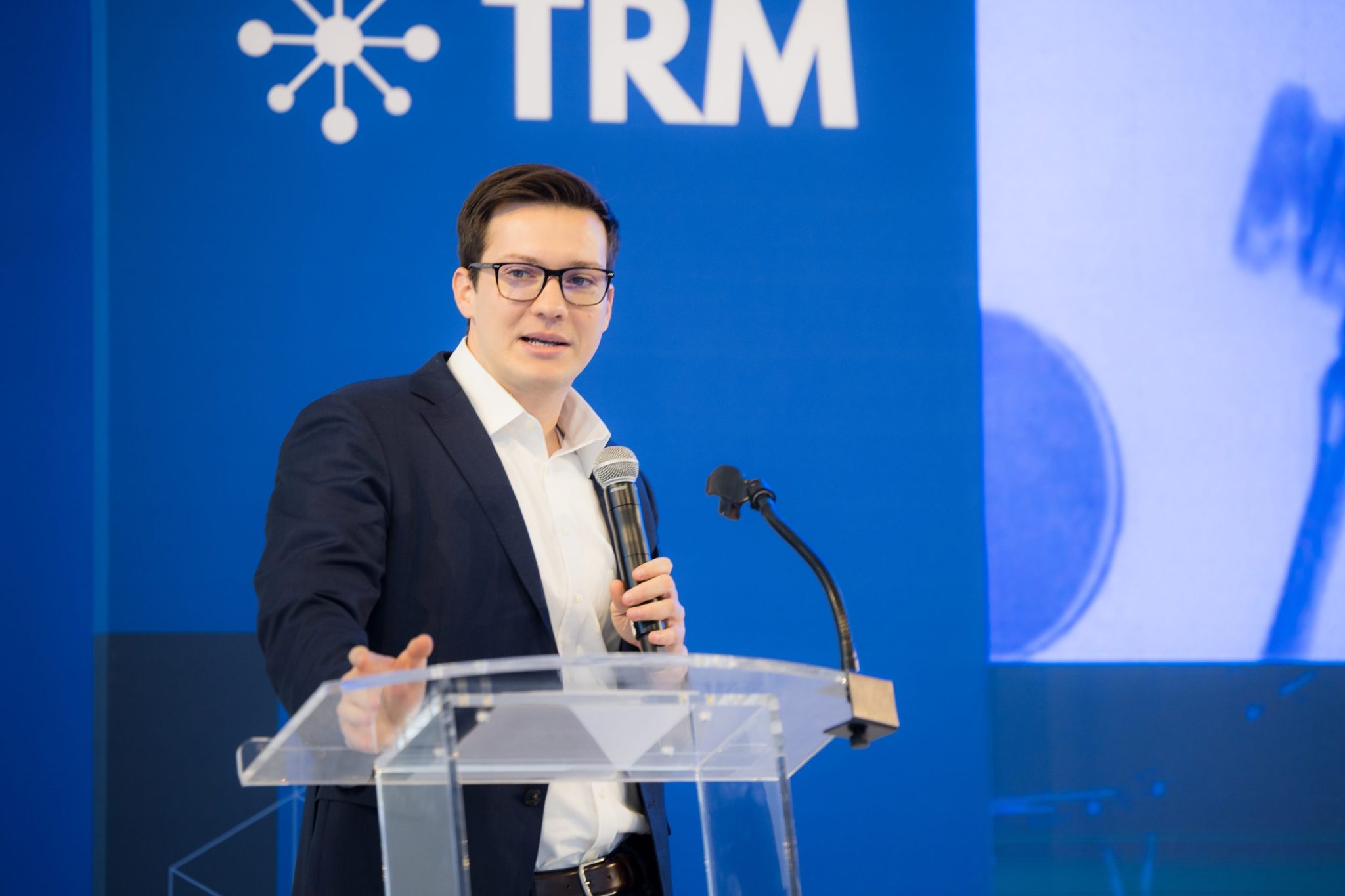
In an interview with Fortune, TRM Labs CEO Esteban Castano said the company now views its mission as not based simply on blockchain forensics, but on mapping online crime more broadly—crime that is being turbo-charged with the advent of AI. To this end, the startup is rolling out a new platform for its customers specifically designed to identify and thwart crooks running scams based on artificial intelligence.
“AI is a second growth engine for our business, not a pivot,” said Castano, adding that its core crypto business is still going strong. “Blockchain intelligence is a multi-decade business. We want to build a generational company.”
As part of the company’s evolution, the 35-year-old Castano said, TRM Labs has adopted a horizontal focus on criminal networks. This focus has come from the insight that criminals of all stripes—from cyber hackers to wildlife poachers to child pornographers—use cryptocurrency, which in turn provides the company with take a broad, network-based view of crime.
“Never before in history did it make sense for a company to map all of crime … But the universal adoption of crypto created an incentive to do so,” said Castano.
This perspective is useful, says Castano, when it comes to confronting what he says is a coming tidal wave of AI-driven crime. The use of AI in crime is especially dangerous, he warns, because it reduces two constraints—time and expertise—that have historically limited the amount of damage crooks can do.
For practical purposes, the new investigations platform that TRM Labs is rolling out is designed specifically to help investigators uncover financial fraud, which Castano says has gone into overdrive thanks to AI tools like deepfakes. The new platform, which the company will publicly announce in November, is also designed to help law enforcement combat sextortion and child sexual abuse, which have likewise increased dramatically alongside the rise of AI.
From Ethereum to AI
When Castano launched TRM Labs in 2018, the field of blockchain forensics was not exactly new as companies like Chainalysis, Elliptic and CipherTrace (since acquired by Mastercard) already offered services that helped law enforcement trace Bitcoin-based money trails. TRM, however, found a niche by being one of the first to help investigators keep track of newer cryptocurrencies like Ethereum and Tron, which likewise became popular (along with old-fashioned cash, of course) for criminal financing.
In discussing TRM Labs’ latest fundraise, Castano demurred at saying how much money the company had raised to achieve its new $2 billion valuation, only saying that it was a “modest” amount and that the new funds came from existing backers.
He added that the company is growing fast, and expects to reach an ARR (annual recurring revenue) milestone of $100 million in the coming weeks. Castano explained that TRM Labs wished to promote the new valuation as a “bat signal” to help bring in new talent, showing the company is on a rapid upward trajectory. He also said his firm’s crime fighting mission provides accomplished people with an opportunity to “do well by doing good”.
As for whether TRM Labs will be able to display similar prowess in the field of stopping AI crime as it has with tracing cryptocurrencies, Castano said several factors put the company in position to take on an expanded mission. He pointed in particular to its data and its existing relationships with banks and law enforcement—both of which he says have been eager to get their hand on the new AI tools—and its extensive network of other partners.
As of early September, TRM Labs had around 500 employees and satellite offices in London, Singapore and Washington, DC.
This story was originally featured on Fortune.com