
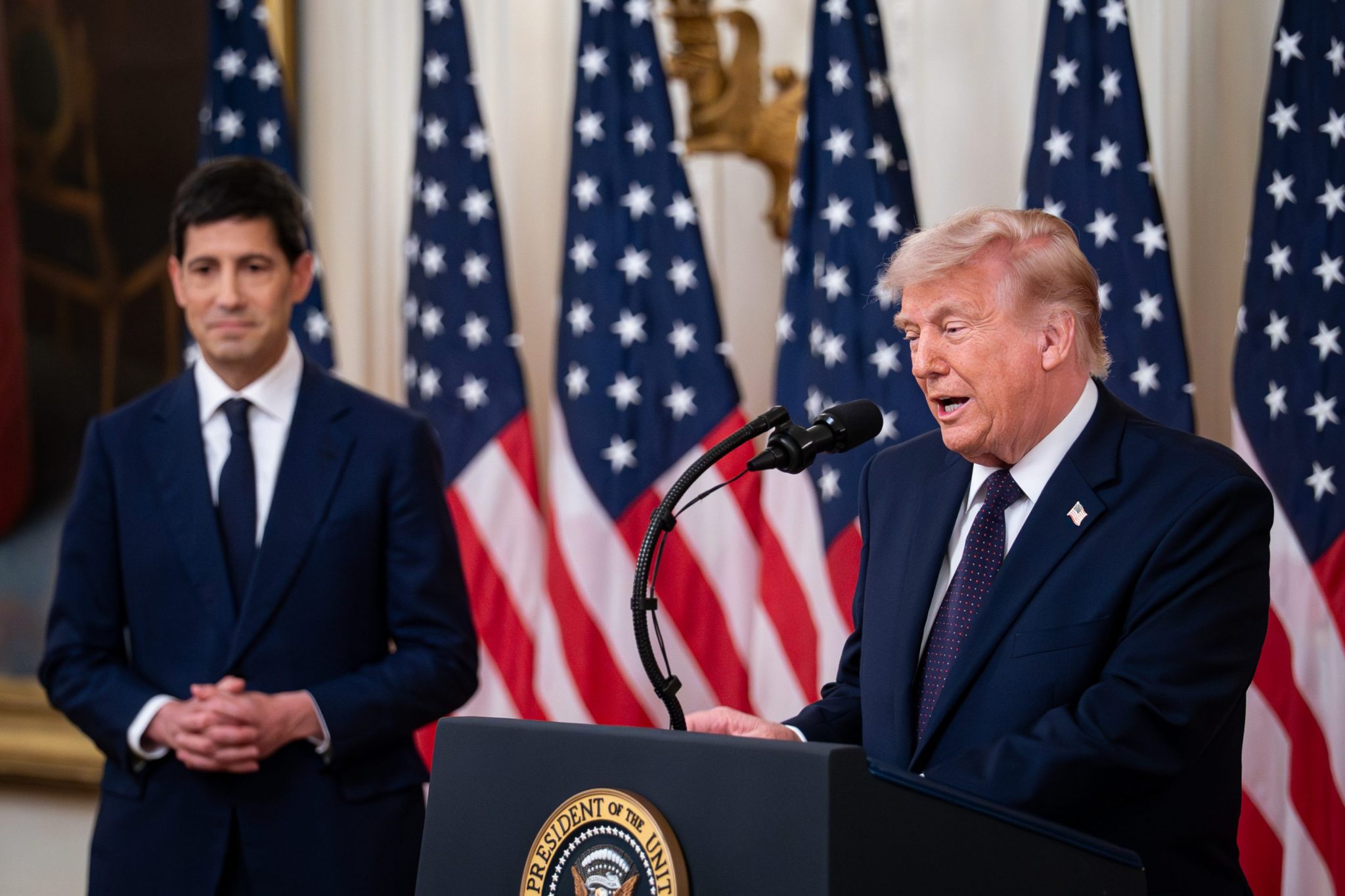
Federal Reserve Chairman Kevin Warsh told markets yesterday that the central bank’s rate-setting committee had unanimously agreed on a 25 basis point interest rate hike to combat inflation.
President Trump heard something different: He believes it’s a personal attack.
The U.S. base rate now sits at 3.75% to 4%, a quarter-percentage-point increase in the opposite direction of the downward trajectory Trump has been aggressively lobbying for. Warsh, whose critics feared would be a “sock puppet” for the White House, backed the decision of the Federal Open Market Committee (FOMC), saying: “The plain fact is that inflation is too high and has been for too long.”
The agreement to increase the base rate, combined with Warsh’s commitment to bringing inflation to the Fed’s 2% target, will go some way to reassure skeptics that the central bank remains—as is legally mandated—credibly independent.
But Trump is unhappy. Still standing by his nominee, Trump directed his ire at the other voting members of the Federal Open Market Committee (FOMC). He told reporters following the announcement: “[Warsh] has got a very tough board. He’s got a board that was put there by a lot of other people, and the interest rates are too high. They’re not appropriate.”
“I talked to Kevin, and I said, ‘You might as well vote with the board because it’s not going to matter.’ The board is very hostile, they’re very political, they’re doing the wrong thing. They are a bunch of politicians or people put on by politicians, and it’s a shame because it’s too high.”
While the president’s support may be preferable to his contempt (as Warsh’s predecessor and fellow Trump-nominee, Jerome Powell, learned the hard way), Trump’s comments do little to help the central bank chairman trying to assure markets he is acting in the best interests of the economy and the public, rather than Capitol Hill.
Trump suggested the economy can “barrel through” the higher rates because it is “doing so well,” but implied he was the target of the committee’s action: “The problem they have is that we have the greatest economy in history … so they’re raising that only for political reasons, and that’s a raise against Trump.”
Now, in the run-up to the midterms, American voters are facing inflation at 3.4%—driven, in part, by supply-side shocks to oil markets prompted by the U.S.-Iranian conflict in the Middle East. The issue is front of mind for voters, with a recent Pew Research study finding the economy was the top priority consumers were thinking about (29%), followed by affordability specifically (15%).
Warsh’s Trump headache
While Warsh and Trump would not have spoken around the time of the FOMC meeting (as the Fed observes a strict blackout period) the writing has been on the wall about a September hike for some time.
The FOMC’s priority between the two sides of its mandate (inflation at 2% and maximum employment) has been clear. While jobs data has been relatively solid—the Bureau of Labor Statistics (BLS) report this month showed that the U.S. economy added 162,000 jobs in August with the unemployment rate unchanged at 4.1%—inflation remains comfortably above average. As Warsh pointed out yesterday, inflation hasn’t been at or below 2% for more than five years.
Indeed, Chicago Fed President Austan Goolsbee told Fortune in an exclusive interview earlier this month: “On the real side, we’ve been stable, now inching toward dangers of overheat, and on the inflation side, after a couple of years of strong progress, it stalled out and started getting worse. But we’ve had one encouraging report, one okay report, and now our challenge is … the inflation.”
It was therefore inevitable that the vast majority of interest rate traders and Wall Street analysts—as well as politicians on Capitol Hill—had expected a hike.
Trump’s comments may prove a further hindrance to Warsh if analysts were to take them at face value: The suggestion that the chairman “might as well” have voted for a hike, rather than conviction and consensus, might alter inflation expectations. Despite that headache, markets have shown they tend to look through Trump’s comments until policy action ensues.
This story was originally featured on Fortune.com