

A Brazilian aviator and a French jeweler walk into a bar. The year: 1900. The place: Maxim’s, the Paris clubhouse for the Belle Époque intelligentsia to discuss matters such as, How much absinthe is too much absinthe? On this day, the question was more practical: How does a pilot tell time on his pocket watch without crashing his airship?
Alberto Santos-Dumont was the son of a French-Brazilian coffee tycoon, and a dashing explorer and aeronaut. His pal, Louis Cartier—another nepo baby as the scion of the Cartier jewelry empire, and a brilliant designer in his own right—proposed a solution: What if a watch could be fastened to his ami’s arm, instead of kept in the pocket of his trousers?
This is how the modern men’s wristwatch was born.
Cartier debuted the delicate, square-faced Santos in 1911 and has been producing versions ever since. They range from svelte relics to a showy platinum-cased 90th anniversary edition with a salmon dial and indigo Breguet hands that fetched nearly $48,000 at Christie’s last year.
“Collectibility-wise, Cartier is probably one of the biggest brands that exists,” says Tom Collins, owner of vintage watch dealer the Wrist Watcher Ltd., “but there are so, so many variants, it’s hard to pinpoint which is a collector’s piece.”
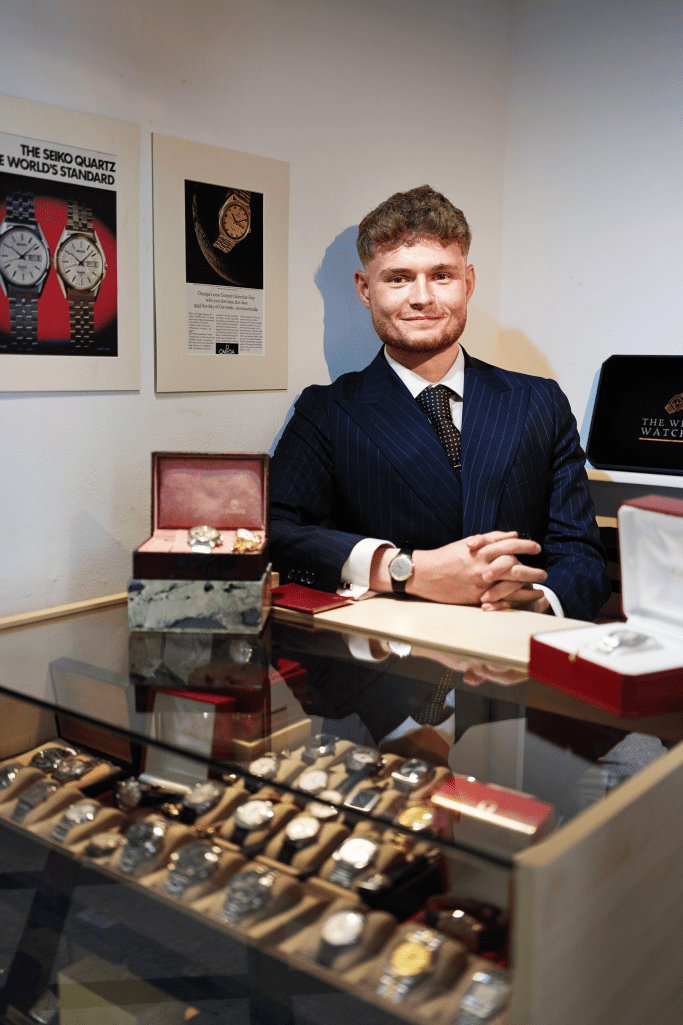
There are clues horologists look for, like the number of grams of gold engraved on the back of the two-tone Santos Carrée, a piece Collins recently acquired for his tiny counter in London’s tony Mayfair. Debuted in 1978, this particular model represents a significant inflection point in design and mechanics for Cartier. The house recast the Santos in a chunky, sportier silhouette; squared the face (carrée is French for “square”); exposed its screws; and integrated a bracelet in stainless steel and 18-karat gold. It also went automatic.
The Carrée is my favorite Santos, a cuspy chameleon that, depending on styling, can give off last days of disco or Bret Easton Ellis protagonist. When I saw it, I had to have it.
Where I saw it, though, was not at Grays Antique Market, the agora where the Wrist Watcher Ltd. rents space, but while scrolling on my phone during a red-eye from Addis Ababa to Heathrow last spring. On random evenings at 8 p.m. U.K. time on @TheWristWatcher1, 22-year-old Collins drops a cache of treasures to his 260,000 watch-fanatic followers, of which I am one. “Presenting the cleanest Cartier Santos Carrée on the market!” the caption read. I immediately slotted a visit into my London plans so I could take my precious home.
Adam Golden of Menta Watches, a high-end dealer in downtown Miami, calls what I experienced seeing that watch pop up on my feed an I want that moment. When he started his timepiece journey in 2012, these lightning strikes largely happened IRL. Today, he tells me, “you essentially can see every watch that was ever produced just by searching on social media.” From a nostalgic birth-year Casio to a “Grand Seiko that only three people in the world have ever heard of,” an heirloom that was passed down through generations can be yours in just a few clicks.
Luxury watch brands have long looked down their noses at e-commerce, leaving the secondary market to gladly take the crumbs and make them into cake. The reseller market hit $10.5 billion in value in the first half of 2026, a 37.2% increase year over year, according to research platform EveryWatch. Even for dealers like Collins and Golden who maintain physical spaces, social media is a growing gateway for buyers under 50.
Over the past decade, a few brands have noticed the trend and jumped into social media. One pivotal moment was Omega’s “Speedy Tuesday” watch—a limited edition produced in 2017 as a tribute to online fans of Omega’s Speedmaster line. A community spun off from a weekly column in the digital magazine Fratello Watches had created a weekly social media ritual around the #SpeedyTuesday hashtag.
“For those that don’t get or believe that social media can have real impact,” says Paul Croughton, an impeccably dressed London editor-in-chief and watch enthusiast, “that was one of the most prestigious watch brands on the planet being directly influenced by a bunch of watch nerds.”
Social media has since melted the line between dealer and influencer, collector and creator, and there’s a flavor of watch content for every consumer. My Instagram Discover page is a narcotic carousel of supple leather and gleaming metal. On the rare occasions that I pull up TikTok, the grid of faces on #WatchTok assaults my geriatric millennial senses: diamond dealers doing on-the-(47th)-street interviews; authenticators revealing results with the breathlessness of a Maury paternity drama; influencers unboxing Tiffany-blue Daytonas and Seamaster Aqua Terras with gloved fingers.
A slightly manic note can creep into this corner of social media. The mostly male, mostly young consumers of this content came up in the pandemic days of meme stock windfalls, speculative crypto investments, and hypebeast product drops. This is how you get imbroglios like last spring’s Audemars Piguet x Swatch Royal Pop launch, which generated headlines like “Global chaos triggered by a limited-edition watch collaboration” (ABC World News Tonight) and “Swatch psychos stampede Long Island mall for special AP release as cop pepper-sprays mob”—a doozy, even by New York Post standards. For this mob, watches are as much assets to flip as trophies to collect. In a K-shaped economy with an evaporating entry-level white-collar job market, can you blame them?
An heirloom that was passed down through generations can be yours in just a few clicks.
Golden doesn’t. He recognizes that social media is probably the path to building a community of watch lovers. “For this industry to thrive and exist in the next 10, 20, 30 years, there needs to be a younger generation,” he says. “I’m reminded of my dad, who’s a stamp collector. There’s no younger generation getting into stamps. That’s going to die out.” (#StampTok would like a word.)
And while the platform and culture may have changed, the thrill of the hunt—and occasional buyer’s remorse—has not. “Sometimes the chase is more thrilling than that moment of ownership,” Croughton says. “You put it on the wrist, and you’re kinda like, ‘I like it … But it doesn’t do what I thought it would do. It doesn’t change me as a spiritual being.’ ”
We do put an awful lot of pressure on luxury goods to transmogrify our mortal bodies. Whether it’s a rare Vacheron, Vuitton luggage, or a Zegna suit, the costumes we put on contain their own stories, which in turn tell stories about us. Setting out on my quest for the Carrée I’d seen on Instagram, I wondered, What story will this watch tell about me? “Here is man of the world,” perhaps. “Here is a man with recommendations for cocktails in Paris and tailors in Bangkok.”
Here is a man who does not know how to Google a shop’s operating hours, apparently. I walked into Grays Antique Market and found the Wrist Watcher counter dark.
Not that it would have mattered. With his social media watch drops, Collins says, “generally, 80% to 90% will go within the first 30 minutes. Some even go within 60 seconds.” The Carrée I’d fallen for, priced at around $5,000, was likely long gone.
Then came a stroke of serendipity that no social media algorithm could replicate. Wandering past cases of Russian silver and Wedgwood china, I happened upon the Watch Locator, a storefront on the lower level.
Owner Rahul Shamshad, a dyed-in-the-wool salesman who talks a mile a minute, keeps a shop that feels more like a professor’s cluttered office than the antiseptic or manospheric galleries that typify the genre. He’s on Instagram too, the 38-year-old told me, but “to be honest, I tend to do a lot of walk-in.”
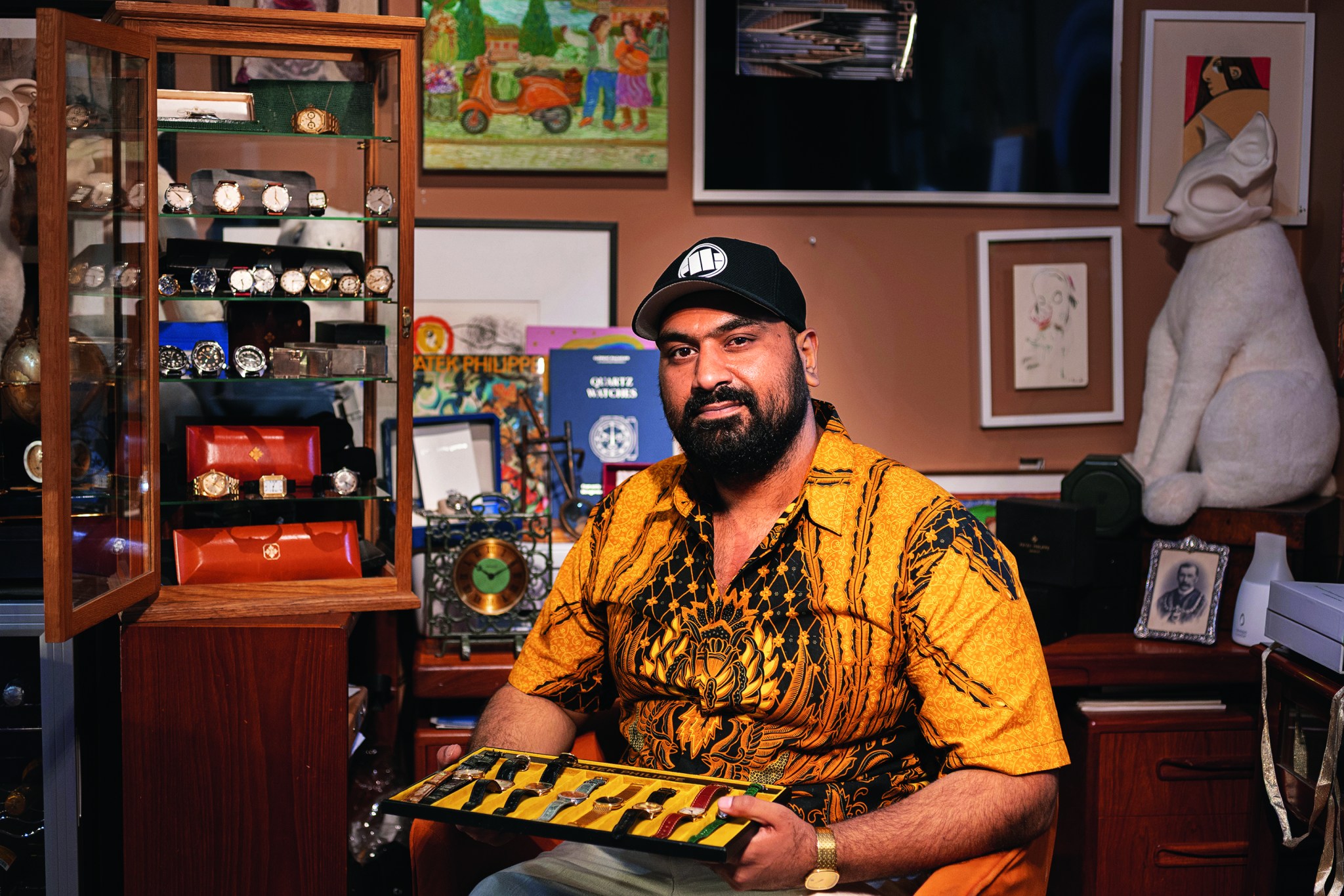
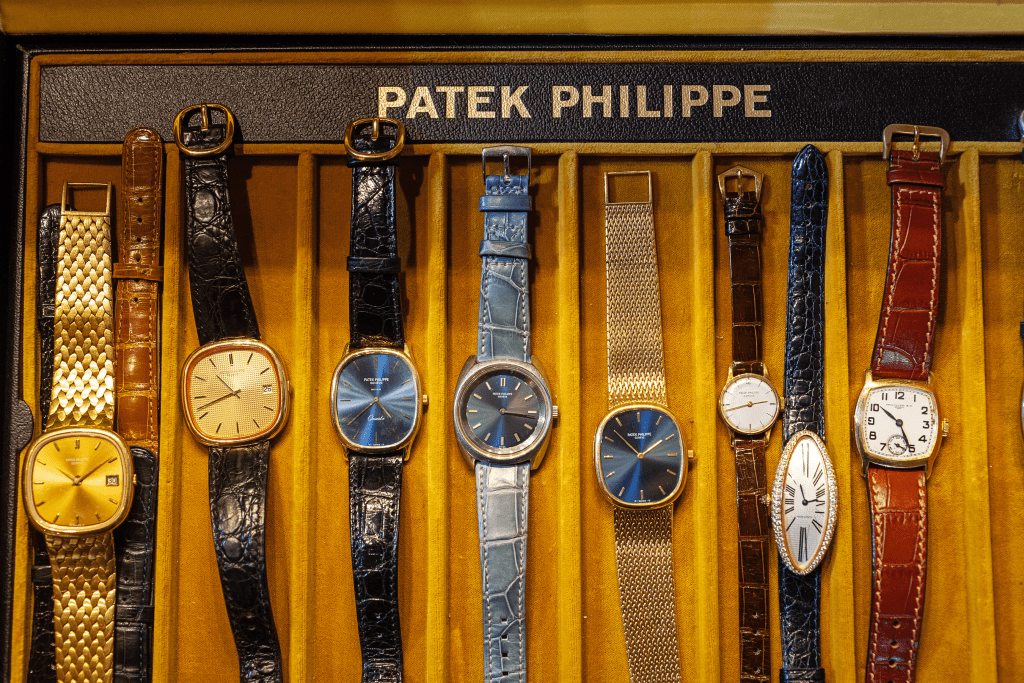
The experience had a warm, old-school glow, not unlike the mid-century Pateks that are Shamshad’s specialty. Those were out of my budget, so I lingered on his deep bench of Omega De Villes, originally a Speedmaster subset whose popularity earned the design its own collection. The unusual hexagonal dial of the 1970–71 De Ville Reference 111.0103 got me. I watched its hands, as thin as eyelashes, ticking across a linen-finish champagne face and thought, I want that.
In my case, the decisive click turned out to be the clasp closing around my wrist.
This article appears in the October/November 2026 issue of Fortune with the headline “The algorithm of desire: How social media remade the rare watch market.”
Wrist Candy
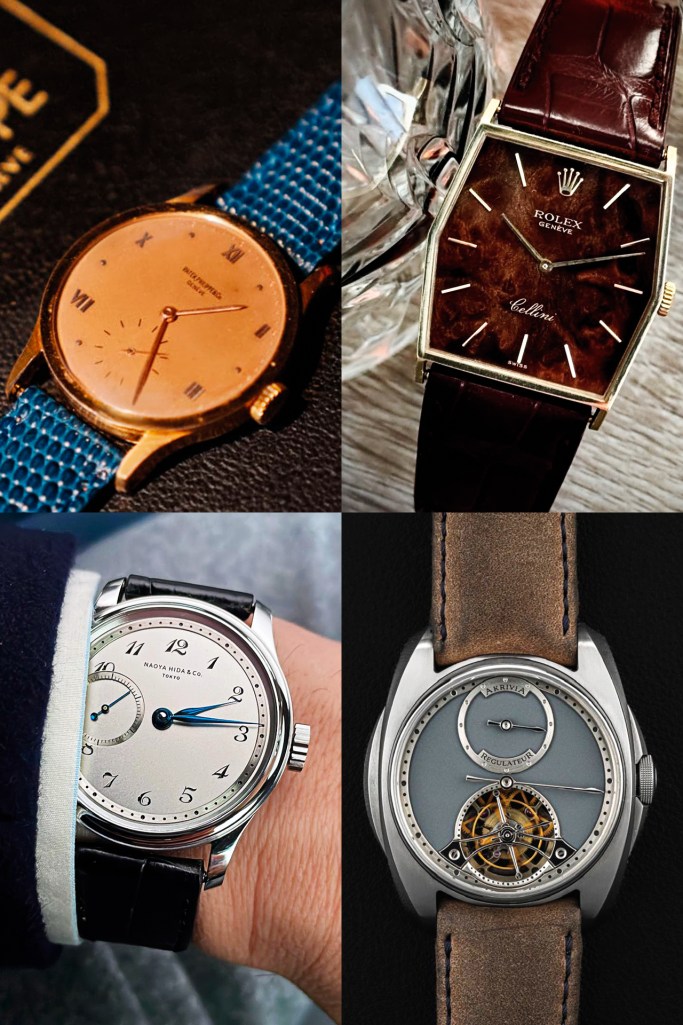
Four watches with Instagram main-character energy
1942 Patek Philippe 570
A big boy from a time, says Rahul Shamshad, “when men were wearing much smaller watches,” this antique Patek stands out for its presence on the wrist and its rose-gold dial. “Only a handful of this configuration ever entered the market.” A Patek devotee paid $54,500 to add it to his collection.
1976 Rolex Cellini Wood Dial 4122
“Modern Rolex is so conservative, but Rolex before the 1990s was a brand that experimented and innovated a huge amount,” says Tom Collins. One example he “really regrets selling” for about $7,400 last year is this handsome Cellini with a hexagonal burled-wood face.
2017 Akrivia Regulator Tourbillon AK04
“This was the fourth model produced by Rexhep Rexhepi, the genius visionary behind the Akrivia brand,” says Adam Golden. “It is estimated that less than 10 of these were produced in total.” Golden won’t disclose the sale price, but puts its current market value between $3 million and $5 million.
2022 Naoya Hida & Co. Type 1D
A handsomely proportioned modern watch in disguise, this edition from independent Japanese watchmaker Naoya Hida features hand-carved numerals and an interesting inset seconds track. “It’s very subtle and elegant,” says Paul Croughton, who paid around $14,000 for it. “You wouldn’t really know what it was unless you’re particularly into watches.”
This story was originally featured on Fortune.com