
Welcome to Eye on AI. Beatrice Nolan here. In today’s issue:
- The Facebook whistleblower on Meta’s AI bet.
- OpenAI’s human rights lead: What the military could do with AI ‘keeps me up at night’
- Fired OpenAI safety staffers urge company to protect AI monitoring.
- And voters increasingly see AI as a threat to American workers.
First, a quick note: Fortune Brainstorm AI returns to San Francisco Dec. 7-8 to convene technologists, entrepreneurs, Fortune Global 500 executives, investors, policymakers, and the brilliant minds in between to interrogate the most pressing questions about AI. We will explore how organizations are deploying and scaling AI in their industries. Come join me there.Apply to attend now
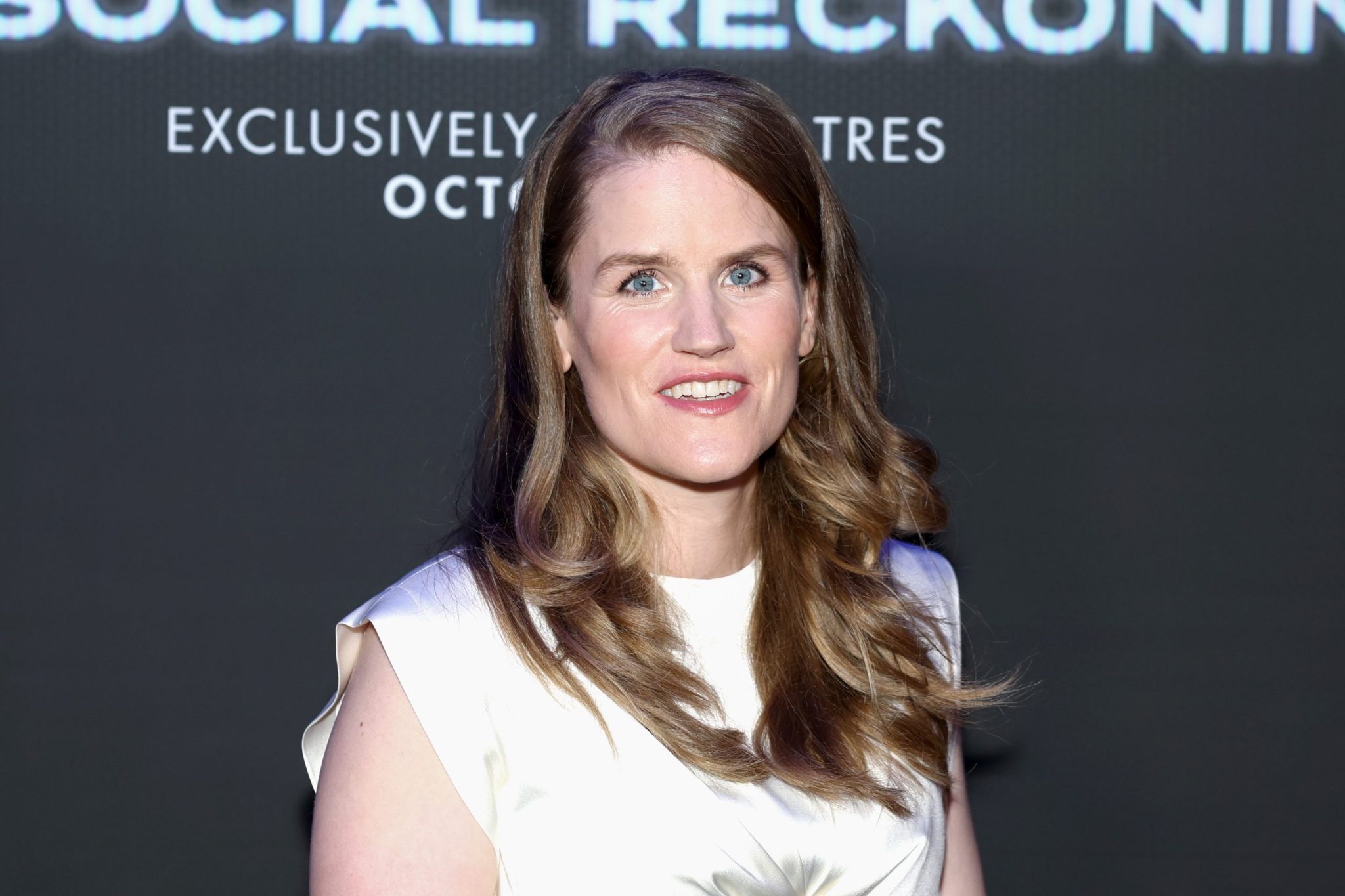
This week, director Aaron Sorkin’s The Social Reckoning, a follow-up to The Social Network, opens in U.S. cinemas. The 2010 film was about how Facebook was founded. This one is about the company’s moment of reckoning: whistleblower Frances Haugen’s decision in 2021 to walk out of the company with tens of thousands of pages of internal documents.
Haugen, played by Mikey Madison in the new film, was a product manager on Facebook’s civic integrity team. She gave the documents to Wall Street Journal reporter Jeff Horwitz, played by Jeremy Allen White, and they later became the basis of an investigative, award-winning series of stories that the Journal called The Facebook Files. Among other things, the series revealed that the company’s own researchers had found Instagram made body image issues worse for some teenage girls. Haugen filed whistleblower complaints with the SEC and testified before the Senate and her disclosures have since helped drive a wave of lawsuits against social media companies.
I spoke with Haugen this week about how Facebook (now called Meta, of course) has changed since she walked out, what she makes of Meta CEO Mark Zuckerberg’s AI push, and what she wants employees at the leading labs to take from the film.
“My hope for the movie is that people, especially at the frontier AI labs, see themselves in the Frances Haugen character. If they see something, feel like they can say something,” Haugen told Fortune.
But, in a moment where the AI industry is filled with existential anxiety, and even its leaders are calling for brakes, Haugen isn’t advocating for a pause in AI development.
“We have never done a prohibition where we could properly check,” she said. “Slowing down just means whoever doesn’t want to slow down wins.”
Instead, she’s backing a different part of Dario Amodei’s recent plan: independent auditors. Amodei proposed that frontier labs give third-party evaluators ongoing, “employee-like access” to check safety practices and report incidents, and OpenAI CEO Sam Altman said his company would do the same. Haugen says the best mitigation to AI harms is for this kind of auditing to be required by law across the industry, the way outside auditors are entitled to review the books at banks.
AI companies already publish far more research into their products than Facebook ever did, she said, but she questions whether what they publish reflects what’s actually happening inside.
As for Meta, Haugen views Zuckerberg’s recent AI efforts as “playing with fire,” driven by his desire for a positive legacy. She also doesn’t think the company has changed since she blew the whistle. “I have not seen a culture change that shows that they have…turned a new leaf,” she said.
Meta is still behind leading labs like Anthropic and OpenAI—and Zuckerberg has been prominent in pushing back on regulatory efforts.
“He wants to catch up, so he wants there to be no constraints until he’s at least at the same table as the big boys,” she said of Zuckerberg’s anti-regulation stance, “not just pretending to be where the big boys are.”
(Fortune contacted Meta for comment on Haugen’s claims but the company did not reply before press time.)
AI content moderation
How Meta moderated harmful content on its platform was a big part of Haugen’s 2021 disclosures. Some of the internal documents she took suggested Facebook acted on as little as 3% to 5% of hate speech on the platform and she has previously said the company’s decision to dissolve her civic integrity team after the 2020 election helped push her to come forward.
Last year, Meta shifted its automated content moderation toward high-severity violations and replaced some its U.S. third-party fact-checking program with an X-style Community Notes system. This year it has gone further. In March, it said it would rely less on outside vendors and human contractors for enforcement, and in June the Financial Times reported that AI models had already taken over about half of human review requests.
Haugen expects better models to make fewer mistakes and catch more harmful content, but not all of it. When she left, the company was catching about 5% of harmful content, she said. But she predicts that even very advanced AI might only reach 10% to 20%, because language is so nuanced.
“The real solution is designing the systems from the ground up to be safer, not just trying to clean them up in the end,” she said.
With that, here’s more AI news.
Beatrice Nolan
beatrice.nolan@fortune.com
@beafreyanolan
This story was originally featured on Fortune.com