

Welcome to Eye on AI. Beatrice Nolan here. In today’s issue:
- Elon Musk puts neoclouds on notice.
- Anthropic’s S-1 reveals two areas where OpenAI could have the upper hand.
- Democrats press Anthropic on AI risks ahead of its IPO.
- And, are our AI agents already influencing us too much?
Is the end of the neocloud nigh? Elon Musk certainly seems to think so.
Neoclouds are a new and increasingly popular type of business that has exploded alongside the AI boom. The business model is simple: Buy up in-demand AI chips, build or lease the data centers to house them, and rent out the computing power to AI companies. As the demand for data centers has grown, so has the number of neoclouds promising to provide them.
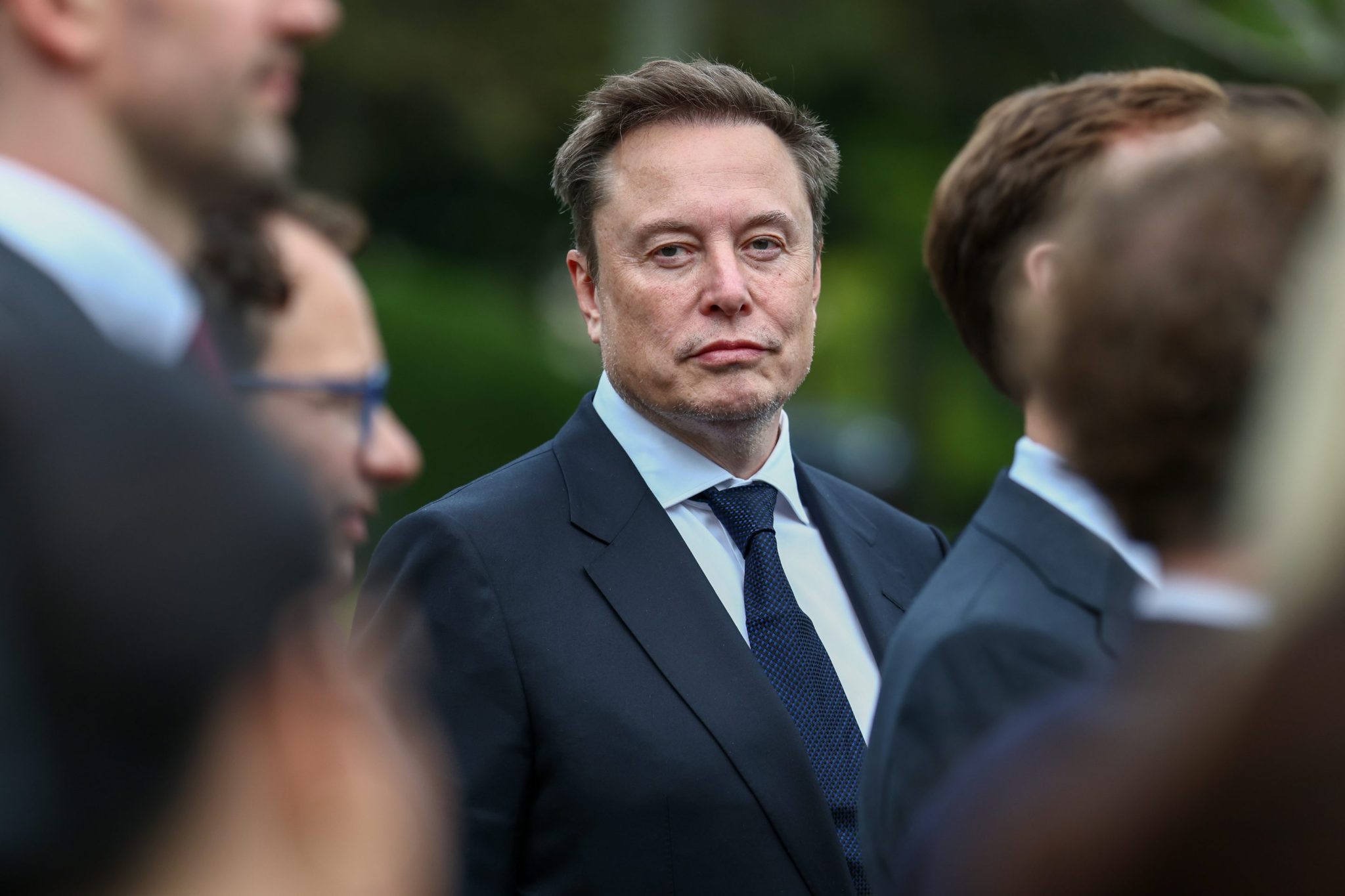
But on Sunday, Musk had a warning for the upstarts. In an X post, he predicted that more than 200 of them could face “guppy-level death and consolidation.”
There are a few reasons for this. First, as Musk points out, lenders are reluctant to finance businesses that depend wholly on AI demand. Second, investors are already questioning the debt-fueled expansion of these companies. And with the Fed hinting at a December rate hike, that debt is only getting more expensive.
Neoclouds are also just risky businesses. Rather than build all the capacity themselves, Big Tech and the AI companies sign contracts with neoclouds, which take on debt to build data centers and acquire the computer chips needed to run AI workloads. If demand holds, everyone wins. If it falters, the hyperscalers can, in theory, shift their capacity to other cloud work while the neoclouds are left with expensive data centers, rapidly aging chips, and loans to repay.
There’s also concerns that Nvidia is propping up the industry in ways that might not be sustainable. The chipmaker has invested more than $7 billion directly in AI cloud providers and its latest quarterly filing shows up to $164.5 billion in guarantees and commitments tied to the data centers running its chips. It’s an effective way to keep GPU sales flowing, but it also means that if the neoclouds stumble, Nvidia may also suffer.
Shares of CoreWeave, Nebius, and Iren dipped on Monday morning following Musk’s comments, though all three recovered by the close. Still, it was another knock for a sector that has faced some recent challenges.
Neocloud vs. neocloud
Musk also isn’t the only one saying the neocloud sector may be headed for trouble. I spent last week in Berlin at Nvidia’s GTC event where I met with several neocloud companies and, surprisingly, most agreed some kind of consolidation in the market is looming.
“I don’t think it will be like a light consolidation. It will be a massive wave,” Raimund Riedl, Volta’s chief financial officer, told me. “We’re going to start to see it in the relatively near future. There will start to be M&A activity, and we’ll consolidate.”
“We’re not worried about being one of those dead bodies, so to speak, because of the nature of this model,” he added.
Broadly, there are two types of neoclouds. The first is the established players, like CoreWeave, Nebius, and Iren, which have data centers and big customer contracts, often funded with big loans. Some, like Iren and CoreWeave, are former Bitcoin miners that already at least some power and sites. The second is the newer startups, which often have little more than a business plan.
Volta is one of the new crowd. It came out of stealth in August and says it wants to lean less on venture capital and more on the huge pool of institutional money that funds roads, power grids, and cell towers, though it did raise $300 million from investors including Andreessen Horowitz and Nvidia. It already has a $10 billion contract, reportedly with Anthropic, that it has used to help secure a $5 billion debt deal, partly underwritten by JPMorgan and Goldman Sachs.
“It’s just like every other new technology sort of hyped area. Everybody piles in,” Paul Miller, a principal analyst at Forrester, said of the neocloud market. “They will not all survive. There’s a lot of dead wood that needs to be cut out.” Miller added he expected to see the start of some consolidation over the next year, but then much more after that.
Gartner predicts that 80% of independent neoclouds will “cease independent operations” by 2030, while Bernstein analysts estimate that only 35% of the data center capacity that has been announced in North America will ever get built, according to a Bloomberg report. As access to the grid remains a bottleneck in many countries and public backlash against data center shows no signs of easing, getting a data center built and connected to power is no mean feat.
To make matters worse, it also might be getting harder to see the demand. In Berlin, one European VC told me that most hyperscalers and larger AI companies are “hedging their bets” and overcommitting to data center deals—fearing many won’t make it off the ground.
Survival of the fittest
Is all this bad for the entire neocloud industry? Well, it depends on who you are.
A shakeout would take some of the froth out of the sector, Miller said, but it doesn’t mean the AI buildout is over. Demand for computing power is still running hot. The problem is that too many companies have promised capacity they may never deliver. When those players fold, their customers won’t disappear, they’ll just go looking for someone who can actually deliver.
That’s good news for the neoclouds with real data centers, real chips, and real customers, Miller says: “Now those companies get to tell customers: ‘I’ve got a data center. I’ve got chips. I’ve got capacity. I know how to run them. I might charge you a little bit more, but I can take you today.’”
With that, here’s more AI news.
Beatrice Nolan
beatrice.nolan@fortune.com
@beafreyanolan
But first: Cyber threats don’t stand still—and neither do the startups working to stop them. From AI-powered deception to hidden vulnerabilities, businesses face an increasingly complex security landscape. For the fourth annual Cyber 60, Fortune, Lightspeed Venture Partners, and AWS spotlight the most innovative cybersecurity startups helping companies anticipate threats, strengthen defenses, and protect their operations. Read the full list here.
This story was originally featured on Fortune.com