

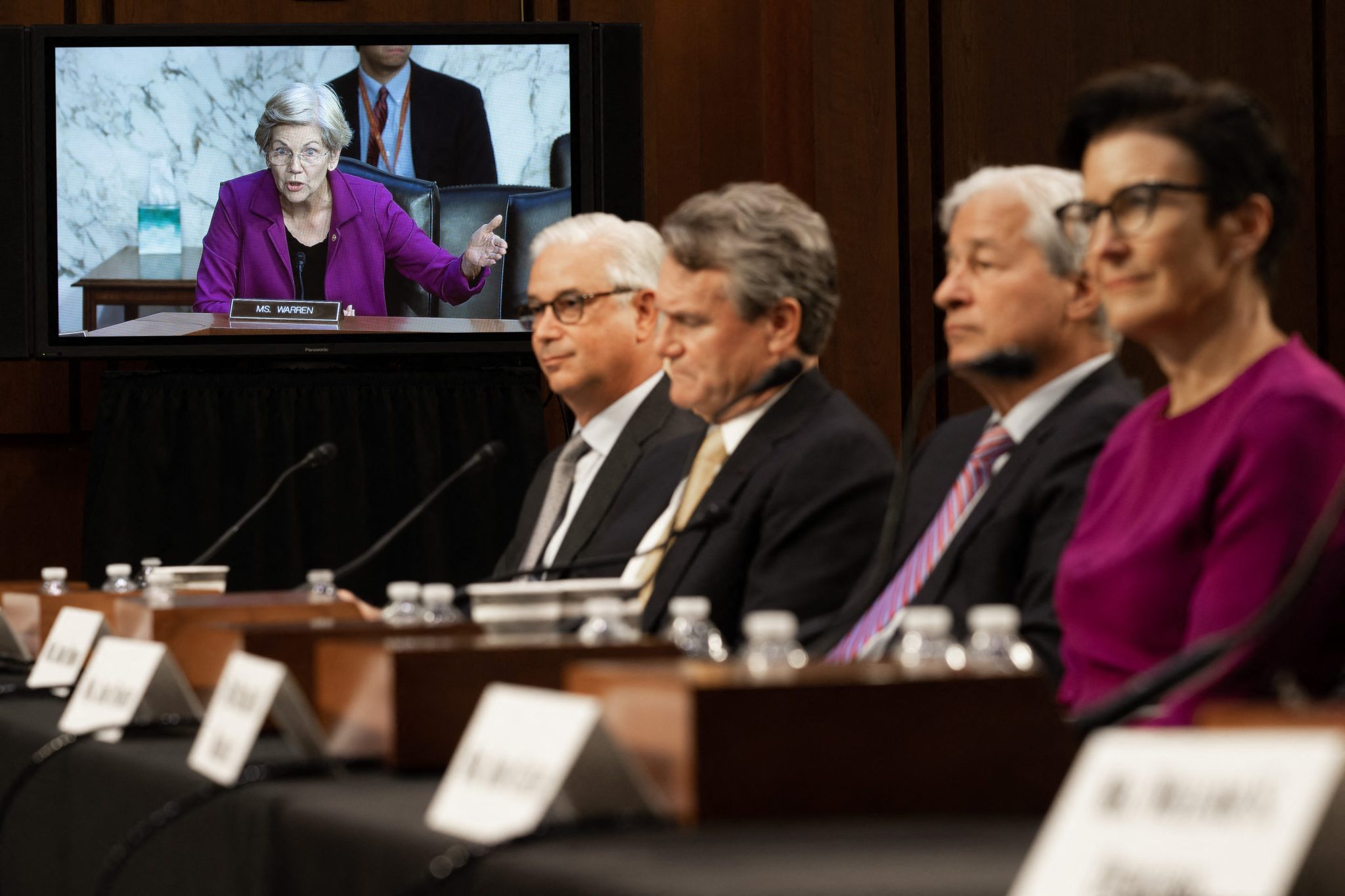
The giant blue wave that swept Congress this week has left Democrats in a celebratory mood. The vibe on Wall Street, however, is less upbeat as lawmakers like Sen. Elizabeth Warren (D-MA), who have expressed pointed hostility towards the financial industry, prepare to wield oversight power. This would seem to bode ill for behemoths like JPMorgan, Goldman Sachs and Morgan Stanley. But the banks can take comfort in the view of analysts and legal experts, who say that the fallout from the mid-term election is likely to amount to little more than “political theater” and public shaming—at least for now.
For Wall Street, the first signs of the new political order are already appearing. Just days after the election, CNBC reported that Senate Democrats are gearing up to investigate JPMorgan for the bank’s relationship with late sex offender Jeffrey Epstein, citing a source familiar with the matter. JPMorgan declined Fortune’s request for comment on the matter.
Before that, on the same evening that polls closed, Sen. Ron Wyden, an Oregon Democrat who is expected to chair the Senate Finance Committee, posted a simple message on X: “Subpoenas.”
It was a one-word preview of the scrutiny Wall Street could face when Democrats take control early next year.
“I think there’s going to be a tremendous amount of political theater,” Joann Needleman, head of the financial services regulatory and compliance practice at law firm Clark Hill, told Fortune.
That could mean subpoenas, investigations, hearings, and more strongly worded letters demanding answers from top executives. Among the lawmakers expected to lead that charge is Warren, who is widely expected to become the new chair of the powerful Senate Banking Committee.
“Elizabeth Warren is going to bring all of these firms in and talk about all the billions that they’ve made and all the things that they have charged consumers,” Needleman said. “The bigger banks will just be called in and be put to shame by various committees that want to inquire about them.”
Warren has already shown how aggressively she is willing to challenge the financial industry. She has previously called for criminal probes into banking execs, described the private-equity industry as legal “looting” and even written a bill that could make it easier to prosecute executives. Longtime Wall Street watchers, though, say any upcoming investigations or oversight hearings are par for the course.
“The people who were elected have mandates, and you have to expect them to follow through on those mandates,” said Mike Mayo, Wells Fargo’s head of U.S. large-cap bank research.
But that doesn’t mean all of this will result in significant disruption to how the big banks operate on a day-to-day level.
“We could certainly see tougher language, more congressional hearings, and increased scrutiny of industries … but translating that rhetoric into meaningful legislation is an entirely different challenge,” Ken Mahoney, president and CEO of Mahoney Asset Management, said in a statement to Fortune.
After all, President Donald Trump still has veto power. Plus, financial regulators such as the Federal Deposit Insurance Corporation and the Office of the Comptroller of the Currency remain under Trump-appointed leadership. Those agencies still have the authority to enforce the rules for banks, so a change in the congressional majority would not reverse the administration’s agenda.
Wall Street has already benefited massively from Trump’s second term in the White House. The FDIC rolled back Biden-era merger policies, making it easier for big banks to facilitate megadeals. Regulators have also relaxed key capital constraints, giving banks greater flexibility to deploy their balance sheets.
“The legislative leaders, at a minimum, have a full pulpit to relay their messages,” Mayo, who started his career as a bank analyst at the Federal Reserve, told Fortune. “The degree that those messages translate to actual laws or regulations is a lot less. So I think it’s a matter of setting a tone, or the pace and degree of deregulation, as opposed to changing the direction.”
Citi analyst Ben Gerlinger echoed that view. “They can subpoena companies. They can bring in management. But it really, frankly, can’t change their business models too much without a regulatory agency being that acting figure,” Gerlinger told Fortune. “They can make life difficult, but they can’t necessarily change the overall tenor of where the banks are projected to go.”
“But at the end of the day, earnings drive banks,” he added. “I think earnings are still in a really good spot, in addition to capital levels.”
If the blue wave outlasts Trump and brings new regulators to Washington, that’s a different story—but not one for today.
This story was originally featured on Fortune.com