

Global AI stocks sold off sharply over the past week, following Jensen Huang’s resignation as Nvidia CEO and tighter rules around semiconductor exports. Not even Anthropic’s blockbuster IPO on Thursday revived sentiment. Tech-heavy indices fell sharply: the Nasdaq 100 fell 9.1% last week, while the PHLX Semiconductor Sector Index is down by 13% over the same period.
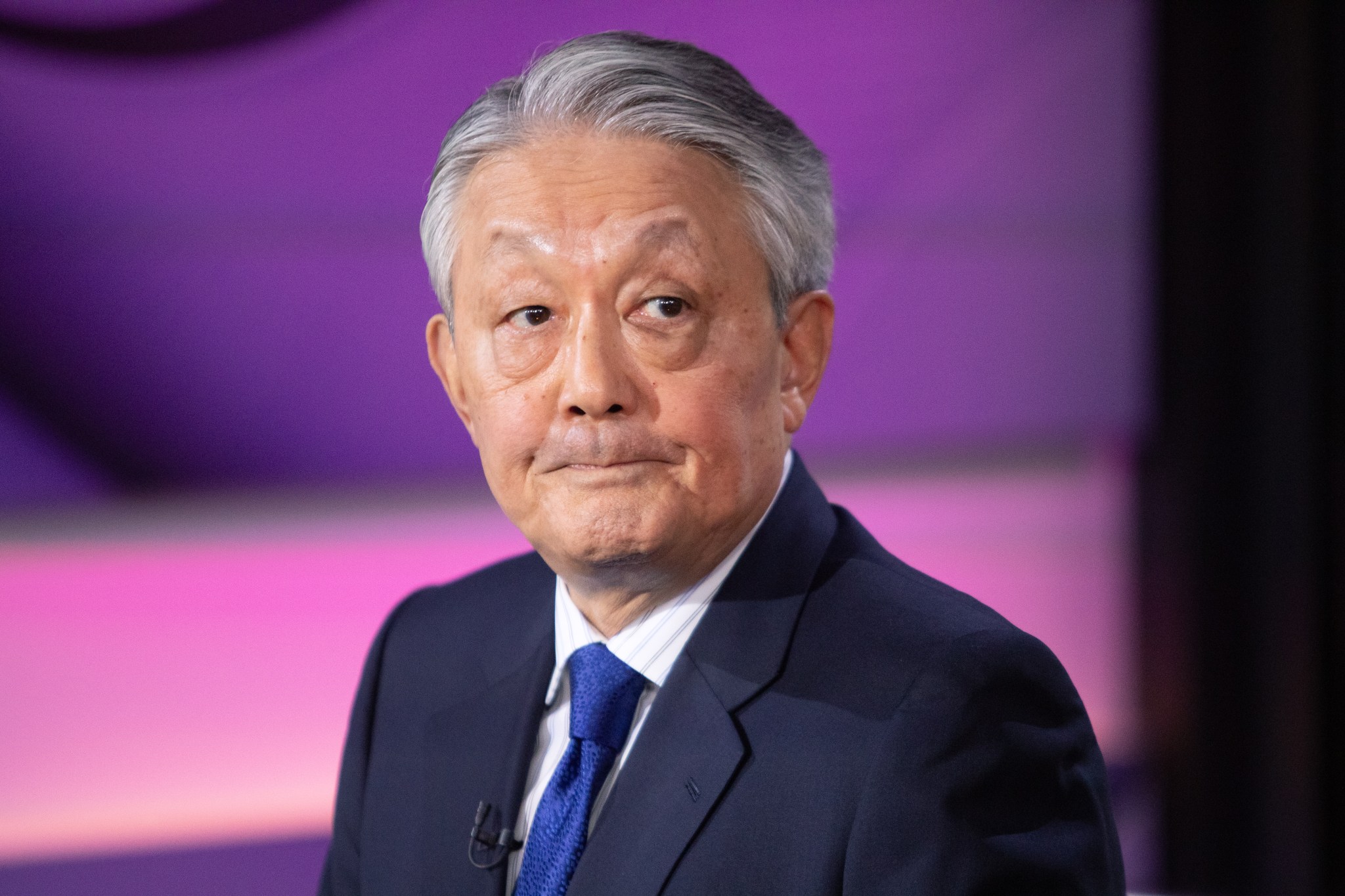
Yet Hiromi Yamaji, CEO of the Japan Exchange Group (JPX), isn’t too worried about the tech turmoil hitting Japan too hard.
“The weight of AI or semiconductor-related stocks in the TOPIX is only 11.3%… in the S&P 500 it’s 20%, in the Nasdaq100 it’s 27%, in Taiwan it’s 47%, and in Korea it’s 60%,” Yamaji tells Fortune. “If there is much less trading volume of AI-related stocks, then we will see some decrease in trading value, but the impact won’t be as much as in other markets.”
The TOPIX index, which covers the broader Japanese equity market and was developed by JPX, fell 7% last week. Japan’s other benchmark index, the Nikkei 225, dropped by 8% over the same period. (The Nikkei 225, developed by Nikkei Inc., tracks a smaller number of large Japanese companies, including more tech manufacturing companies).
Taiwan’s TAIEX index—where chipmaker TSMC makes up over 40% of the weight—crashed by 13% last week, prompting the island’s government to take measures against short-selling on Thursday to stabilize markets.
Japanese equities hit historic highs in the summer of 2026 following a series of corporate governance reforms Yamaji launched, which were aimed at improving market transparency and fairness. The rules have strengthened rules regarding protection of minority shareholders and cross-shareholding within Japan’s sprawling conglomerates. Since April 2025, JPX has mandated that firms on its Prime Market board must give disclosures in both English and Japanese.
Between 2024 and 2026, average trading volume on the Tokyo Stock Exchange more than doubled from 5.7 trillion yen ($35.9 billion) to 12 trillion yen ($75.5 billion). The amount of Japanese stocks bought by foreign investors also jumped from 5.4 trillion yen ($34 billion) in 2025 to 10.8 trillion yen ($68 billion) in the first ten months of 2026, according to JPX data.
“We need to [undertake these reforms] in order to improve the quality of our listed products, but we have to get support from those listed companies as well,” Yamaji explains. “That takes time… [Many] Japanese traditional companies don’t like whatever we’re doing, like the corporate governance reforms.”
The Japanese government has also worked to increasingly shift household cash into the stock market. In 2024, they revamped the Nippon Individual Savings Account (NISA)—a government tax-free investment program for Japanese residents—by introducing an unlimited tax-free period on dividends and investment gains and raising the annual investment limit to 3.6 million Japanese yen ($22,600).
The number of NISA accounts jumped from 22.5 million in 2024 to over 31 million by September 2026. The total amount invested via these accounts increased from 31 trillion Japanese yen in 2023 to 88.4 trillion Japanese yen in 2026. In an August op-ed for International Banker, Yamaji noted that this growth was led by those under 50.
In April, the JPX updated its request to listed companies to explain how they will start allocating more cash to growth, rather than just using surplus capital for share buybacks. Corporate share buybacks had reached a multi-year high in 2025, amounting to 22.3 trillion yen ($140.3 billion).
“Companies have to deliver results, that is, actual growth,” Yamaji says. “This is the more difficult stage since there’s no one-size-fits-all solution. Each company has to formulate their own plan based on their own unique situations.”
The JPX also hopes to improve its appeal to non-Japanese companies. Currently, just five of the 3,884 firms listed on the TSE are foreign companies.
The TSE launched the “Asia start-up hub” initiative in 2024 that helps Asian startups raise money and set up in Japan. Firms from ten economies across Asia—including Singapore, Taiwan, Hong Kong, Mongolia and the Philippines—have joined. Thus far, 26 firms, ranging from Vietnamese music start-up POPS to Taiwan-based Internet of Energy (IoE) platform NextDrive, have enrolled in JPX’s incubator program.
“It’s an ecosystem to support Asian start-ups to come to Japan, not only for the TSE listing, but also to grow their own businesses by using the Japanese market as an incubator,” Yamaji says. “The Japanese economy is big enough for them to grow.”
This story was originally featured on Fortune.com