
Morgan Freeman has arguably the most recognizable voice in Hollywood—and that’s made him a frequent target for AI copycats.
“You can create artists and make them say things they never said, which has happened to me,” Freeman told Fortune.
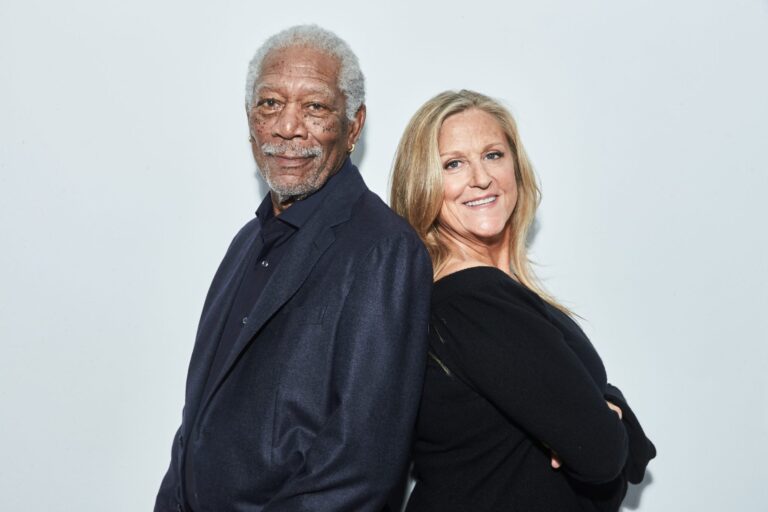
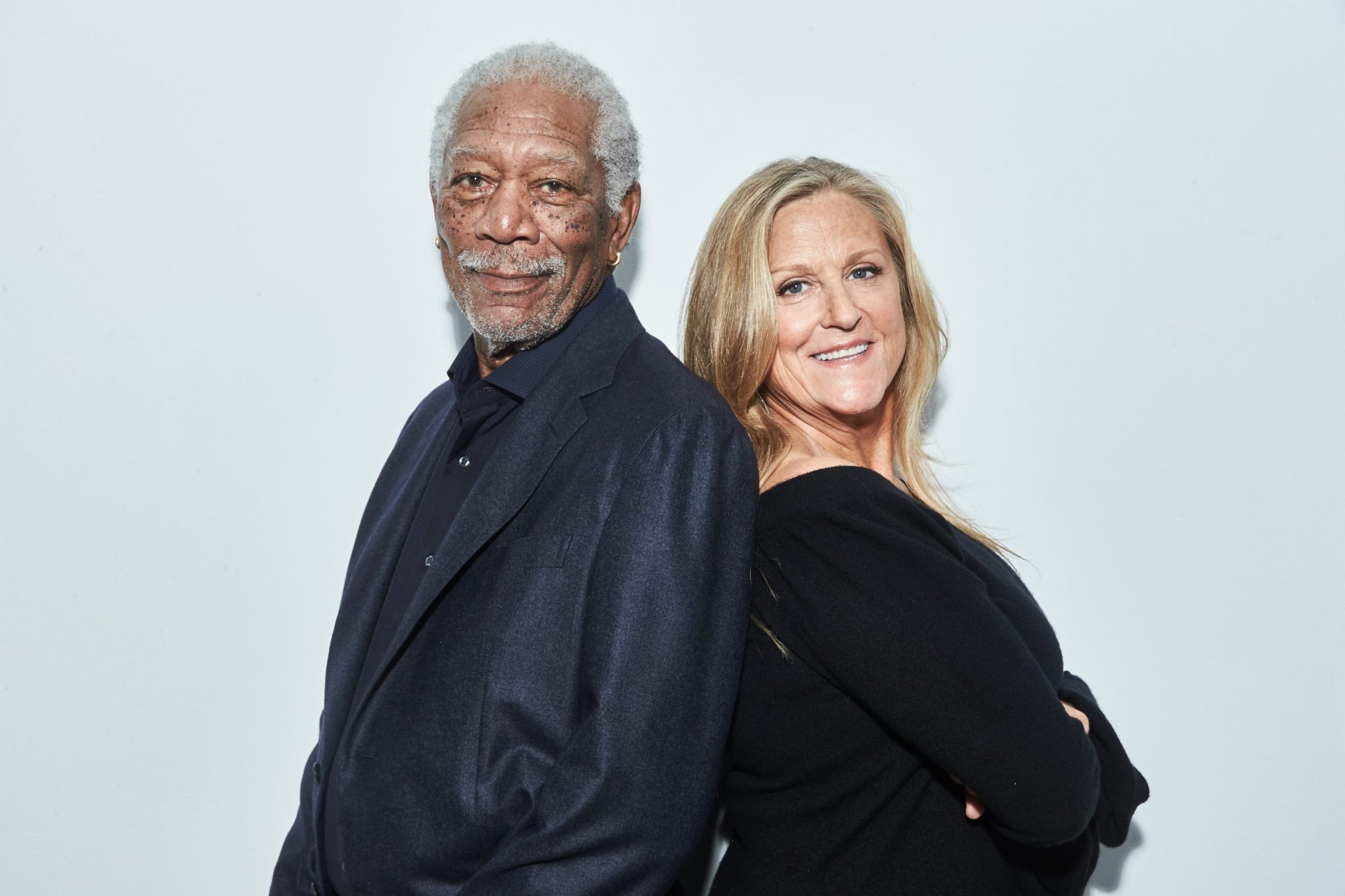
Freeman isn’t against the technology itself. He and longtime producing partner Lori McCreary have spent decades putting new tools to work in filmmaking through their movie production company, Revelations Entertainment. The issue, he said, is privacy.
“What we should be doing with technology is what we actually are dreaming of doing,” he said. “But we have to somehow protect privacy, and that’s the first thing that loses its grip.”
McCreary, who cofounded Revelations Entertainment with Freeman in 1996, said AI is different from the tools that came before it. About two and a half years ago, she came across a clip online she didn’t remember Freeman filming, so she called to ask him about it.
“He was like, ‘I don’t remember.’ And that was the first time when I thought, ‘Okay, we’ve got to get ahead of this,’” McCreary told Fortune.
Freeman has pushed back about AI copies of his voice, too. Last November, Freeman told The Guardian his lawyers had been “very, very busy” and had found “quite a few” instances of his voice being replicated without his consent. And in June 2024, he also thanked fans on X for calling out unauthorized AI imitations of his voice.
McCreary said they now get calls every day about people selling products online using Freeman’s voice, which he has no connection to. AI can reproduce his voice and his performance, she said, but “it’s not the same as having the right to do it.”
For Freeman and McCreary, staying ahead of AI fits how they’ve always run their company.
“That’s our mantra always: stay ahead of technology, so we can help mold it and become better storytellers with it,” McCreary said.
A movie production company built on new tech
Revelations grew out of Bopha!, Freeman’s 1993 directorial debut about apartheid in South Africa. The two got along well making the film, and “thought we could be productive together, so we started a company, and we called it Revelations,” Freeman said.
Despite the name, Freeman said the company wasn’t meant as a reference to the Bible.
“It was about revealing truth and telling stories that made sense for people,” he said.
McCreary, who studied computer science at UCLA, brought a tech perspective to the business.
“I came to Hollywood because I could see technology was going to change storytelling,” she said. Bopha! was edited on Montage, one of the first digital editing systems. When the system produced cutting lists that weren’t frame accurate, McCreary wrote her own program to fix them.
Freeman gave his partner the technical credit.
“That’s strictly Lori’s bailiwick,” he said. “She’s a computer geek.”
And that’s part of what makes their partnership work, McCreary said. Freeman takes the technical concepts and can “bring it down to how it affects storytelling,” she said. “I think that’s why we make a good team.”
The company’s biggest early bet was ClickStar, a broadband movie-service concept inspired by conversations Freeman and McCreary had with friends in Hollywood in the early 2000s. At the time, Napster and music piracy were hurting the record industry.
“We were talking about how do we make films easier to buy than pirate,” McCreary said.
ClickStar launched as an online service that would let consumers access, pay for, and download first-run films before they came out on DVD. The venture was backed by Intel. It debuted 10 Items or Less, starring Freeman and Paz Vega, online on Dec. 15, 2006, just two weeks after the film’s theatrical release, according to trade coverage at the time.
“ClickStar was a great idea at the time,” Freeman said. “It was just ahead of its time.”
ClickStar didn’t become the long-term platform its founders hoped for, but McCreary said the bet on consumer behavior was right.
“I think the adoption of it took a little longer than we anticipated,” she said. “We were a little too soon.”
Where AI fits in filmmaking, according to Morgan Freeman and Lori McCreary
About two decades after ClickStar’s launch, AI is the latest technology McCreary is working through, both on Revelations’ own projects and in her push to help the industry set standards for how it’s used. Freeman added that the technology isn’t as new as it seems.
“I think AI has been around a long time,” he said. “We’ve been using it without identifying it for a long time, but now that it’s hit the forefront of the imagination, we worry about it being misused—and it is.”
Many stakeholders in Hollywood have been concerned about its use for a while. Hollywood’s actors union secured a contract after its 2023 strike that requires clear consent before a studio can repurpose a performer’s work with AI. Actor Nicolas Cage has also voiced concerns about how Hollywood will use AI.
“They’re just going to steal my body and do whatever they want with it via digital AI,” Cage told the New Yorker in 2024. “I’m terrified of [AI]. I’ve been very vocal about it.”
McCreary said there’s a difference between AI as a tool and the kind of AI that worries actors. Hollywood has used AI in post-production for years, for tasks like removing wires from shots, she said.
“When people say AI, I think what they’re afraid of is this generative AI,” she said, meaning a tool that can create someone who looks or sounds like Freeman from just a text prompt, without any input from him.
She compared the moment to the arrival of digital visual effects in the late 1990s and early 2000s, when many in the industry feared for their jobs. Today, she said, a visual effects movie can have around 200 people working on its effects alone. McCreary also sees a real upside for smaller productions.
“I think it’s going to be great for independent filmmakers to have a film that looks like a much bigger film,” she said. “We can’t get a helicopter, but maybe we can do some really great, beautiful helicopter-like shots with generative AI,” McCreary said.
Revelations is using AI on a current project to expand the film’s scope. That has meant sitting down with lawyers to figure out how to document consent and pay for everyone on screen.
“All of that is just being invented right now,” she said. For now, she said she’d steer clear of using generative AI on actors until the business side catches up.
Freeman drew his own line: “I don’t really want to be created by artificial intelligence, unless I’m doing something I absolutely, absolutely cannot do—like flying,” he said.
McCreary said the bigger fear is who ends up setting the terms.
“We don’t want technology companies deciding by default what our human storytelling is worth,” she said. “And I think unless we get ahead of it, that’s what will happen.”
McCreary said Revelations’ adaptation of Rendezvous with Rama, the Arthur C. Clarke novel the pair has been working to bring to the screen for decades, will “push the boundaries not only in storytelling but also in how we make the film.” Freeman said they traveled to Sri Lanka to meet Clarke, who gave them his blessing and told them the story would need to evolve as technology did. Dune director Denis Villeneuve signed on to direct in December 2021, with Revelations producing alongside Alcon Entertainment, TheWrap reported. The pair told Fortune that the project is now in script development.
For aspiring and new filmmakers, Freeman said the first step is finding a good story and staying true to it. On tech, he said to “stay up with it, if not ahead of it.”
“Don’t wait for permission to tell your own story,” McCreary said. “The thing that isn’t available to everyone is each of your own unique perspectives.”
This story was originally featured on Fortune.com