

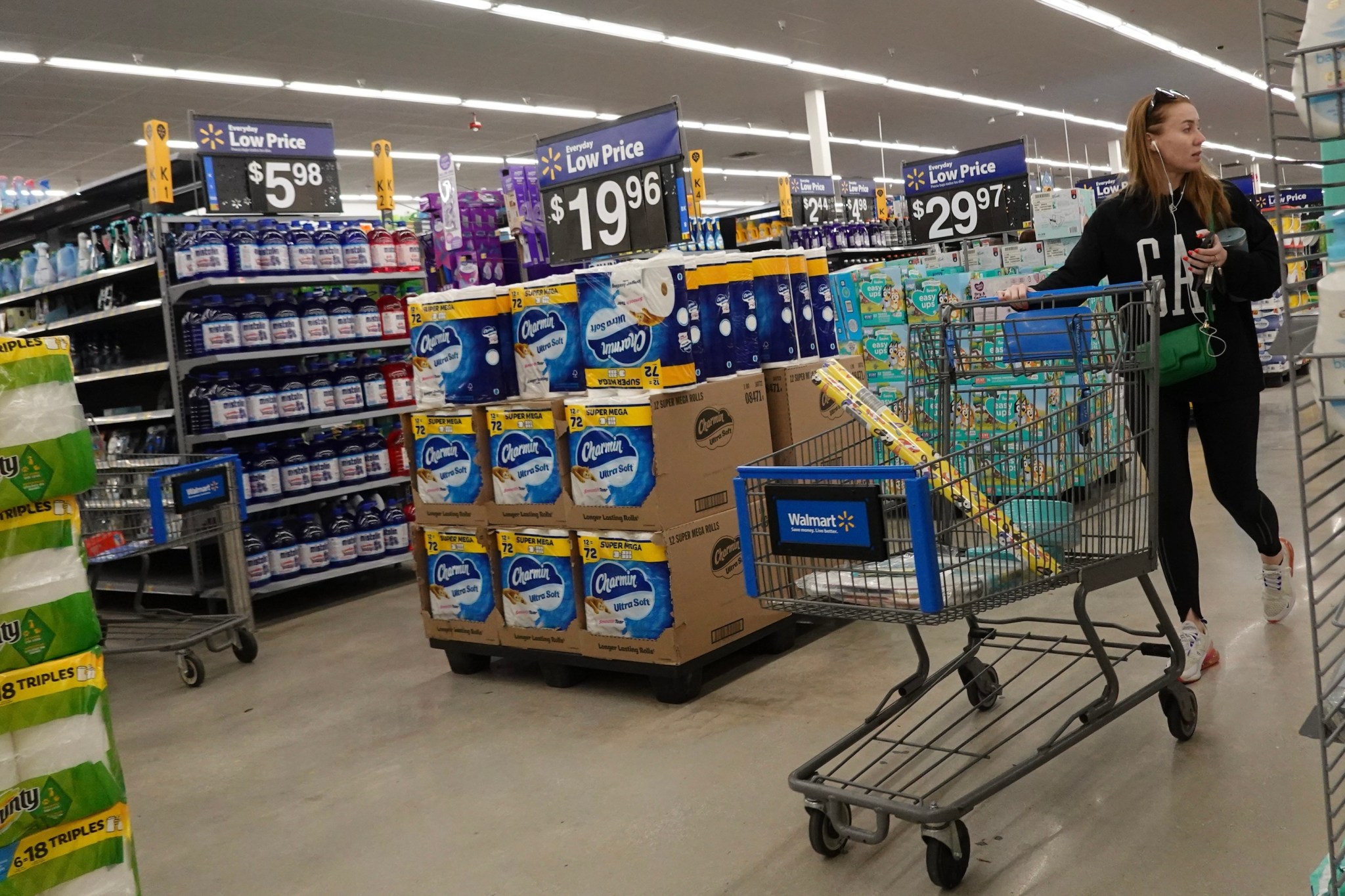
Walmart is known for its bargains, but its growth increasingly comes from shoppers who don’t strictly need them. Six-figure households like a good deal, too.
Upper-income households led Walmart’s U.S. market-share gains, the company said Nov. 19 as it reported fiscal third-quarter results. Revenue rose 5.2% to $188.8 billion from $179.5 billion a year earlier and topped Wall Street’s forecasts for both sales and profit.
E-commerce did the heavy lifting. U.S. online sales rose 23%, the 11th straight quarter up more than 20%, while global e-commerce grew 17%.
“We delivered strong results, growing our core business and gaining market share,” CEO John Furner said in the release. Walmart raised its full-year outlook for the third time this year and now expects net sales growth of 4.9% to 5.2% and adjusted earnings per share of $2.84 to $2.89, up from $2.80 to $2.87.
Not everything accelerated. U.S. comparable sales rose 2.9%, well below the 4.5% gain a year earlier, and the new outlook came in more conservative than analysts expected, the Associated Press reported.
The split matters well beyond Bentonville. With more than 150 million customers shopping its stores or website each week, Walmart is one of the clearest windows into American spending heading into the holidays, and right now that window shows higher earners stepping up while others pull back.
Higher earners, younger members
Furner said in February that most of Walmart’s share gains came from households earning more than $100,000, and in June he told reporters that higher-income customers were visiting more often and buying more.
The new customers also skew young. At Sam’s Club, Gen Z and millennials made up more than half of new sign-ups in the quarter, and more than half of that group chose the pricier Plus tier.
Convenience is a big part of the pitch. Mobile ordering, free pickup and fast delivery let customers fill a grocery cart, pick up prescriptions and stock the garden in one stop, and Walmart said its biggest market-share gains in three years came in food, CNBC reported.
Membership is the next lever. In October, Walmart launched a $120-a-year bundle of Walmart+ and Sam’s Club Plus, nearly $100 less than buying both separately.
“It does help at a time when we do see some customers showing some signs of pressure,” Furner told Fox News Digital at the launch, pointing to higher energy costs.
Stores do double duty
Walmart’s stores power its online business. The company said more than 80% of U.S. e-commerce orders, including third-party marketplace orders, are fulfilled from stores, letting it deliver a wide assortment faster.
Fuel costs have tested that network this year. Diesel hit a record national average of $6.53 a gallon on Sept. 22, according to AAA, a surge CBS News reported was especially painful for farmers and small businesses.
Prices have since eased, with diesel falling below $6 in mid-November for the first time in two months as President Trump signaled he wouldn’t escalate the war in Iran. Furner told CNBC the retailer aims to keep prices low despite fuel costs, and Walmart ended the quarter with about 7,700 rollbacks.
Advertising is padding the margins. Walmart U.S. ad sales rose 37% in the quarter, and WARC platform benchmarks put Walmart’s average return on ad spend about 25% above Amazon’s.
Walmart’s global ad business brought in roughly $6.4 billion last fiscal year, per WARC. That’s far behind Amazon’s roughly $68 billion but well ahead of Target’s Roundel and of Instacart and DoorDash combined.
The shoppers slipping away
Not every customer is on board. Numerator data released days before the earnings report showed Walmart stores lost 5.6% of their low-income purchasing households, and the ones who stayed made fewer trips.
Among low-income shoppers cutting back on Walmart store visits, 51% named Amazon as an alternative, ahead of local grocery stores and dollar stores.
That rivalry has already cost Walmart a crown. Amazon ended Walmart’s 13-year run atop the Fortune 500 this year, and Walmart now ranks No. 2 on the 2026 Fortune 500, with $713.2 billion in revenue.
Furner’s answer is to pull every part of the business into the fight. “From membership and agentic shopping to new ways of using our stores and delivery network, we’re bringing the best of Walmart together to serve customers better and create new opportunities for growth,” he said.
This story was originally featured on Fortune.com