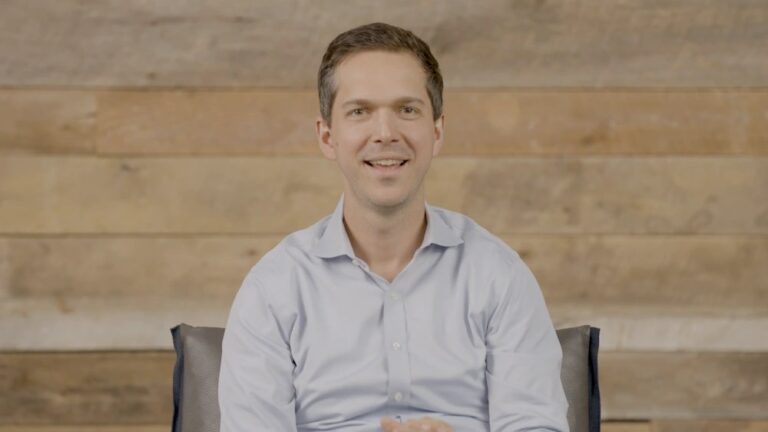

Ask Dan Shipper how often venture-backed media startups succeed, and he’s candid.
“My feeling about the history of media companies taking venture capital is that it doesn’t go very well,” he said. In other words, it usually doesn’t work out, I suggest. “It works out never, actually,” laughs Shipper, founder of AI-focused media and software company Every.
Shipper’s right: VC-backed media startups of yesteryear have frequently tanked in spectacular fashion, from The Messenger and Vice to Ozy Media and Quibi. But Shipper is betting that Every—currently with about 130,000 unpaid subscribers and almost 10,000 paid—can play by its own rules and ultimately win its own game.
Hence, the fundraise: Every recently raised $17.5 million in Series A funding, at a $110 million post-money valuation, Fortune has exclusively learned. IA Ventures’s Jesse Beyroutey led the round, with Betaworks and The Atlantic CEO Nicholas Thompson joining, among others. Shipper, 35, will retain full control of the company, and is changing his title to “Philosopher King,” which I rib him about. He good-naturedly says the change is semiotic.
“The really important thing about taking the money for me was that we’d do it in a way that allows us to achieve our goals… and do it in a way that doesn’t require us to sacrifice our soul or the things about the company that I love deeply,” said Shipper. “I think of changing my title as a symbolic thing. If this was a normal venture capital deal, that would be completely off the table and ridiculous.”
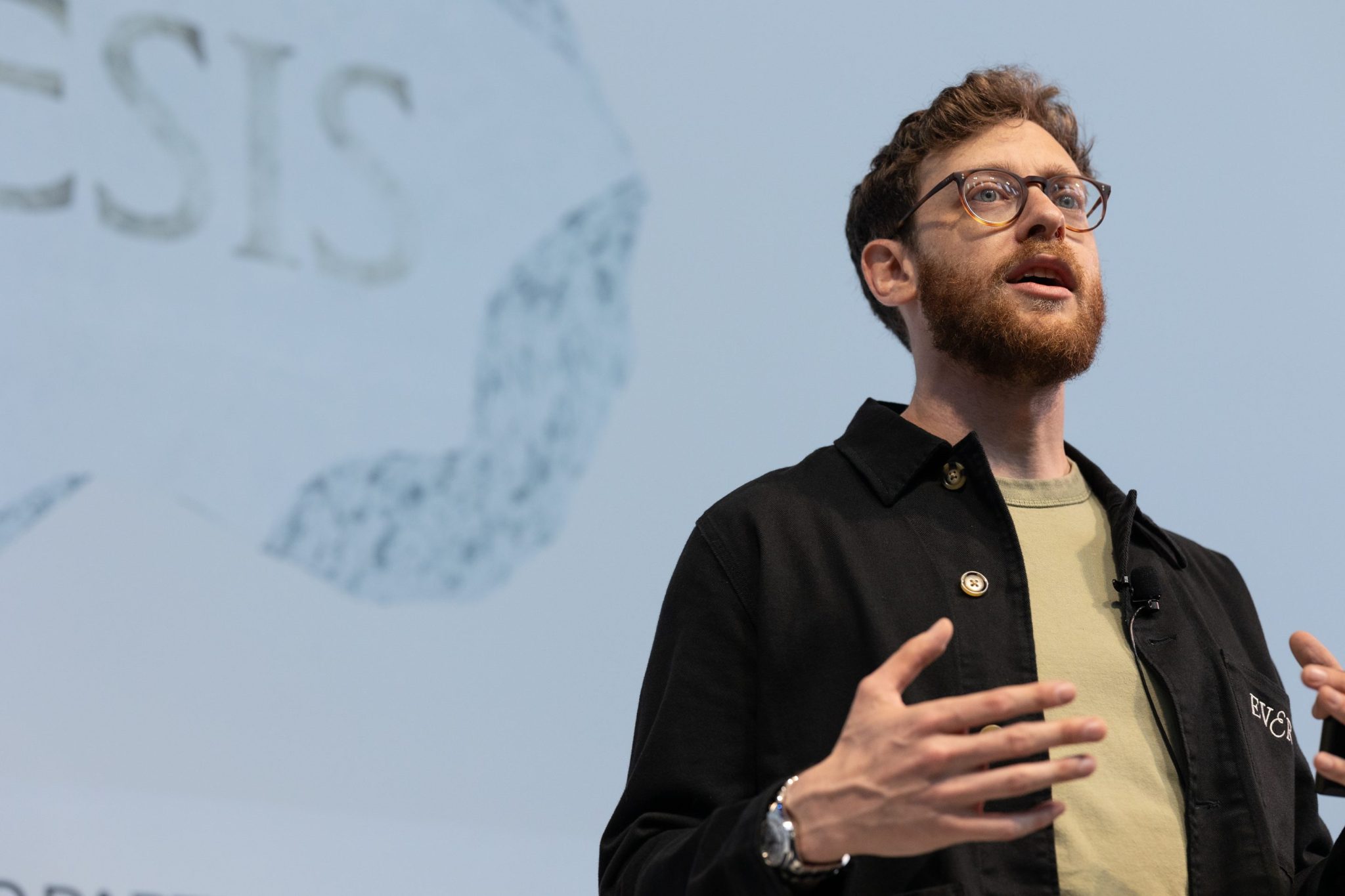
And this isn’t a normal venture deal, in a couple of ways. First, Every is a media company. With its neoclassical pop art aesthetic, Every has a multi-pronged business model: Its writing serves a professional audience seeking to become “AI-native,” while the 35-person company also provides consulting services to large companies and produces conferences (I recently interviewed Shipper at Every’s Thesis: 2027 conference in Brooklyn). Second, Shipper didn’t raise in a standard startup process: IA’s Beyroutey and Shipper are close friends (they went to college together) and Shipper went straight to Beyroutey.
“I didn’t shop the deal,” said Shipper. “I went to someone I deeply trust, who understands the business deeply, who understands exactly what I want to do with it, and has put me in the position where I make all the decisions to build the company in the way that I want to build it,” Shipper said. “I think that’s the only way to build a business like this, because this is a very unique shape. It’s a media company and a technology company, kind of smushed together.”
Shipper started Every in 2020, about six years after exiting his first startup, co-browsing company Firefly, in 2014 (the acquisition came right as he was graduating college). He spent the intervening years finding the right next thing. Every became the answer, in part because it addressed a number of questions that Shipper had been asking throughout his life. For one, he’d long felt tension between writing and entrepreneurship (at Every he could be both). He’d also been interested in tech since he was a kid.
“I thought a lot about why Microsoft and Windows had worked, and one of the big reasons is that they came during a hardware platform shift, from mainframes to PCs,” said Shipper. “They started building operating systems for that, and that’s always a really big opportunity…. And I thought: I wonder what my platform shift is going to be?”
Shipper and Every are all-in on AI, and the company is built to help people understand how they can actually use AI, in their jobs and their lives.
“I think too few companies are trying to do that,” said Shipper. “Too many companies are trying to build the machine god or are worrying about Armageddon, and I’m not…. I would expect improvements we’re seeing [in AI] to continue, and I would expect there to be a gap between the improvements that you see on the charts and how well those improvements translate into actually better work by people (and that people at companies are proud of). Our job is to fill that gap.”
Shipper is optimistic that AI won’t replace humans at work, a common fear and feature of AI discourse.
“The narrative is ‘it’s so over for humans’, and I think that’s exactly wrong,” he said. “That relies on this sleight of hand where you forget that humans are the ones who make these things, and humans are the ones that prompt these things—and decide what’s valuable and what’s not.”
In some sense, Shipper expects AI to eventually blur into the background, much in the same way we don’t really say “I used the Internet.”
“Ultimately, I think the technology and the model advances will disappear, and we’ll actually just think about the humans that did it,” said Shipper. “Asking if Claude did it will be like asking if you used your laptop. ‘Did your laptop do it?’ No, you did it.”
Happy Thanksgiving and we’ll see you again on Monday.
Allie Garfinkle
X: @agarfinks
Email: alexandra.garfinkle@fortune.com
Submit a deal for the Term Sheet newsletter here.
Joey Abrams curated the deals section of today’s newsletter.
This story was originally featured on Fortune.com