

Good morning!
For the past few months, Microsoft chief economic opportunity officer Aneesh Raman has been predicting the death of the traditional career ladder as AI reshapes the workplace. In its place, he envisions a “climbing wall,” where progress isn’t always upward and workers chart their own paths based on their unique skills, interests, and opportunities.
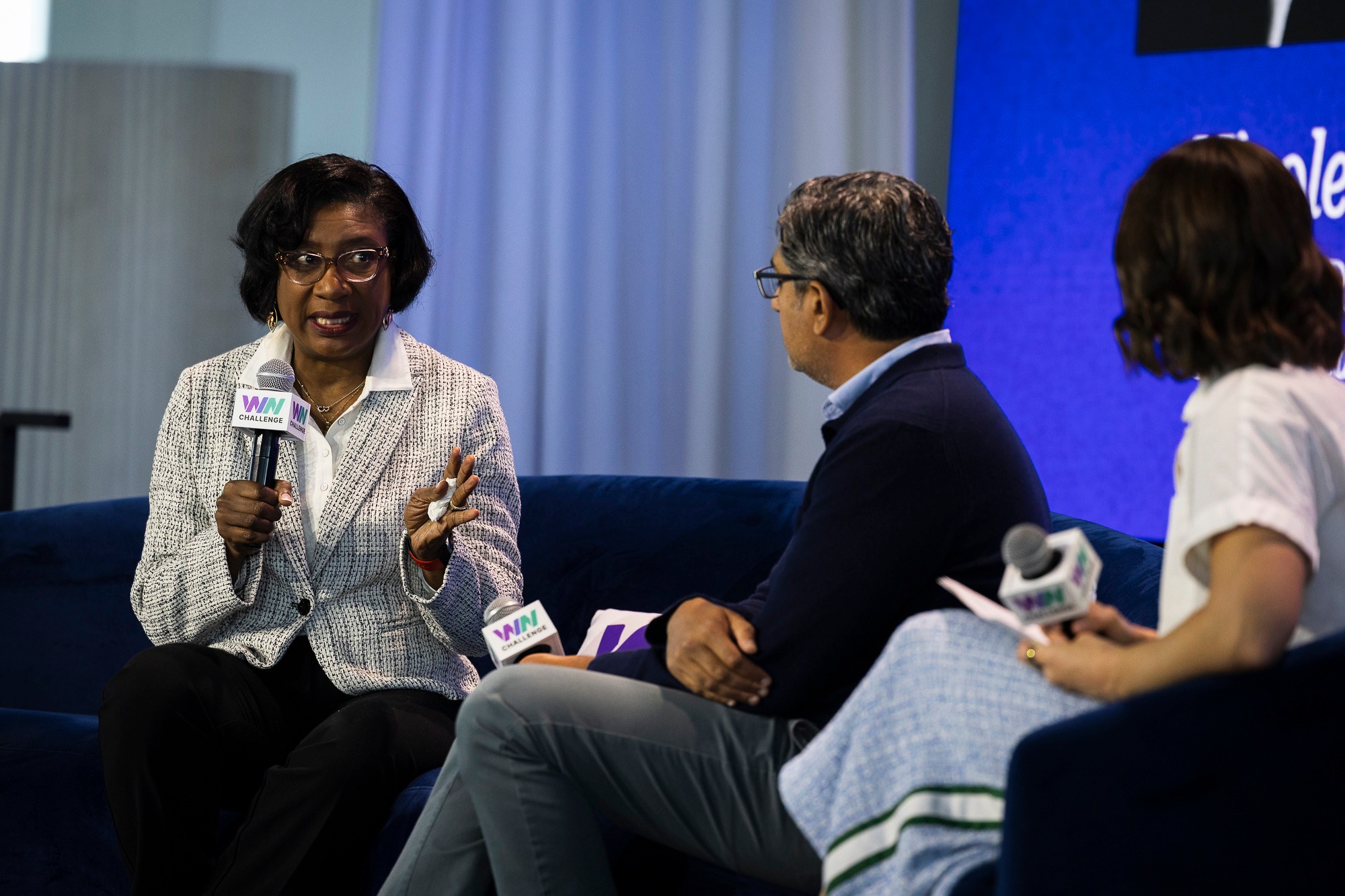
But if career advancement becomes less predictable, what does that mean for women and other historically marginalized groups, who research suggests benefit from clear criteria for raises and promotions? I put that question to Raman at Aspen Digital’s WIN Summit in late October.
Raman acknowledged that losing the familiar career playbook could initially be intimidating, but argued that it could ultimately give workers more freedom to advance in ways that suit their individual strengths and ambitions. “Over time, you start to climb in ways that are unique to you,” he said.
Part of the answer, Raman said, is “radical transparency”: ensuring workers understand how AI is changing their jobs and what opportunities they have to shape their own careers.
But if AI is helping rewrite the rules of career advancement, there’s reason to question whether women and men will benefit equally. New research from Nicole Smith, a senior researcher at Pew Research Center, found that in more AI-exposed occupations, men’s employment grew 6.3% for each one-point increase in an occupation’s exposure score, while women’s barely changed. Among workers with a high school diploma or less, women’s employment fell.
Smith also pointed to a divide in how men and women are approaching the technology. Men are much more optimistic about AI than women, she said, and may be more inclined to use it to pursue new opportunities. “We need to change our mindset and to make sure that we open these conversations to women,” she said.
Raman, meanwhile, believes women could have an edge in the AI era. He argues that women over-index on uniquely human skills, such as empathy and judgement that will become increasingly valuable as AI transforms work. He predicts that more women will become CEOs and that women’s representation on corporate boards could climb from roughly a third to half or more.
The question now is whether employers can make career advancement more flexible without making the path to success less equitable.
Kristin Stoller
Editorial Director, Fortune Live Media
kristin.stoller@fortune.com
This story was originally featured on Fortune.com