

Bank of America told investors to “take profits” on June 5, and many of them did.
Savita Subramanian’s strategy team flagged seven of the firm’s 10 bear-market signposts—five already triggered by April, plus two more in May—and told clients to trim their winners. The firm sees the S&P 500 ending the year at 7,100, below where it trades now (at time of writing, 7,367).
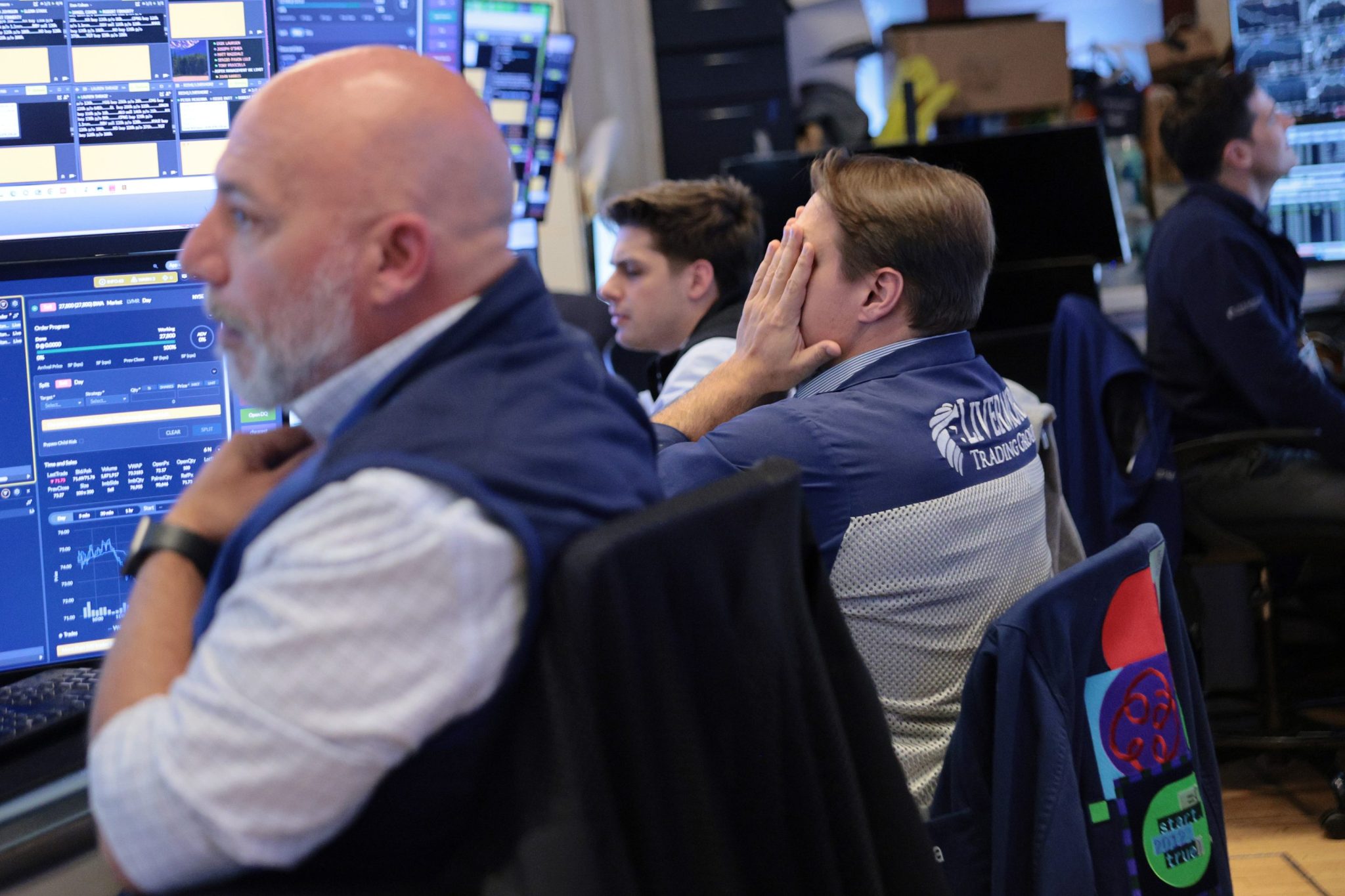
That note now makes Subramanian look like Nostradamus. The S&P 500 had set a record on June 1, four sessions before she published. By Wednesday’s close it was down about 4.5%, to 7,267. The Nasdaq had fallen roughly 7% from its own June 1 peak; the Dow about 2.7%, or some 1,400 points.
Many of the funds that suffered the worst routs were the most leveraged. The Direxion Daily Semiconductor Bull 3X fund returned 75.9% in May and still bled $4.1 billion that month—a second straight month of outflows as traders cashed out of the year’s defining rally.
The Philadelphia Semiconductor Index fell 10.3% on June 5–its worst day since 2020–after Broadcom’s cautious guidance and a memory glut handed the crowd a reason to sell. More than $1 trillion in market value evaporated in a single session. Micron, which sits at the center of the memory story, was hit hardest. A Monday bounce faded by Tuesday. By Wednesday the indexes were lower again, until rebounding on Thursday on stabilizing news in Iran.
Underneath the headline indexes, the rotation is clear: out of the high-beta tech winners and into the boring stuff. Stocks fell Wednesday, but most of them rose—nearly 63% of issues advanced even as the Dow shed 950 points. The spread between the best- and worst-performing tech stocks is the widest since February 2000, Subramanian said.
What were the signs?
BofA tracks 10 conditions that tend to all trigger before an S&P 500 peak, sorted by sentiment, valuation, and macroeconomic.
Both valuation signals were lit. The first is the Rule of 20: Add the market’s price-to-earnings ratio to the inflation rate, and if the sum is above 20, that means stocks are expensive. The logic is that inflation makes future earnings worth less, so it should buy a lower multiple. Today the market pairs with a trailing p/e ratio of above 30 with inflation over 4%, and the total sits well above 20.
The second signal tracks the gap between the priciest stocks and the cheapest. That gap has stretched to an extreme BofA reads as speculation; investors paying almost any price for the winners, like the semiconductor or memory sectors, as they did in 1999 and 2021. By a broader measure, the index is expensive on 17 of 20 metrics, eight of them richer than the dot-com peak.
Three of the five sentiment gauges also tripped: First, investors expect stocks to continue rising. Second, analysts have pencilled in long-term earnings growth so high that any slight miss will disappoint, or, in the case of NVDA, even a beat that’s not up to expectation disappoints. And dealmaking is booming, which tends to happen near a top, when money is cheap and executives are confident enough to make riskier bets.
Both of BofA’s credit signals tripped, too. One measure is stress in corprotate borrowing markets, and the other, from the Fed’s survey of loan officers, tracks whether banks are making credit harder to get. Both are early warnings: Trouble shows up in credit before it shows up in stocks.
Not everyone reads the signposts as fate. Morgan Stanley called the sell-off healthy, noting that seeing tech’s leadership change could extend the bull market rather than ending one. Its strategists see the S&P 500 reaching 8,000 by year-end as money broadens out of memory and semiconductors into the rest of the market.
Plus, many analysts acknowledged traders were perhaps clearing up some space for Friday, when SpaceX prices the largest IPO in history—roughly $1.77 trillion—and starts trading the next morning on the Nasdaq as SPCX, with Anthropic and OpenAI lined up behind it. The same week investors fled the market’s priciest names, they’ll decide what to pay for its newest one.
“Our bear market signposts—the triggers that typically precede an S&P 500 peak—suggest additional caution may be warranted,” Subramim warned.
This story was originally featured on Fortune.com