

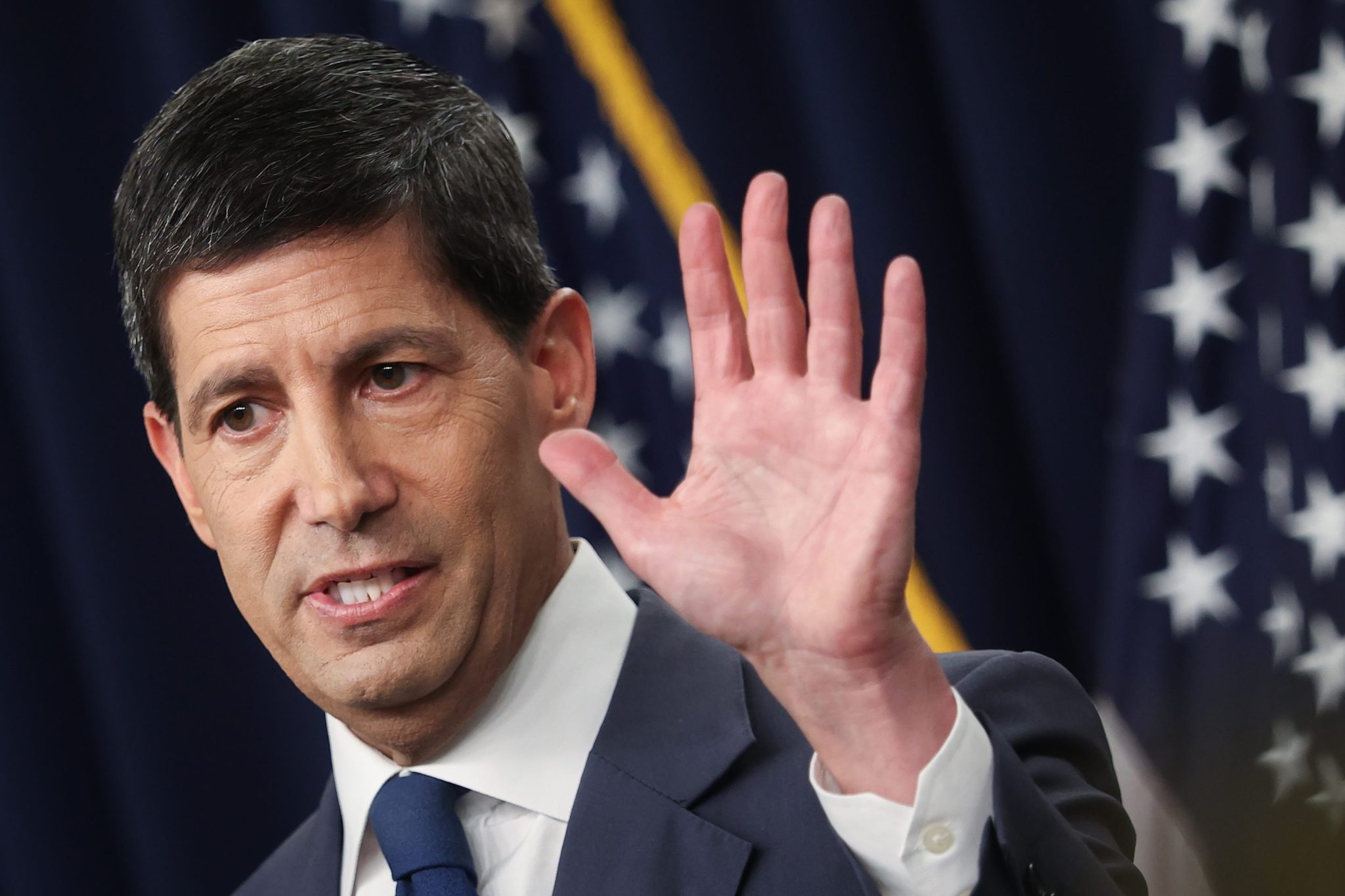
Fed Chairman Kevin Warsh has been clear: The central bank has gotten too comfortable sharing its expectations for the path of monetary policy, and believes its policy decisions have been hamstrung as a result. Wall Street is now blasting its response: Dialing back communications will be tolerated, a perceived void of information will not be.
The boomerang Fed policymaker (Warsh served on the Board of Governors from 2006 to 2011 under his mentor, chairman Ben Bernanke) has been consistent in his criticism of forward guidance—the practice of publicly sharing expectations of where short-term interest rates will go.
During a press conference following the meeting of the Federal Open Market Committee (FOMC) last week, Warsh built on his thinking. In reducing forward guidance, he said, market prices can respond to economic data “in the direction and magnitude they see fit.” This ultimately benefits the Fed, he suggested: “The central bank need not always and everywhere be the center of attention … For our part, we need to observe market reaction to developments, direct and unfiltered.”
If reaction is welcome, markets delivered: Long-dated bonds spiked after Warsh’s statement and remain elevated, while two-year Treasuries slumped, reflecting expectations that the Fed would not be tightening financial conditions. The response from investors wasn’t necessarily in reaction to what Warsh did or didn’t say, J.P. Morgan’s Alex Wolf told Fortune, it was a reflection of newfound uncertainty.
Increasing noise in the absence of facts is precisely what Goldman Sachs chief U.S. economist Jan Hatzius is worried about. In a note yesterday, Hatzius highlighted that markets over- or under-reacting to data points may confound the very response the Fed is watching closely.
“Participants in short-term interest rate markets—where the Fed matters most—price what they think the Fed will do, not what it should do,” Hatzius reasoned. “This will remain true if the FOMC provides less information about its thinking, except that markets then have less information and potentially more inaccurate beliefs on which to base their thinking. Such a shift will not provide policymakers with a more reliable source of information about the real economy.”
Not only does Hatzius believe the new strategy will not achieve its aims, he said it might have two “undesirable” effects. The first is that if markets don’t know which data the Fed deems important, it may not react to updates the Fed later uses as a basis for policy change. As a result, policy will lag the real economy and end up “destabilizing rather than stabilizing.”
Secondly, markets may overreact to a piece of data or a policymaker tidbit, pricing in hikes or cuts that the central bank then fails to deliver. “This implies unnecessary volatility in both financial conditions and the impulse from financial conditions to the real economy,” Hatzius adds.
The sense of a framework
Warsh is also garnering criticism for seemingly suggesting that familiar yardsticks are moving. Responding to a question about what measure the FOMC uses when discussing the 2% inflation target, the “proper, standard answer” is PCE, the chairman confirmed, referring to the Personal Consumption Expenditures Price Index, which reports changes in the prices of goods and services purchased by consumers in the U.S.
“Who knows, come after next January, what we might say about strategy,” Warsh continued.
There were hints that a shift may be coming—after all, one of Warsh’s Fed task forces is charged with “revisiting how the Federal Reserve understands and responds to the drivers of inflation.”
But the outcome of this work doesn’t explain the blanks being raised at present, argued Jeremy Siegel, emeritus professor of finance at the Wharton School of the University of Pennsylvania. Writing for WisdomTree, where he serves as senior economist, Siegel said the argument to reduce forward guidance is a legitimate one.
However, “even without providing explicit forward guidance, central bankers still have an obligation to explain the economic framework behind their decisions. On that score, this press conference fell well short.”
And while Warsh may be only one voice at the Fed, he is the voice, added Hatzius. In the absence of his outlook, markets may erroneously rely on insight that doesn’t reflect the view of the entire committee: “If [Warsh] doesn’t distill the individual views of participants into a coherent message or doesn’t communicate this message to the public, the loudest voices and most frequent speakers on the committee will likely have the biggest impact, whether or not they are representative of the median FOMC voter.”
This story was originally featured on Fortune.com