

Luxury home prices across the U.S. have fallen year over year for 31 straight months, according to a report by Realtor.com published Monday. But Florida is a major exception, driven by a mix of new wealth flooding the state and too few homes to buy.
Wealthy Americans have been moving to the state for years. Florida took in a net $137 billion in income from other states between 2019 and 2023—and that was before even more billionaires moved to the state ahead of the proposed wealth taxes in California and Washington.
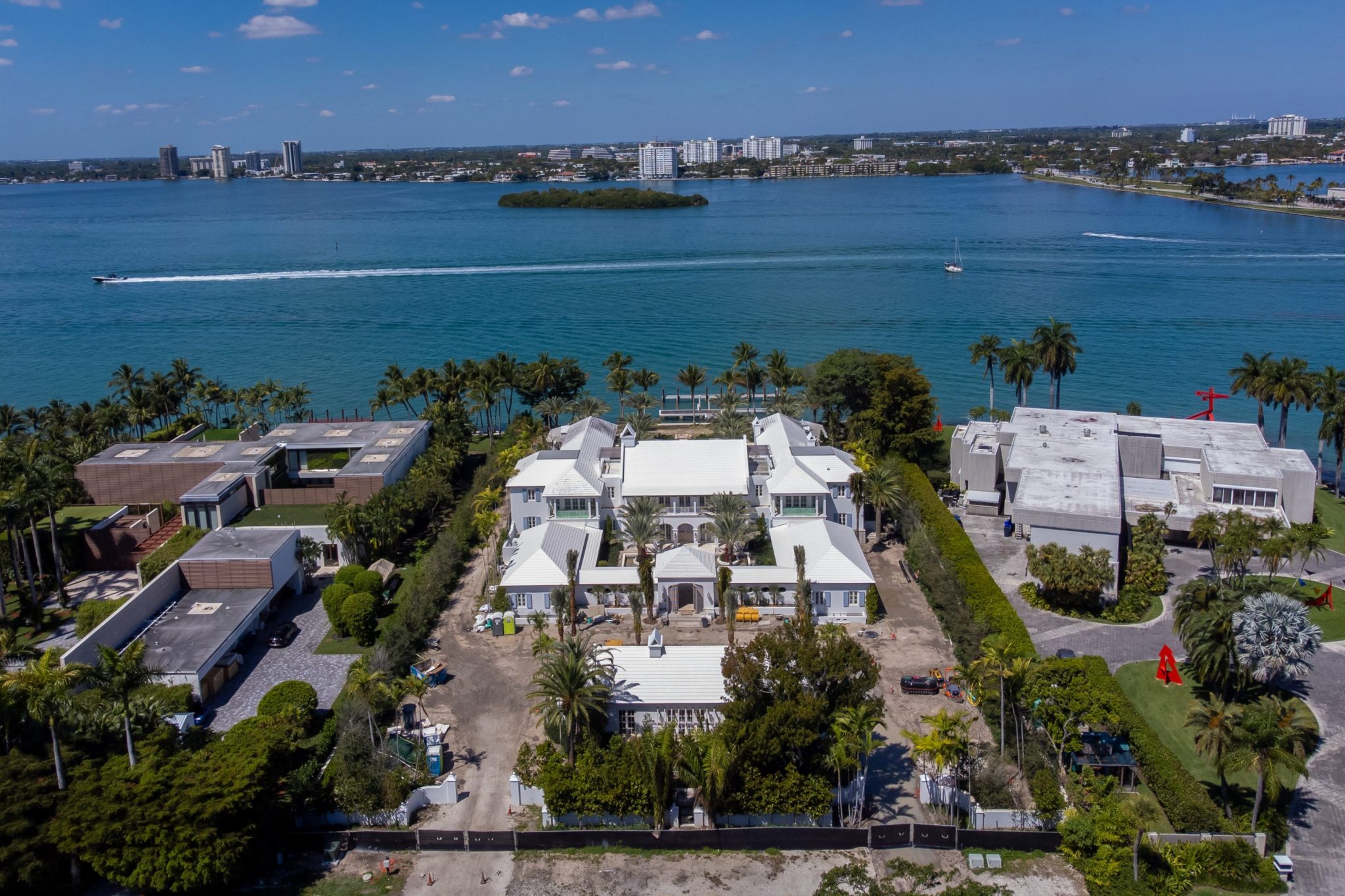
Billionaires including Jeff Bezos, Ken Griffin, Mark Zuckerberg, Larry Page, and Sergey Brin have spent hundreds of millions of dollars on South Florida estates, drawn by no state income tax, the lifestyle, and the business climate. At the same time, the supply of million-dollar homes in many of the state’s markets is shrinking, and the luxury homes that do hit the market are selling faster. That combination is keeping prices up even as they fall across the U.S.
“Low rates lit the match, tight supply fed it, investors added heat, and wealthy newcomers poured gasoline on it,” Arman Javaherian, CEO of the homebuying platform Homa and a former Zillow executive, previously told Fortune.
Meanwhile, the national entry point for luxury housing, meaning the asking price that marks the top 10% of listings, fell to $1,197,014 in October, down 2.3% from a year earlier. The declines were steeper at the top of the market. The threshold for the top 5% of listings fell 4.1%, while the top 1% fell 6.2% to about $5.1 million, the report shows.
But in Florida, the luxury threshold in the Miami-Fort Lauderdale-West Palm Beach metro rose 4.1% to about $2.3 million, and in Naples, it climbed 9% to about $3.75 million, more than three times the national entry point.
Only 12 of the 43 metros Realtor.com analyzed saw luxury prices rise at least 1% over the past year, and five were in Florida: Naples-Marco Island, North Port-Bradenton-Sarasota, Cape Coral-Fort Myers, Miami-Fort Lauderdale-West Palm Beach, and Tampa-St. Petersburg-Clearwater. Naples led the country with a 9% jump to about $3.75 million, making it the only one of the nation’s 10 most expensive luxury markets where prices climbed. Its priciest listings also sold a median 27 days faster than a year ago. In the Miami metro, the luxury threshold rose 4.1% to about $2.3 million.
Realtor.com senior economist Anthony Smith wrote that million-dollar inventory is shrinking in most of Florida’s gaining markets, and “that smaller pool of available homes may be helping support prices, even as luxury thresholds fall nationally.”
Florida is a magnet for billionaires
Citadel founder Ken Griffin relocated his hedge fund from Chicago to Miami in 2022, the same year he paid $106.9 million for a Coconut Grove estate. Now, that enclave in Miami is becoming so popular with the ultrawealthy that luxury hotelier Raffles is building 35 homes there starting at $4.5 million.
“We don’t really play in the middle market. We continue to see tremendous amounts of wealth moving into Florida, especially South Florida,” Camilo Miguel Jr., founder and CEO of Mast Capital, one of the partners on the project, previously told Fortune.
Amazon founder Jeff Bezos also sold his $63 million Seattle mansion for million and has spent $237 million on three properties on Indian Creek, the island nicknamed “Billionaire Bunker.” In September, a Delaware LLC reportedly tied to Bezos paid $69.5 million for an oceanfront estate in nearby Golden Beach. Meta CEO Mark Zuckerberg and his wife, Priscilla Chan, also closed on a $170 million Indian Creek estate this year, and Google cofounder Larry Page spent about $173.4 million on two Coconut Grove properties.
“Someone buying a $20 million or $50 million home in Miami is coming for no state income tax, the lifestyle, and the business climate,” South Florida luxury real estate advisor Michael Martirena told Fortune last week. Under Florida’s newly approved Amendment 3, the yearly cap on taxable-value increases for second homes will also drop from 10% to 5%. Experts said that change matters most to wealthy owners with multiple properties.
Elsewhere, the luxury market is still coming down from its pandemic-era gains. The pandemic packed years of luxury price growth into roughly 24 months, and as of May, the typical luxury market had held onto only 59% of that run-up, according to a June Realtor.com report.
In October, San Jose’s luxury threshold dropped 12.1% from a year earlier, New York-Newark-Jersey City’s fell 11.3%, and San Francisco’s fell 7.1%. Realtor.com has attributed San Francisco’s luxury slump primarily to tech-sector layoffs, people moving out of the area, and a smaller pool of buyers.
This story was originally featured on Fortune.com