

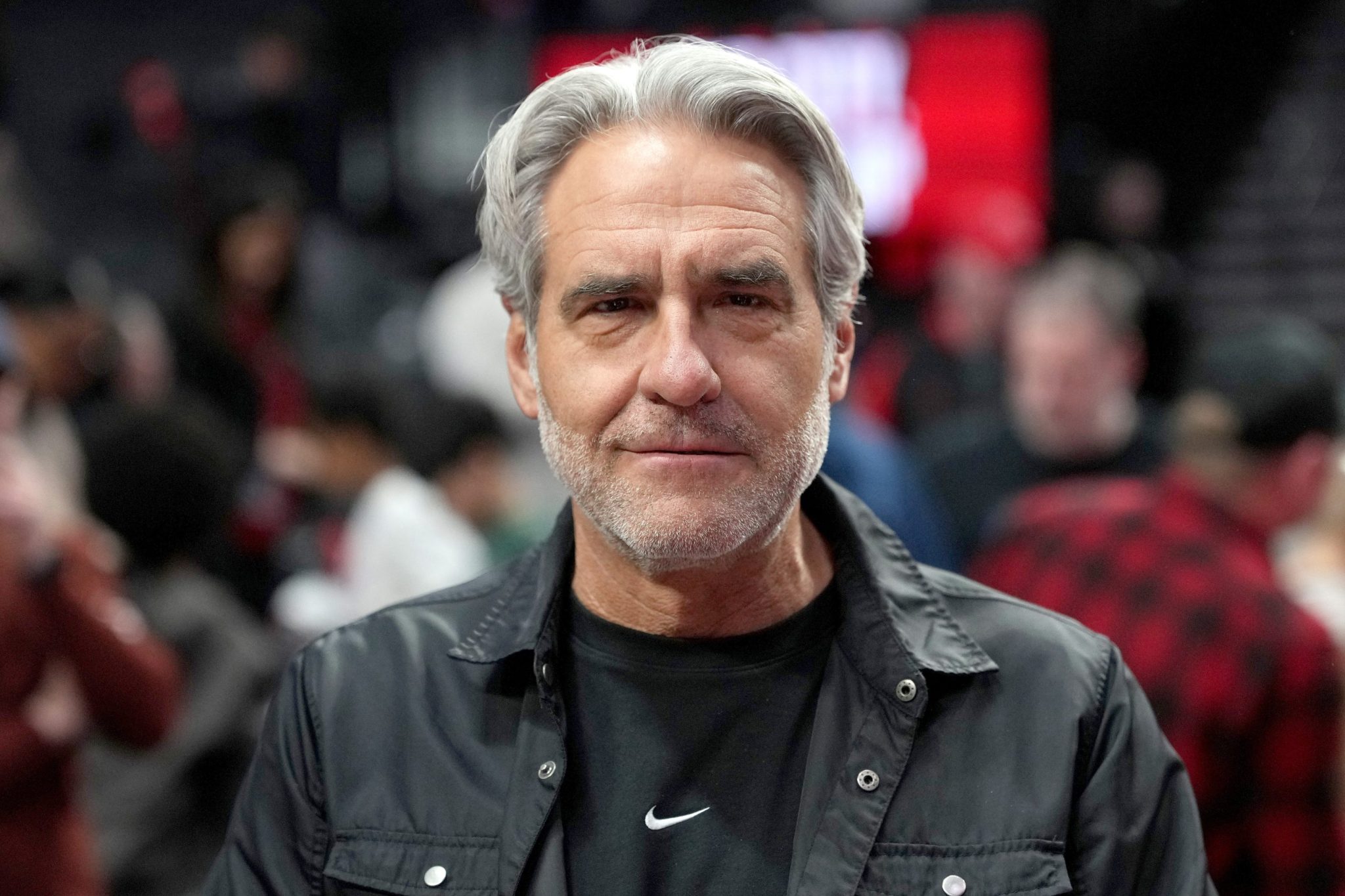
When Nike brought Elliott Hill out of retirement almost two years ago to helm the sports conglomerate, it was with the intention of turning the brand’s strained relationships with athletes and retailers around in what Hill would later call a “sport offense.”
That offensive strategy seemed to pay off—in North America at least—when Nike’s quarterly earnings exceeded Wall Street’s expectations. The company reported an adjusted 20 centers earnings per share, compared to the 13 cents expected. It also reported $10.97 billion in revenue, a $130 million increase from the expected $10.86 billion. And thanks to a nearly billion dollar tariff refund ($986 million), the company’s gross margin increased 8.9% during the quarter—even if analysts excluded the gain in their earnings expectations.
The Nike veteran is facing two report cards. There’s the one after the bell today that demonstrates what real progress Hill has made on stemming Nike’s losses (for the past two years, Nike’s sales fell every single quarter with shrinking profit margins and money earned per share dropping by almost two thirds). But he’s also facing the one on the world stage that’s playing out in stadiums across the United States, Mexico and Canada. The World Cup could show whether his efforts to rejuvenate Nike’s sports culture into something consumers really want, if it really paid off.
On the offense
Hill inherited a company in freefall: negative 5% year-over-year revenue growth and the start of what would become a 62% decline in earnings per share from its peak in May 2024. Since his first quarter as CEO in November 2024, earnings per share, a number investors keep a close eye on, is down 56%—hitting $1.51 per share—and operating income is down by half.
Nike brought back Hill to fix its relationship with retailers like Dick’s Sporting Goods after his predecessor John Donahoe aggressively pursued direct-to-consumer sales in a digital strategy that Hill said made Nike’s partners “feel we’ve turned our back on them.” And so Hill focused his tenure on rebuilding Nike’s shelf presence.
Going on a sport offense meant shifting Nike from designing for women, men and kids to designing with different types of athletes in mind, for a more “sport-led” approach to maximize innovation, Hill explained at a May 2026 talk at UC Berkeley’s Haas School. The earnings report as clearly on his mind last week when he told the FT that this restructuring was taking longer than he’d anticipated. “Job’s not done until the job’s done,” Hill said. “I guess Wall Street will be the judge of that, right?”
His efforts seem to be paying off in North America: revenue growth is up 15 percentage points since the lowest point under Donahoe.
Nike’s World Cup moment
A portion of Hill’s strategy involved bringing Nike on par with Adidas on the world stage. While the rival is an official FIFA partner, Nike outfits 12 teams with kits and uses advertising to compete. He told investors on the March earning call that soccer is next in the sport offense with the new Mercurial footwear, Tiempo cleats and Aero FIT national kits, asserting that Nike is “utilizing the World Cup as an opportunity to catalyze the football marketplace for quarters to come.”
Nike will face off against Adidas to make the most of the World Cup as the two compete through ad campaigns, with Nike featuring superstar athletes Cristiano Ronaldo, Kylian Mbappe and LeBron James (juxtaposed with Adidas’ ads featuring Lionel Messi). The decades-long rivalry is not just about bragging rights: It’s the first big global stress test of Hill’s approach to driving up Nike demand. To meet this end, Nike also overhauled its previous playbook by adding celebrities like Kim Kardashian and K-pop star Lisa to its “Rip the Script” ad campaign, which gathered over 78 million views, as compared to Adidas’s 7.8 million in the last month.
“There’s a reason why Nike is spending that kind of money on those ad campaigns at the World Cup,” David Swartz, a senior equity analyst for Morningstar, told Fortune.
The company said the goal of the ad was to give fans “something worth talking about, worth clipping, worth wearing, worth showing up to,” a seeming attempt to turn the enthusiastic culture around the World Cup into Nike demand.
“Nike is very visible during the World Cup and it can generate sales directly, because people do buy jerseys for those national teams and for the players that they like,” Swartz told Fortune. “It’s also a big branding opportunity in the long term to try to get Nike back in the forefront of the sportswear world, where it typically has been, but has lately fallen behind.”
From dominating footwear to declining sales
While Tuesday’s report showing North American growth matters for Nike, Swartz told Fortune that regaining market share in China—where Nike is losing out to Chinese footwear company Anta—matters all that much more. Today’s earnings show China results for Nike as weak but in line with expectations. Nike’s China revenue fell from over $7B (when Hill started) to $6B as of February’s quarterly data and is projected to fall to $5.5B through August because of competition and inventory glut.
“Its profitability in China has just collapsed, which has been a big problem because historically it was Nike’s highest margin region,” Swartz said. “The main concern right now for investors probably is how long is it going to take for Nike to get a turnaround in China.”
There’s also the concern that Nike has fallen behind on innovation, with no new and exciting sportswear products to attract consumers, an issue compounded by the tariffs and high gas prices that have been squeezing consumer companies generally. Retailers in China are also having difficulty selling Nike merchandise, even at a discount, which continues the inventory glut and takes up shelf space that could hold new products, according to Swartz.
“Utlimately, Nike needs to have more full price selling and less discounting of its products to get its margins back up,” he added.
This story was originally featured on Fortune.com