

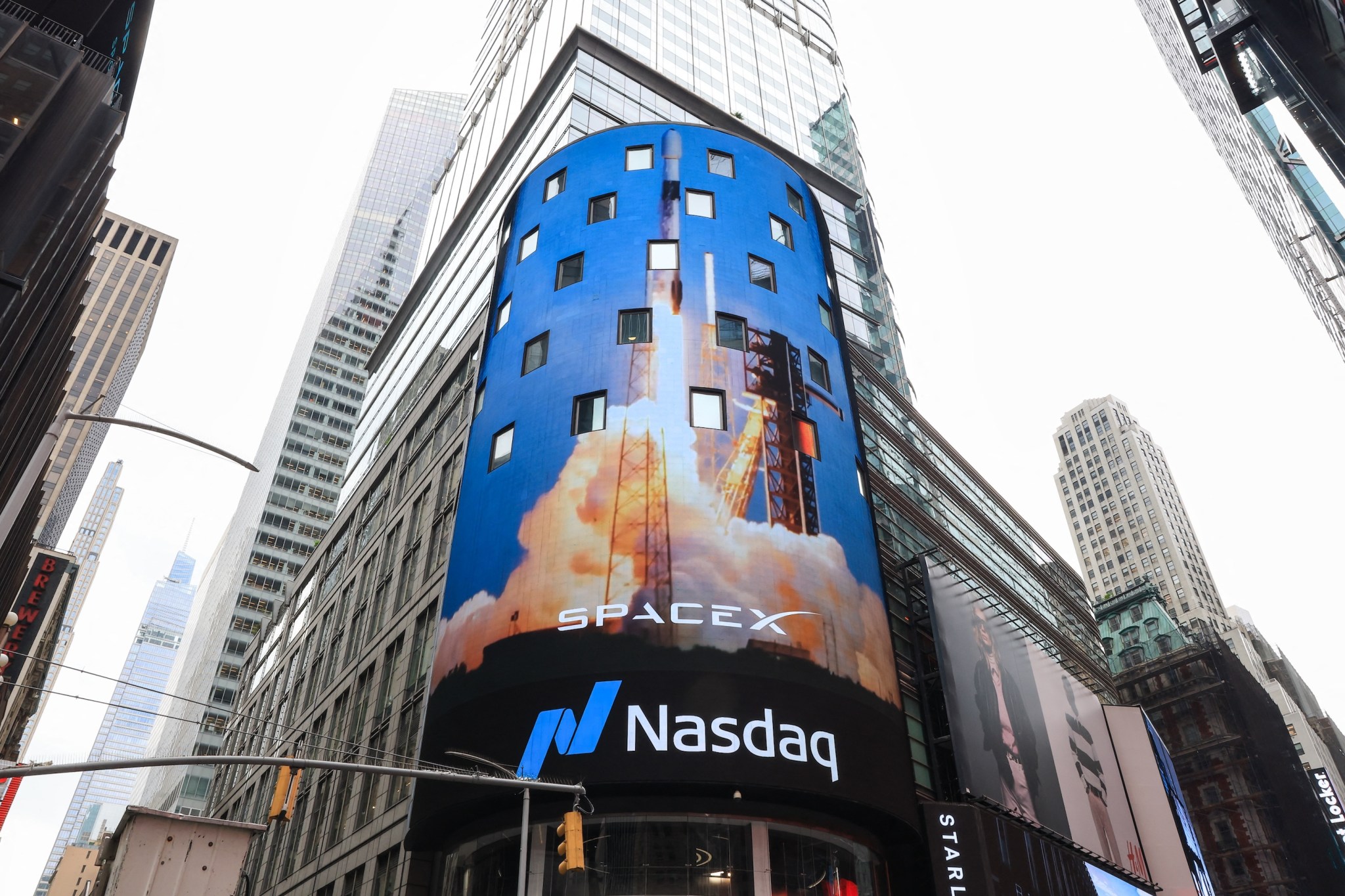
Good morning. SpaceX and Amazon have become structural look-alikes, increasingly competing for the same profit pools in cloud computing, AI infrastructure, and satellite connectivity.
Amazon, founded by Jeff Bezos, and SpaceX, founded by Elon Musk, now command a combined market value of roughly $4.5 trillion. In a new Fortune report, my colleague Amanda Gerut examines why investors appear willing to assign Amazon-like valuation multiples to a company generating only a few percent of Amazon’s revenue while still reporting operating losses.
The comparison raises important questions about capital discipline, risk pricing, and the durability of today’s “AI and infrastructure” valuation premium.
Gerut argues that Amazon and SpaceX are evolving into converging infrastructure conglomerates. Both operate satellite internet networks. Both are investing aggressively in hyperscale data centers and AI infrastructure. And both are betting that owning the underlying “pipes”—whether in orbit or on the ground—will create durable competitive advantages and pricing power across multiple businesses.
“If you squint, you can see them as doppelgängers with one big difference—or, more accurately, nearly 700 billion differences,” she writes. “Amazon generated $716.9 billion in revenue in 2025 and $80 billion in operating income, compared with SpaceX’s $18.7 billion in revenue and a $2.6 billion operating loss.”
For finance executives, the broader question extends beyond rockets and e-commerce. The analysis explores the widening gap between narrative-driven valuations and current financial performance—and what that means for capital allocation, cost of capital, competitive strategy, and the inevitable boardroom question: Why can’t we earn a SpaceX multiple?
Whether SpaceX ultimately proves to be the next Amazon or a cautionary tale about growth expectations, the comparison offers a timely case study in how markets price optionality, platform economics, and founder-led companies pursuing trillion-dollar opportunities long before the earnings arrive. You can read the complete article here.
Sheryl Estrada
sheryl.estrada@fortune.com
This story was originally featured on Fortune.com