

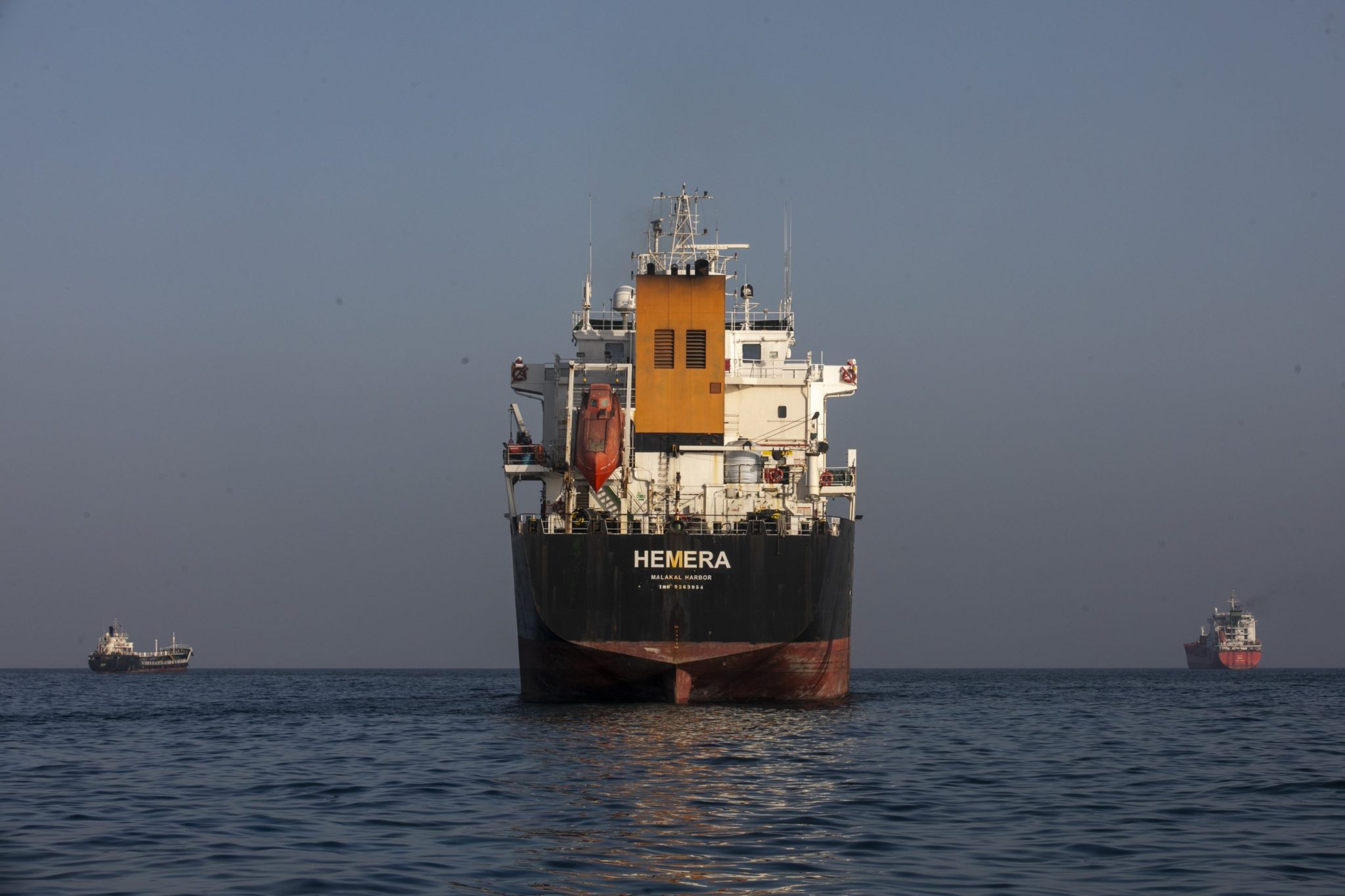
As traffic in the Strait of Hormuz continues to be disrupted during the months-long Iran war, one company is benefitting from the global trade chaos.
Clarkson, the world’s largest shipbroker, reported its best-ever operating profit of £64.8 million ($87 million) for the six months ending June 30, a more than 55% increase from a year ago. The UK-based company founded in 1852 saw a nearly 40% increase in revenue to £413.5 million ($555.5 million).
CEO Andi Case attributed the jump to worldwide changes in supply chains as a result of the Iran war, increasing demand for companies like Clarkson. Shipbrokers are third-party firms that liaise between ship-owners, such as Maersk, and cargo-holders, like retailers.
“Clarksons delivered a record first half performance, reflecting both the investment into our underlying business and the exceptional volatility caused by the disruption to global trade from global conflict including the situation in the Strait of Hormuz,” Case wrote in a statement on Monday. “We expect the full year performance of the Group to be materially ahead of market expectations.”
He added that the disruptions have “created a pronounced shock across global shipping markets” that have reshaped trade routes and caused a “period of operational dislocation” followed by an increase in both freight rates and hedging activity.
Since the onset of the war in February, traffic in the Strait of Hormuz has dwindled from its pre-war rate of more than 100 ships per day passing through the chokepoint to about 33 today, according to maritime data tracker Kpler.
Despite President Donald Trump signalling the resumption of peace talks after canceling a renewed offensive against Iran, disruptions in the area look to continue, with Tehran expanding the war across the Gulf region.
That includes Yemen’s Houthi movement blockading Saudi Arabian maritime traffic near the Bab el-Mandeb Strait. Ukraine’s drone attacks on Russia have also suspended shipping to Black Sea ports and trade corridors key for grain exports.
These supply-chain upheavals have mounted pressures on certain industries like aviation, where jet fuel costs have soared, and agriculture, which has dealt with shortages of key chemicals used in fertilizers as a result of Strait of Hormuz closures. But as those sectors try to cope, companies like Clarkson thrive.
“In any market, any disruptions, obviously, create some kind of a zero-sum game,” Jean-Paul Rodrigue, a professor of maritime business administration at Texas A&M University at Galveston, told Fortune. “That is, some actors are losing and the others are gaining the equivalent loss.”
Why Clarkson is winning big in times of geopolitical chaos
According to Rodrigue, the shipbroker’s record-breaking earnings are a matter of simple supply and demand: With fewer ships passing through the Strait of Hormuz, the need increases for third parties like Clarkson, which can help connect retailers to ships actually able to transport goods.
Like any broker, companies like Clarkson receive a share of the transactions between the two parties. So when the cost of shipping increases, a brokerage’s share likewise increases.
“When you have geopolitical instability, of course, it disrupts the market,” Rodrigue said. “It creates uncertainty. It creates a lack of knowledge because nobody knows what the hell is happening. Uncertainty therefore, actually increases the importance of such firms because people are getting a bit more desperate.”
But uncertainty doesn’t always mean winning big. In March 2025, ahead of the Trump administration’s steep tariffs and amid continued conflict between Ukraine and Russia, Clarkson said the trade tensions would have an adverse impact on revenues.
The Iran war, however, has had the opposite effect. Sea freight routed near the Strait of Hormuz nearly quadrupled in the first two months of the conflict, according to data from the International Rescue Committee, primarily as a result of steep insurance premiums associated with navigating the region. The higher demands and costs of doing business presented a strong opportunity for companies like Clarkson.
“They just behave rationally,” Rodrigue said. “Market positions change…and when the market position changes, obviously supply and demand change, and those who are at the right end of the stick are going to benefit.”
This story was originally featured on Fortune.com