

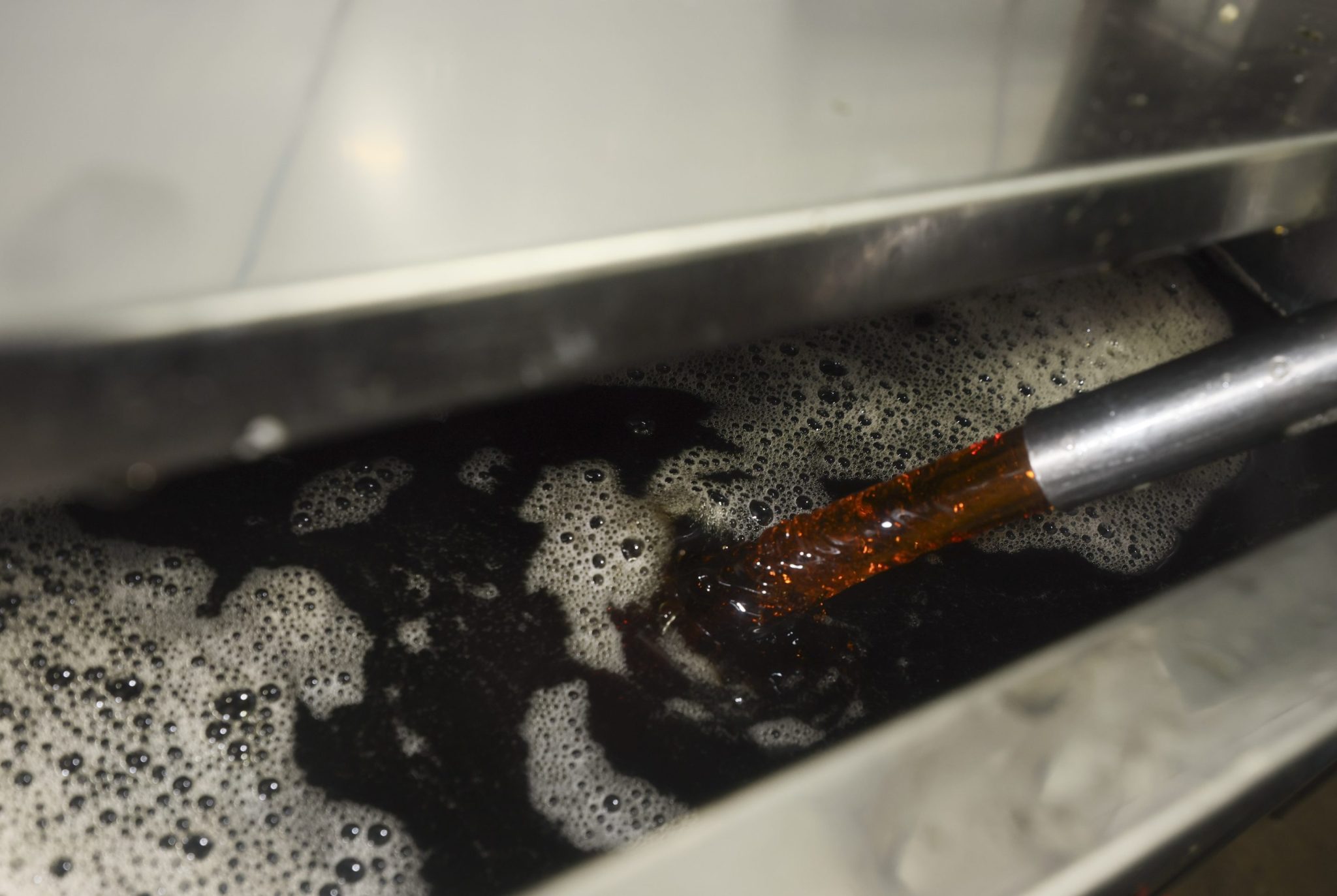
Canada is the world’s top producer of maple syrup, and the vast majority of it comes from Quebec, but the province is nearly tapped out of reserves.
The Quebec Maple Syrup Producers, which oversees the strategic syrup reserve, predicted the stockpile will be completely empty by February.
While new supplies will continue to be produced, the reserve will not be able to help ease any wobbles in output, which depends heavily on the weather and can be volatile. The strategic reserve consists of three warehouses in Quebec that can hold about 218,000 barrels.
Canadian maple syrup has seen demand increase in recent years as producers have diversified to more market beyond the U.S. About 65% of Canada’s syrup exports go to its southern neighbor, down from 80% two decades ago.
But last year saw an especially big spike in demand after President Donald Trump launched his global trade war. To get ahead of anticipated tariffs, Americans rushed to buy up Canadian syrup supplies. As a result, total syrup exports jumped nearly 16% last year, up from 9% growth in 2024.
While exports through the first eight months of 2026 slowed sharply, up just 2.5% annually, production has lagged, falling 5% last year, according to Canada’s statistics agency.
Still, Canada retains control of the commanding heights of maple syrup. In 2025, the Canada accounted for more than 75% of global production, with 90% of its output coming from Quebec.
Unfavorable weather could disrupt the production season, but Simon Doré-Ouellet, the deputy general manager at the Quebec Maple Syrup Producers, told the Toronto Star that the market’s supply of syrup is secure for the coming year.
“It is clear, however, that the strategic reserve will need to be replenished over the next few years,” he added. “And a good production year in 2027 would be welcome even though we have little control over that.”
A good season could go a long way. Quebec has boosted its production capacity by 50% over the past six years, Doré-Ouellet told the Star. That means there are more than 21 million new taps where sap can be collected from maple trees.
Of course, Canada isn’t the only country that’s seen reserves of a key commodity dwindle. The Iran war has forced oil-consuming countries around the world to tap crude stockpiles. In the U.S., the Strategic Petroleum Reserve has fallen to the lowest level since 1982.
Meanwhile, Japan has a rice reserve that had to be drawn down last year as prices soared amid bad weather and looming threats from natural disasters that sparked panic buying. But this year, Japan has already swung to a record surplus.
And China has a strategic pork reserve. In 2019, an outbreak of swine fever sent prices higher, prompting Beijing to release supplies from the reserve.
But today, prices have slumped as the anemic consumer economy has weighed on demand while the government’s prior encouragement to boost production has now resulted in oversupply.
Pork prices have plunged 39% over the last four years, raising alarms about deflation across the broader economy. To help prop up the market, China has repeatedly purchased pork for the strategic reserve, but that has its limits.
“There is little to do from the demand side,” Hannah Liu, a China economist at Nomura, told the New York Times in May. “You cannot order other enterprises to purchase more pork.”
This story was originally featured on Fortune.com