

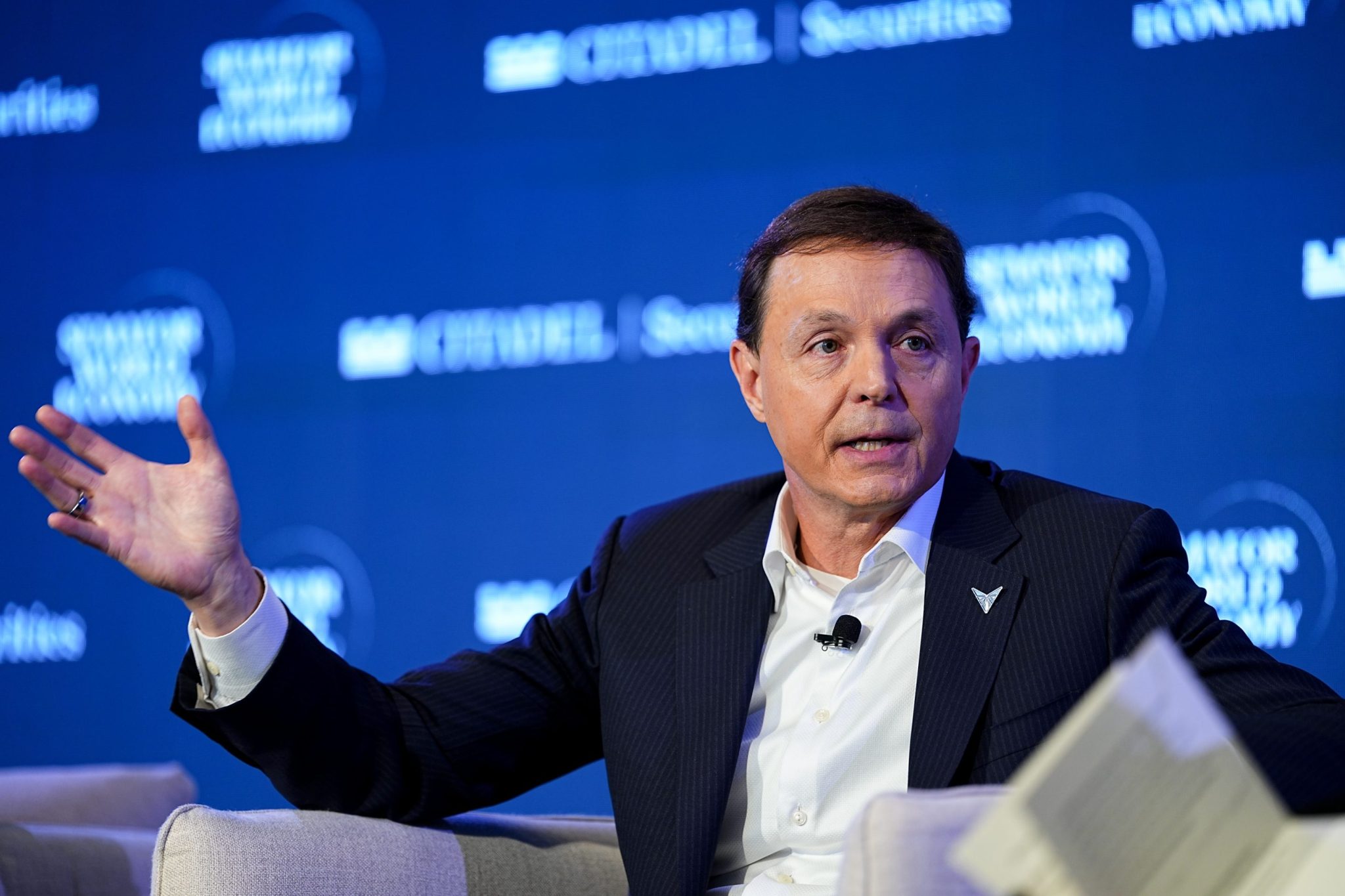
Dylan Taylor made his first million at 27. Last year, he became a billionaire at 53, after taking his space-holding company, Voyager Technologies, public on the New York Stock Exchange. But don’t expect his two children to inherit all of it.
“I’m not a huge believer in generational wealth transfer,” the founder and philanthropist tells Fortune. “I don’t think that’s good for the kids. And I don’t think it’s good for society, frankly.”
It’s why, like Microsoft cofounder Bill Gates, Taylor has put a hard cap on what his kids will one day receive; “It’s a lot, but it’s eight figures, not nine,” Taylor responds, when asked exactly how much his children can expect to inherit.
When you’re worth as much as Taylor, there’s only so much you can spend in one lifetime. Eventually, the conversation turns to what happens to the rest.
“At some point, once you have a couple hundred million dollars, you can’t really spend what you have,” Taylor explains. “So it then becomes, how much do you want to give to your kids?”
His answer: enough for a safety net, but not enough to remove the need to build something of their own.
So far, it seems to be working. His children are now old enough to access those resources, but he says they haven’t touched them. “They want to do things on their own,” Taylor adds. “Which is exactly what you want. That’s what you hope for.”
And everything above that eight-figure cap—potentially hundreds of millions, if not more—is going to philanthropic causes he cares about, including Space for Humanity, his nonprofit that sends people to space.
This billionaire would rather fund philanthropy
The number of billionaires on the planet keeps growing. And Taylor has watched up close (and unimpressed) how his peers approach the question of what to do with money they’ll never spend.
“I’ve been in rooms where people are obsessing about deductions and trusts, and how do I get more to my kids,” Taylor says. “It just doesn’t resonate with me.”
“I don’t obsess over those kinds of deductions,” he adds. “If you’ve been very fortunate, you should pay your taxes, and you should contribute to society… To me, it’s more like: what are the unmet needs in society, and how do we help?”
Admittedly, if he had “an extra dollar”, he says, he’d rather give it to charity than hand it to the government, because he has more confidence it will land where it’s needed. But his philosophy on giving is clear: He’d rather see it help people today than hoard as much wealth as possible for future great-great-great-grandchildren that he’ll never even meet.
“For it to go into some trust that’s going to go to my fifth generation in the year 2200, I don’t think that’s in the spirit of making the world a better place.”
And he’s far from the only one who feels that way.
It’s not just billionaires like Bill Gates and Jeff Bezos—even middle-class boomers aren’t giving all their wealth to their kids
Taylor is part of a growing class of ultra-wealthy questioning whether passing down enormous fortunes is really good parenting.
Microsoft cofounder Bill Gates has revealed he plans to leave his children less than 1% of his wealth, believing it’s better for them to find their own success than inherit it.
After Apple founder Steve Jobs passed away, his widow, Laurene Powell Jobs, said the billions she inherited won’t be passed on to the three children they shared. Jobs, estimated to have been worth approximately $7 billion when he died in 2011, “wasn’t interested” in building legacy wealth, his wife told the New York Times in 2020. “If I live long enough, it ends with me.”
Amazon’s Jeff Bezos has also signaled that the vast majority of his wealth will go to charity rather than his four children.
Other wealthy leaders and celebrities alike are enforcing strict rules and restrictions to unlock their wealth, such as requiring their kids to earn two degrees first.
But it’s not just billionaires. Even those with much smaller bank accounts are making the same call and opting not to pass their wealth down to their offspring. Just one in five baby boomers expect to leave an inheritance at all, according to a Northwestern Mutual survey—even though more than half of Gen Zers and nearly 60% of millennials say they’re depending on one to achieve financial security.
And it’s not the case that the generation simple hasn’t gotten around to estate planning yet. Actually, 60% already have a will in place—but their children and grandchildren are more likely to find funeral instructions in it than cash or the deed to their family home. That’s because the majority are explicitly planning not to leave anything behind, with only 11% saying it’s their top financial goal.
This story was originally featured on Fortune.com