

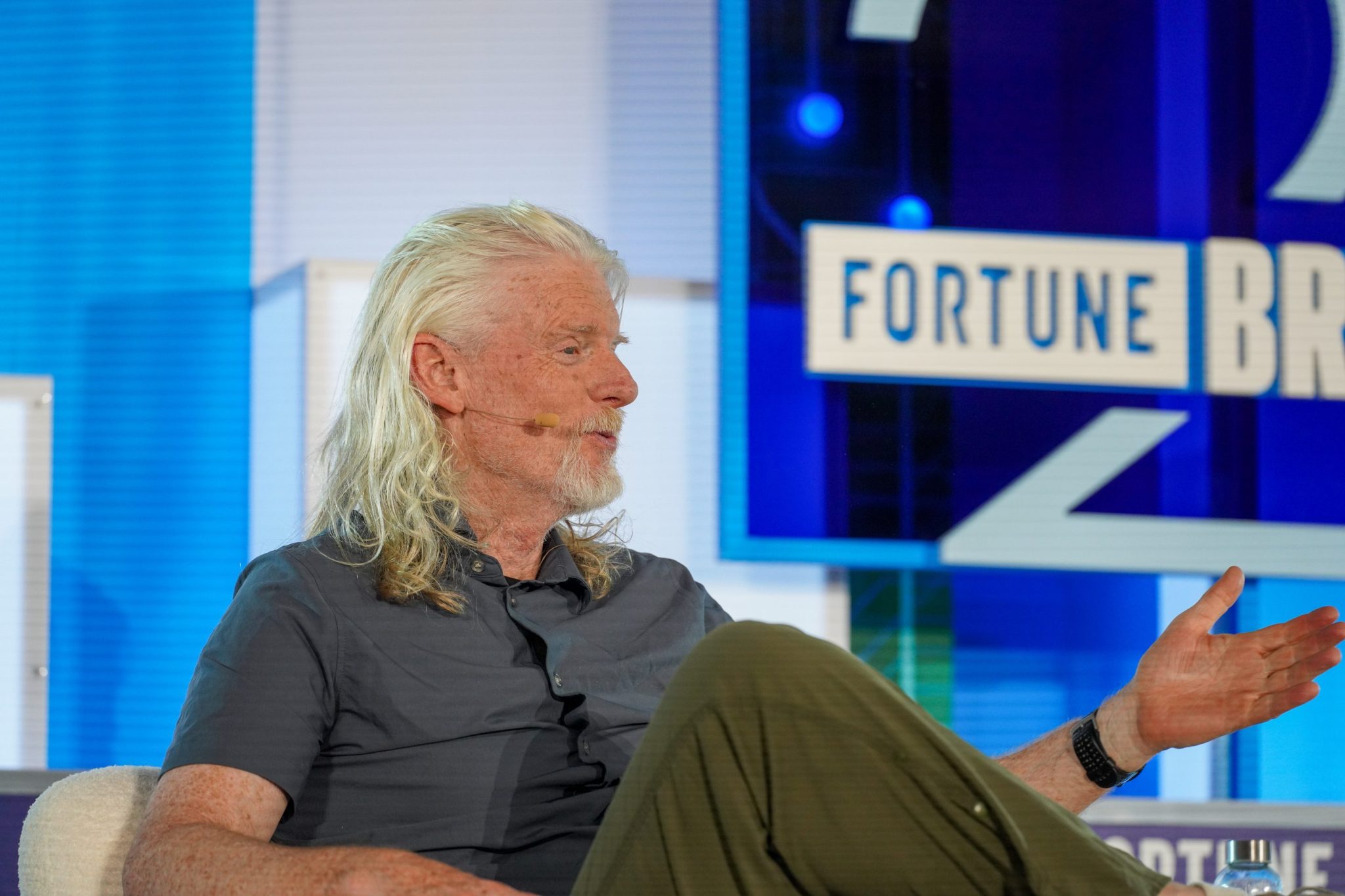
Twitch chief executive Dan Clancy said that in an attention economy, livestreaming formats like his platform foster a sense of human connection and authenticity that consumers can’t get from social media channels.
The CEO of the Amazon-owned company spoke at the Fortune Brainstorm Tech conference in Aspen on Monday alongside Grant LaFontaine, chief executive of popular streaming marketplace Whatnot. Both executives emphasized that real-time connection is core to their business success. They also highlighted that the digital neighborhoods each has made contrast with highly addictive, quick-hit social media channels.
“Social media has become antisocial. Sitting and swiping doesn’t make you feel connected to other people,” Twitch’s Clancy said. “If you think of real-world communities—churches, running clubs—it all comes from shared experiences in real time.”
Twitch and Whatnot have both amassed audiences of millions who view content for hours on the platforms. Twitch has an estimated 35 million daily active users. Whatnot has said it attracts several million daily active users. Whatnot has risen fast in recent years and challenged e-commerce giants like eBay. It had $8 billion in sales last year, with the company succeeding in collectible categories like trading cards and sports cards, but also in fast-growing verticals like women’s fashion and sneakers. It ranks as one of the top shopping apps in Apple’s App Store.
More from the 25th annual Fortune Brainstorm Tech conference:
Answering a question about Twitch and Whatnot themselves becoming addictive platforms, Whatnot CEO LaFontaine said his company has aimed for long-term customer relationships over short-term exploitation. He also said Whatnot allows its users to set limits, though he did not specify what those limits are.
Both Twitch and Whatnot have struggled to turn hours of broadcasts into profitable businesses. Historically, most of Twitch’s users have been men, and nearly three-quarters of them have been under 35, according to a 2024 report by investment bank Needham & Co.
Clancy disputed the possibility of Amazon selling Twitch and said the streaming platform would likely not have grown as big as it did if it hadn’t been for Amazon’s 2014 purchase. He added that Amazon may not have fully understood what it was buying at the time, because Twitch’s value is difficult to grasp for those who aren’t active users of the platform.
Clancy and LaFontaine said that the scraping of data on their platforms by AI labs has not been a major threat, and that AI avatars replacing their human creators isn’t a problem they anticipate. LaFontaine said he expects AI to aid sellers in creating content or engaging with their followers during times when the sellers aren’t streaming. Clancy said AI will allow Twitch’s creators to “access their creativity” by providing tools that make content creation easier.
“AI is trying to take humans out of the equation, and live is one of the formats that keeps humans at the center,” Clancy said. “You connect with people. You can understand them. You can see who they are.”
This story was originally featured on Fortune.com