
Wind the clock back 14 years and Ukraine was a country on a different path. The UEFA European Championship, cohosted with Poland, had provided a major international showcase for Ukraine and reinforced its ambitions to become more closely integrated with the European political and economic community. A European Union–Ukraine Association Agreement had been drafted, promising greater access to EU markets, visa-free movement, and greater alignment with EU standards. There was optimism that Ukraine could break with its post-Soviet political traditions and move more firmly into Europe’s economic and regulatory sphere
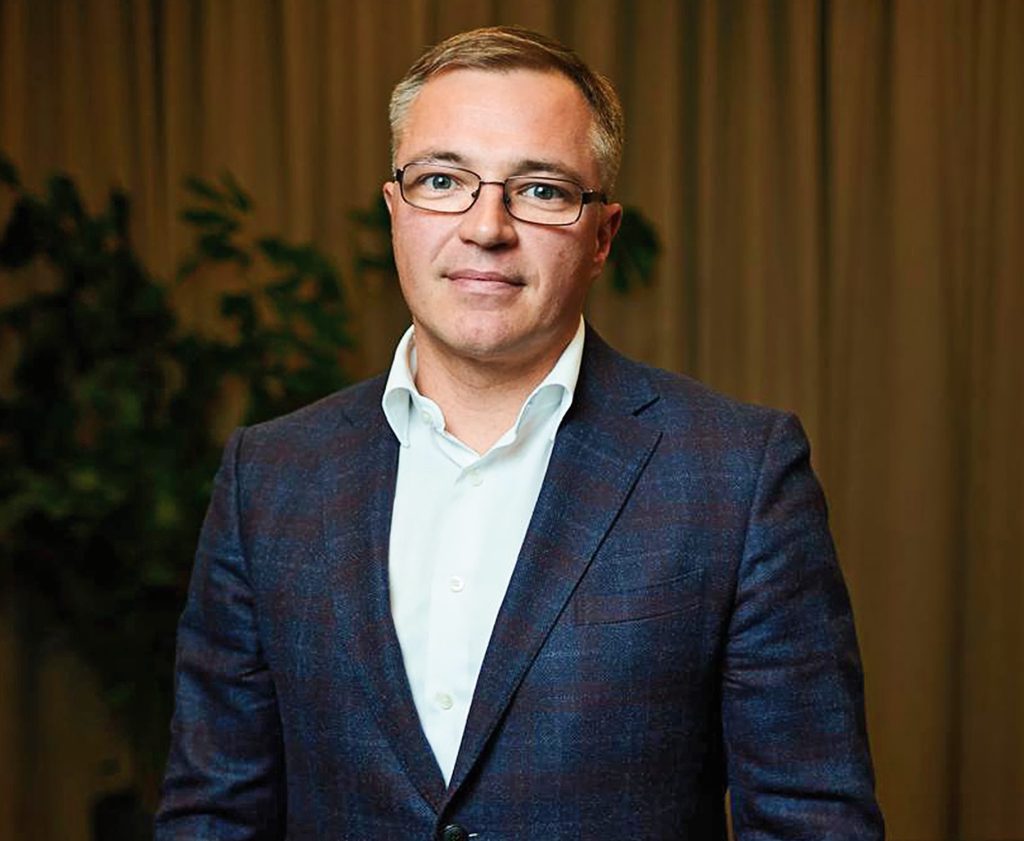
One of Ukraine’s most important industries remained a major force, despite concerns about stagnation and a lack of modernization. Steel production stood at 32.8 million tonnes (36 million tons) in 2013, and the country’s largest steel producer, and then largest private- sector employer, Metinvest, had appointed a new chief executive, Yuriy Ryzhenkov. Ryzhenkov is a man who has steelmaking DNA running through him.
“Why the steel industry?” he asks. “Very easy. My father, mother, uncle, aunt—they’re all steel engineers. My grandmother was a coal plant chemical engineer, which is also part of the steel industry. My grandfather was in the coal industry, but mainly coal for steel. So it was kind of inevitable. I tried to resist it by going into IT, but it didn’t work out in the end.”
A new CEO usually has a straightforward to-do list: a strategy reset, meetings with investors, and some thinking about which new products and markets to explore.
Preparing to navigate a war is not often high on the agenda. But in February 2014 all that changed for Ukraine, for Metinvest, and for Ryzhenkov.
An armed militia, with no identifying insignia, arrived in Crimea, a peninsula in Southern Ukraine, and occupied the land. They had Russian weapons and equipment, despite initial denials from the Kremlin that they had anything to do with the country. A month later, Russian President Vladimir Putin declared that Crimea, part of Ukraine, was now part of Russia. Battles between Russian separatists and Ukrainian government forces spilled over to the nearby Donbas region, and Metinvest, which had major facilities in Donetsk and Luhansk, was a target.
“Our headquarters was in Donetsk,” Ryzhenkov told me. “Most of our people were based there. Our key facilities were all around Donetsk city. All the logistics went through Donetsk. So in a way, I didn’t even have a chance to work for Metinvest prior to the Russian invasion.

Literally, it started happening a few months after I joined the company.”
“A doomsday scenario”
Ryzhenkov is that rare individual—a wartime CEO. Most C-suite leaders have to deal with the missteps and mistakes of corporate life: angry clients and customers, missed project deadlines. Few have to deal with missiles and hostile forces.
“I did manage to visit most of the facilities before it all started,” he said. “But [it was soon] a crisis. It is not as significant as now, but at that time we were not used to it, and it seemed like a doomsday scenario.
“We had logistical disruption; we had supply shortages; we had problems for the employees, for their security. At the end of 2014 and into early 2015, we already had the shelling of our plants in Mariupol. Azovstal [a Metinvest-owned iron and steel works and one of the largest plants in Europe] was hit. The bridges in Mariupol were blown out. Pretty much the occupied part of Donetsk was cut off.”
And so Ryzhenkov did what he supposed any self-respecting business leader who employed tens of thousands of people would do. He set about trying to fix things.
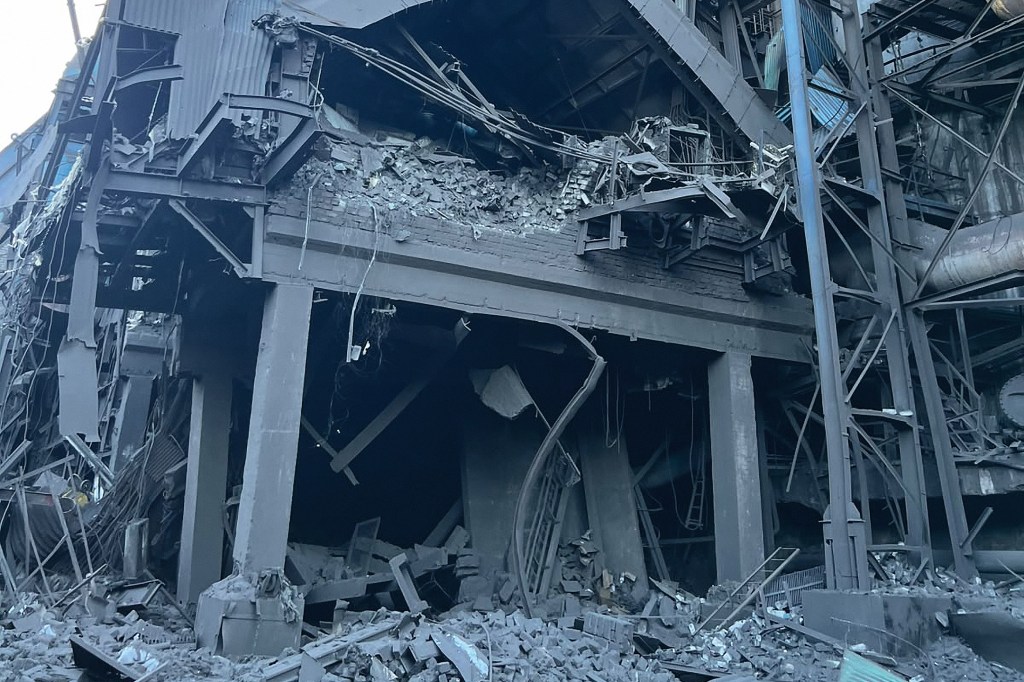
ballistic missile strike.
“We spent 2017, 2018, and probably most of 2019 restoring the logistics for our facilities, which remained on Ukrainian-controlled territories,” he said. “And by 2019 we were pretty much back to normal operations, whatever was the new norm. We went back into investing in the renovation of our facilities, with a particular focus on Mariupol, which was the largest steelmaking hub in the country, and the one that was in the highest need for modernization. We spent most of our investments in the new technologies in decarbonization and in cleaning up. There was a lot of interesting transformation of Metinvest during that period.”
War: The ultimate disrupter
Ryzhenkov’s modernization plans brought greater collaboration between different factories, and the business became more efficient and productive. CEOs often talk about the need for disruption to truly allow for innovation. War is the ultimate disrupter.
“In wartime you cannot restore to the original state. You do the best you can to continue operating.”
Yuriy ryzhenkov, CEO, Metinvest Holding
Ryzhenkov said Metinvest, which is No. 496 on the Fortune 500 Europe, became “vaccinated” against war. That did not mean the company escaped its effects—far from it—but that it learned to become more resilient and adapt to an entirely new operating environment. Ryzhenkov said 2021 was “probably the best year for the steel industry ever. We were very proud.”
This period of success was short- lived. Russia began its full-scale invasion of Ukraine in February 2022 as its forces crossed into the country from Belarus in the North, Russia in the East, and Crimea in the South.
“Naturally, we didn’t expect the invasion,” Ryzhenkov said. “There were lots of talks about it, but we could not believe that was logical. So we assumed, if it’s not logical, it’s not happening. Which was a wrong assumption, of course.”
There is a matter-of-factness to Ryzhenkov, which I am sure is connected to his software engineering past. If there is a problem, find the solution and apply it. War is certainly a problem, and maybe an unsolvable one. But the Metinvest CEO is determined to keep hunting for solutions.
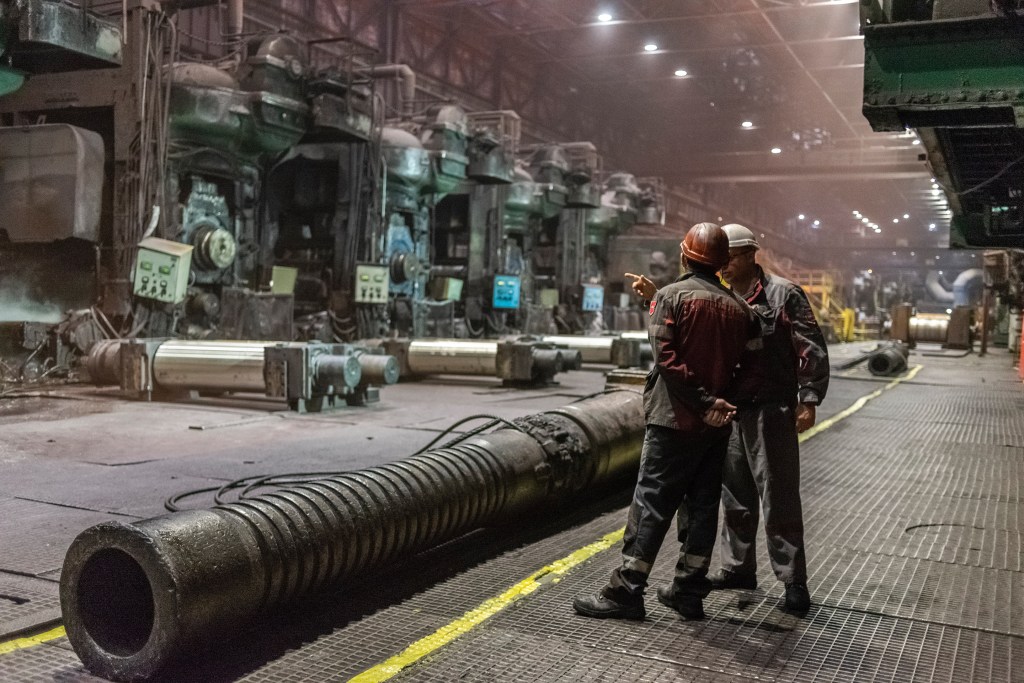
“Our key facilities in Mariupol were encircled in a few weeks,” he said of the early part of the conflict, when Putin hoped to see the surrender of Kyiv in a matter of weeks. Metinvest lost control of its Azovstal and Ilyich steel plants in occupied Mariupol, which accounted for almost half of the country’s steelmaking capacity, shortly after the Russian invasion. Originally constructed during the Soviet era, the Azovstal works were designed to withstand bombings, and its network of underground tunnels and bunkers became shelters for hundreds of civilians and Azovstal employees during Russia’s weeks- long siege. Around 100 civilians were eventually evacuated from the plant in May 2022.
“The one thing that we regret still to this point is that we did not start the evacuation of all the employees from this area earlier. To be honest, we just didn’t expect it to be encircled that quickly. People were focused on shutting down the facilities in an orderly fashion, letting dangerous gases out. You know, just cooling down equipment. At that time, we were still thinking about an ecological catastrophe or any consequences that may happen to the environment. We didn’t realize how severe it would be.”
Metinvest launched the Heart of Azovstal project in 2023 to provide support for the members of the Ukrainian armed forces who helped defend Mariupol and their families. This includes health and psychological assistance and help with transitioning into civilian life
Ukraine’s steelmakers face a new threat
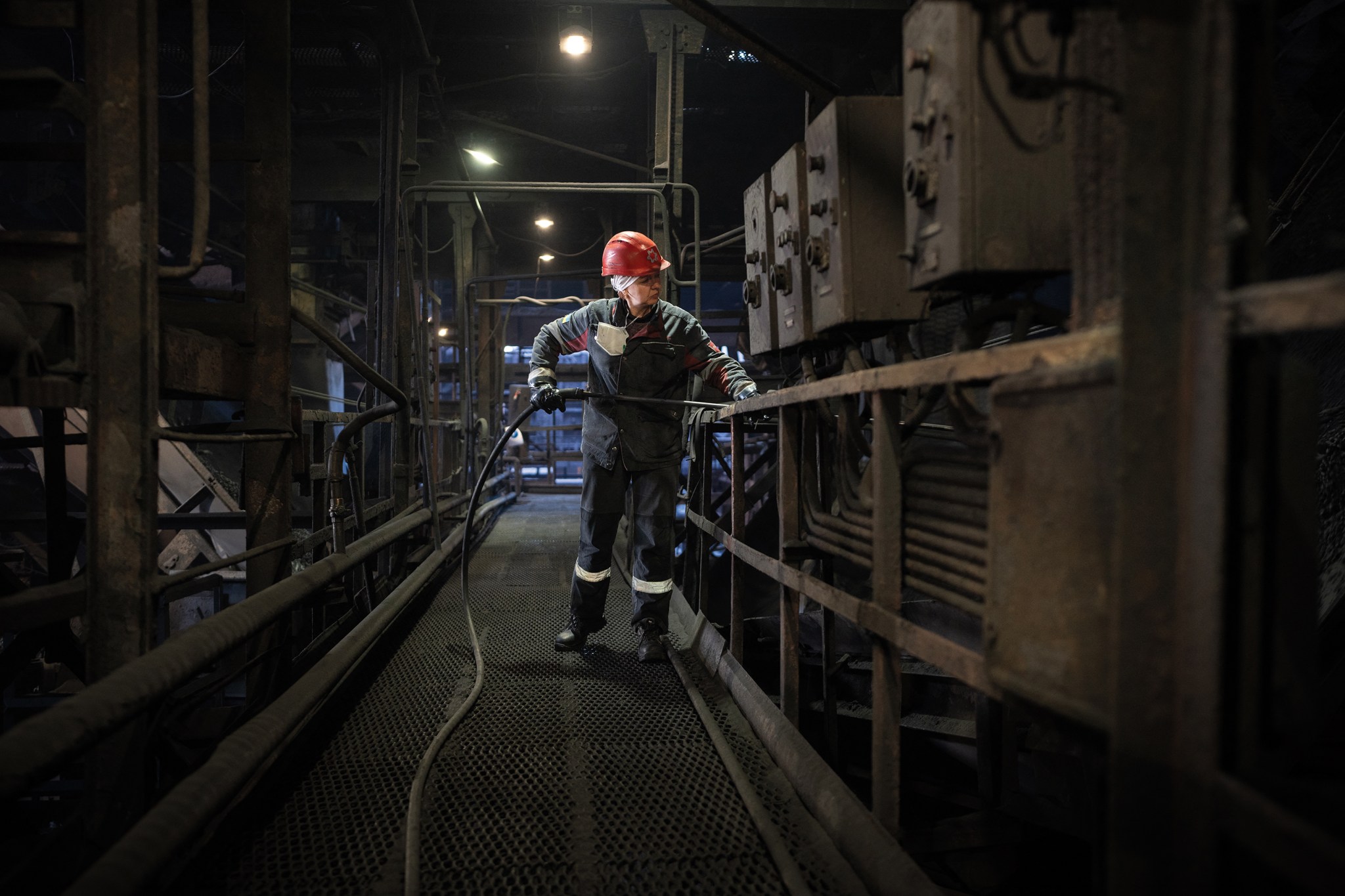
Four years on, and the “forever war” is entering another brutal winter. More than 8,000 of Ryzhenkov’s nearly 33,700 employees are fighting Russian forces. Factories are under constant bombardment. Hundreds of Metinvest colleagues have been killed. In fact, with a sigh of resignation, Ryzhenkov said that this period of the war is as tough as anything the company has seen since it all began 12 years ago.
“The blockade of the seaports is more severe now than it was in 2022,” Ryzhenkov said. “We’ve been hit numerous times. Our facilities have been hit over the last four and a half years, and even though we were restoring them after every hit, you get weaker with every attack.
“In wartime you cannot afford to restore to the original state. You do the best you can to continue operating, and that best is never the ideal.
Unfortunately, it was one of the most severe campaigns for bombing in August and September this year. We had to stop both of our steel mills.
“We lost 14 people at our steel mills, which was probably the largest loss since 2023 in a single bombing. That’s where we are.”
Now there is another threat to the future of steelmaking in Ukraine, and it doesn’t come from the East, but from the EU. In July, new tariffs were applied to all EU steel imports in an effort to protect the continent’s industry from cheaper foreign competition. The regulation caps the amount of steel that can enter the EU duty-free at 18.3 million tonnes (20.2 million tons) per year.
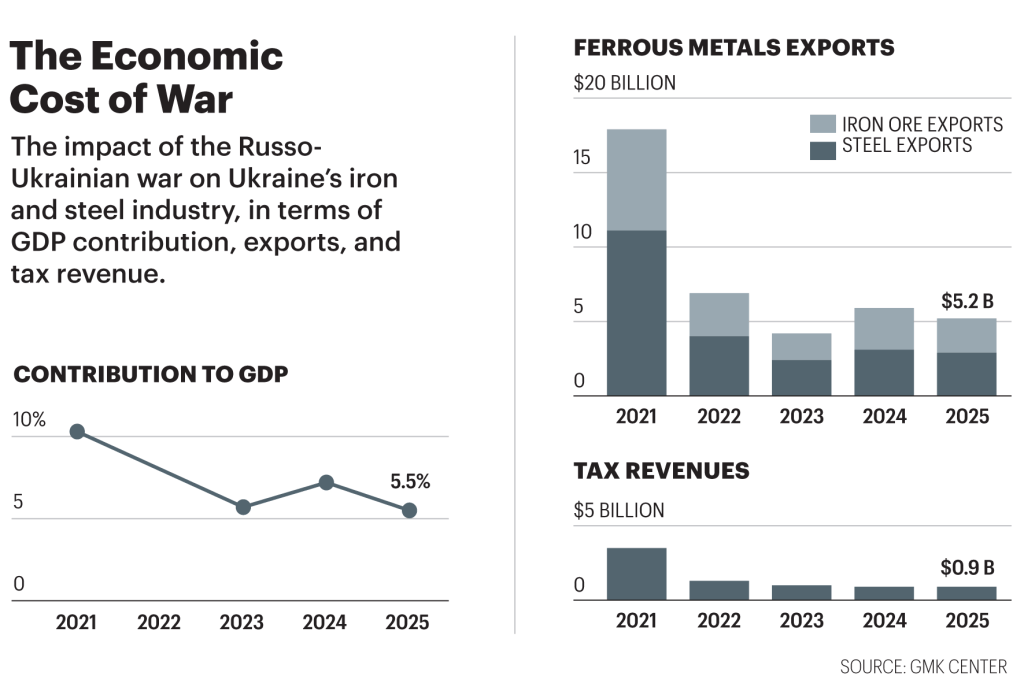
This is expected to result in a 1.3 million to 1.5 million tonne reduction in Ukrainian steel exports compared with 2025, according to Ukrainian steel consultancy GMK Center.
“If you compare the quotas that were allocated to Ukraine this year to what was supplied last year, it’s minus 60%, and that’s at the time when the ports were already closed, and we literally have no other alter- native,” Ryzhenkov said.
“When the invasion happened, the EU pretty much realized that for Ukraine the only available market is the EU with the blockade of ports. They abolished any restrictions for the steel to be supplied there, which was, in my view, the correct answer.
“And then suddenly, in the first half of this year, we got these quotas where we were pretty much dumped with all the other countries [outside the EU], and the fact that we had exceptional circumstances in terms of logistics, in terms of energy supply, in terms of personnel availability, they were not taken into account, in my view, at all.
“It was too harsh, given the circumstances.”
Negotiations continue, and the EU has said it is aware that Ukraine is a unique case. In May, Karin Karlsbro, a member of the European Parliament and a vice chair of the Committee on International Trade, warned: “Ukraine must not be punished by EU measures while its steel industry is under direct Russian attack. Ukraine is not the source of global overcapacity.”
However, the pincer movement— the armed invasion from the East, and tariffs from the West—is leaving steelmaking in Ukraine in a perilous position. Between 2021 and 2025, steel production in Ukraine fell from 21 million tonnes to 7.4 million tonnes; the value of exports fell from $22 billion to $6 billion; and tax revenues dropped from $3.5 billion to $870 million. Russia’s constant attacks on factories, energy supply systems, and railways mean that steel supply to the Ukrainian armed forces is also being degraded.
“There is pretty much no future without a market to which you can sell,” Ryzhenkov said. “With the continuing disruptions, it’s very difficult to make a steel business economically viable. [This] is typically a business where you have to have 90%-plus capacity utilization to be profitable, even in normal times, and where you have to develop your markets with long-term commitments, and in today’s circumstances, that’s just not possible.”
I ask whether we could be witnessing the end of steelmaking in Ukraine?
“Well, if nothing is done, it’s almost inevitable,” he said. “If Ukraine is not allowed to participate in the European market fully, and at the same time the circumstances preclude any significant investments, then, I mean, everything comes to an end eventually.”
Ryzhenkov reminds me of that long line of steelmakers. Family history does bring with it a high level of determination to continue, despite the losses and the constant threats of more attacks.
“To be honest, that’s the only choice we have, right?” he said. “Well, not the only choice. I mean, obviously, you can slam the door and walk out, but we have more than 35,000 people working for us. We have more than 8,000 of our employees in the Ukrainian armed forces, which also rely on us. So, I mean, why would you slam the door if you can still try to do something to carry on? I just don’t find a reason for myself to do that.”
This article appears in the December 2026/January 2027 issue of Fortune with the headline “Ukraine’s biggest steelmaker faces a war on two fronts”
This story was originally featured on Fortune.com