

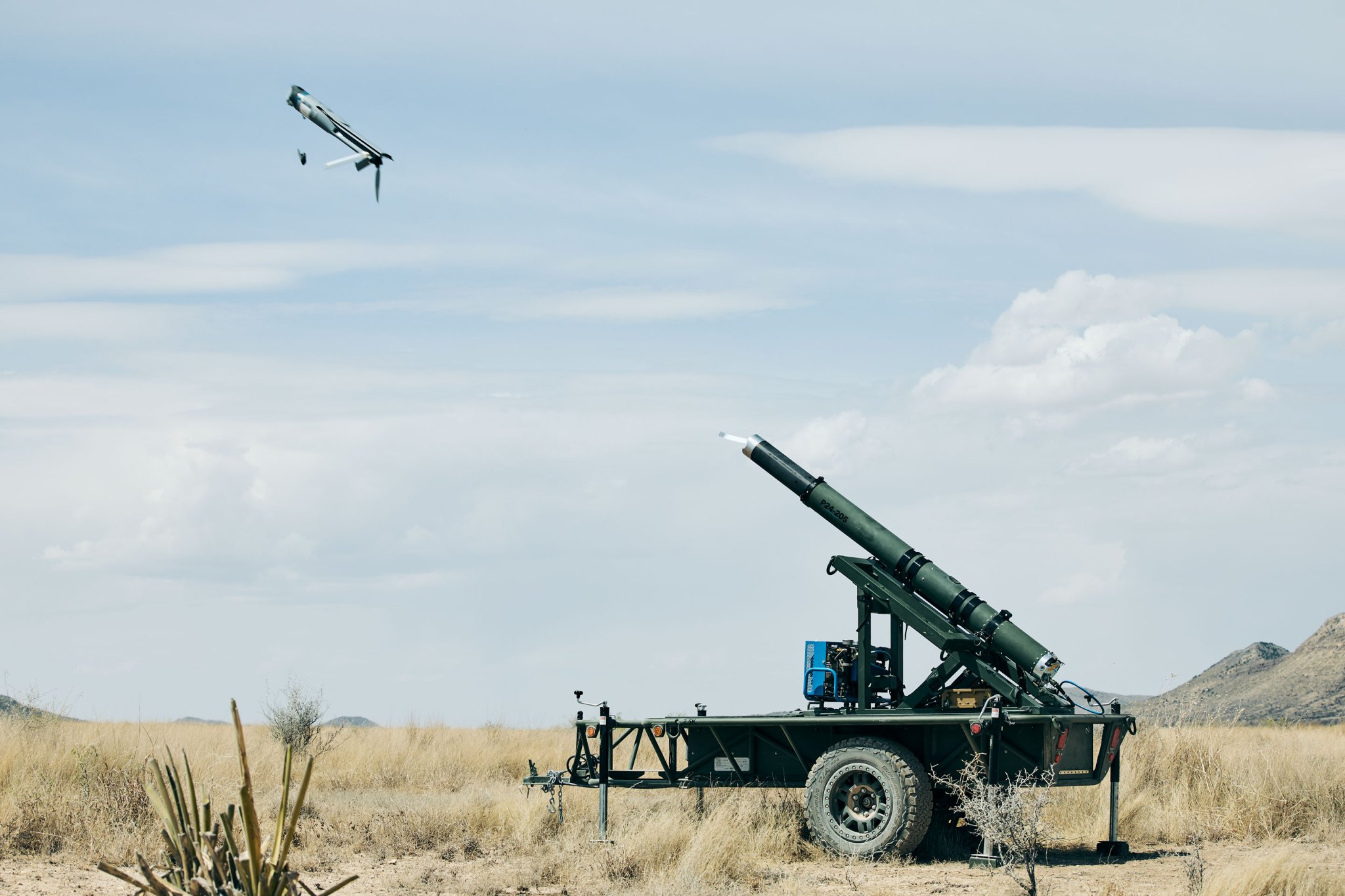
Drones, missiles, and warships were, for a long time, deemed uninvestable in Silicon Valley—or, at minimum, contentious.
Consider 2018: Googlers were storming out over their company’s involvement in the AI military initiative Project Maven, and Anduril was the anomaly, a multi-million defense-focused startup soon to be headlined as “the most controversial startup” in tech. VCs touched defense rarely, if at all.
Today, they can’t get enough. Anduril, now valued at $61 billion, is joined by a growing class of “neo-primes,” from autonomous shipbuilder Saronic, last valued at $9.25 billion, to drone maker Shield AI, at $12.7 billion. Defense has exploded into a consensus growth area among VCs, seen as ripe for AI-fueled innovation. The numbers bear it out: in the first quarter of 2026, VCs deployed a record $19.8 billion into defense tech across 262 deals, according to PitchBook. (For comparison: That number in Q1 2024 was $5.7 billion, and in Q1 2025 about $17 billion.)
The vibe shift is sending valuations into the stratosphere. Early-stage defense startups are raising millions and fetching multiples from 17 times to 50 times revenue (sometimes even higher).
With the market running so hot, the inevitable question that emerges: Are we in a bubble? At Fortune’s Brainstorm Tech conference in June, Anduril CEO Brian Schimpf answered with a nuanced but decisive “Yes.”
“When there are successful companies, you have lots of other companies and investors chasing that, and [there can be] very risky behavior,” Schimpf said onstage. “We’ve been very careful at every stage to manage this, but it’s easy to chase those valuations if you’re not being careful. So, I do think there’s a bit of a bubble. Capital’s cheap, and it’s great if you can get capital as an advantage—go for it. But do understand the consequences for your company when you do: You put expectations through the roof of what you can deliver on.”
Given how far ahead valuations have gotten from the fundamentals of many startups, it’s tough to argue that there’s not a bubble in at least some corners of the defense tech market. But that’s not to say these aren’t real businesses or that the market is on the verge of imploding.
“Is there a bubble in defense tech? It’s always a hard question,” said Peter Wilczynski, Vantor’s chief product officer. “It’s obvious to say yes. But the people who say yes then are always wrong, so it’s complicated.”
I think the more interesting series of questions goes something like this: What parts of defense tech funding, as it exists today, are fragile, and what is likely to prove resilient? Are traditional Silicon Valley investors actually equipped, in mindset and business models, to underwrite and ride out the gulf between defense (and D.C.) economics versus the economics of consumer apps or enterprise software? And, if there is a bubble, is that actually bad?
No matter what, there’s certainly friction ahead.
“We’re probably close to the adolescent period, for sure,” said Wilczynski, who previously spent 12 years at Palantir. “There are going to be teenage years in defense tech, and it’s going to be awkward.”
We’re back on July 6, happy Fourth, and have a great weekend,
Allie Garfinkle
X: @agarfinks
Email: alexandra.garfinkle@fortune.com
Submit a deal for the Term Sheet newsletter here.
Joey Abrams curated the deals section of today’s newsletter. Subscribe here.
This story was originally featured on Fortune.com