

Welcome to this week’s Fortune Gulf Brief. We’ll be covering:
- Between peace and conflict: The Gulf’s uncertain future
- Emirates Airline’s profits plunge 66% amid wartime disruption
- Mobile World Congress Doha spotlights MENA’s digital connectivity gap
- From Wall Street to Japan: Dubai’s growing fintech influence
- And, the three we enjoyed reading this week
Qatar continued its diplomatic push to broker an end to the U.S.-Iran war this week, but prospects of a breakthrough remain uncertain.
On Tuesday, a Qatari government spokesperson said that Monday’s closed-door talks between the U.S. and Iran were “focused on making progress”, but that the timeline for a potential agreement remained unclear.
“We cannot say how close or how far away an agreement is,” Ibrahim bin Sultan Al Hashmi, director of the foreign ministry’s media and communication department, told a weekly briefing in Doha.
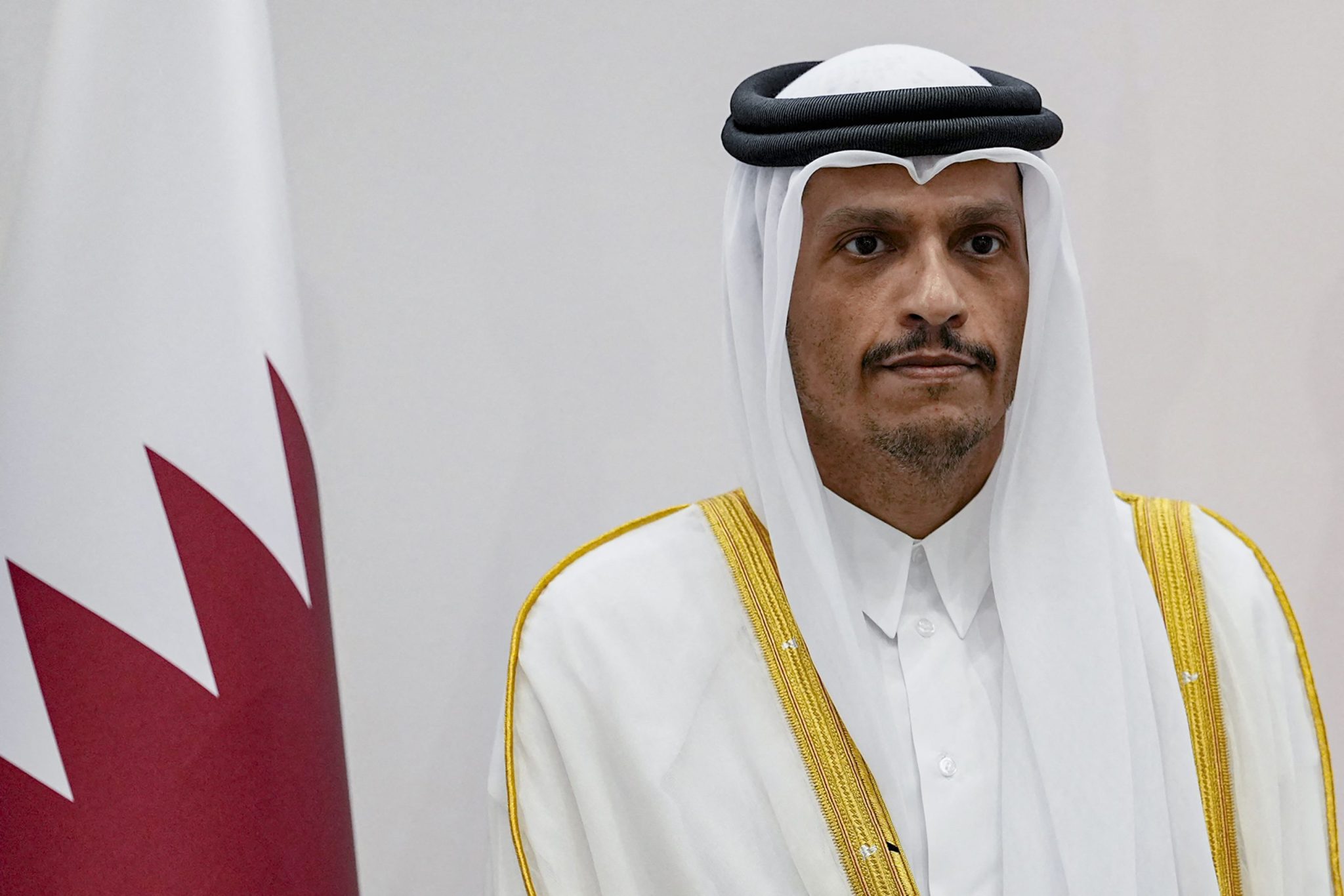
His remarks followed those of Qatari Prime Minister Sheikh Mohammed bin Abdulrahman Al Thani who described his White House meeting on Monday with U.S. President Donald Trump and Vice President JD Vance as “positive”.
Emerging from the latest round of shuttle diplomacy, Al Thani said he was “Grateful for the positive discussions on reaching a deal and bringing peace to the region.” Before Al Thani’s visit to Washington, Qatari officials had held talks in Tehran as well as consultations with other regional governments.
On Tuesday, Al Thani made an unscheduled stop at the G7 foreign ministers meeting in Paris where top European diplomats have reportedly been pressing U.S. Secretary of State Marco Rubio to avoid any new escalation against Iran.
Trump, meanwhile, took to Truth Social to argue that Qatar, Saudi Arabia, Kuwait and the UAE “would prefer the status quo”, referencing both the US naval blockade and restrictions on Iran’s overland trade under Operation Iron Gate. Echoing Qatar’s comments, he said: “We are seeing positive momentum toward an end to this conflict”, but warned that the U.S. is “locked and loaded” should there be any changes in regional developments, adding “that seems to be quite unlikely”.
Speaking at a geopolitical forum in Abu Dhabi on Monday Anwar Gargash, diplomatic advisor to UAE President Mohamed bin Zayed, said: “We should prepare for a long period of uncertainty in which neither a decisive resolution nor stable regional order can be taken for granted.” This would require the UAE to invest in its defensive capabilities and stronger international security partners, he said.
The number of attacks on commercial shipping in and around the Strait peaked in October, reaching its highest monthly level since the U.S.-Iran war began, with more than 30 incidents recorded, according to the U.K. Maritime Trade Operations.
On Tuesday, GCC defence ministers approved plans to establish a joint command center in Kuwait, with member states contributing forces to strengthen military integration across the six-nation bloc.
The advanced command will form part of the existing Unified Military Command which is headquartered in Riyadh. However, the announcement offered no details on the number or composition of forces to be assigned, the command’s specific mandate or when it would become operational.
The continuing uncertainty did not deter Barclays from opening its new office in Riyadh’s financial district on Monday. It marks the U.K. lender’s return to the market after more than a decade as it seeks to expand its Gulf business. Barclays’ Asia-Pacific CEO Jaideep Khanna told Bloomberg last month that the bank was a “big believer” in the Middle East.
Riyadh’s business district has been under remote work orders for about a month, while ongoing travel restrictions continue to create additional challenges for commuting from nearby Gulf hubs, as well as for global executives flying directly into the kingdom.
Melissa Hancock
As ever, thanks for reading, and do keep in touch with your thoughts and ideas.
melissa.hancock@fortune.com
This story was originally featured on Fortune.com