

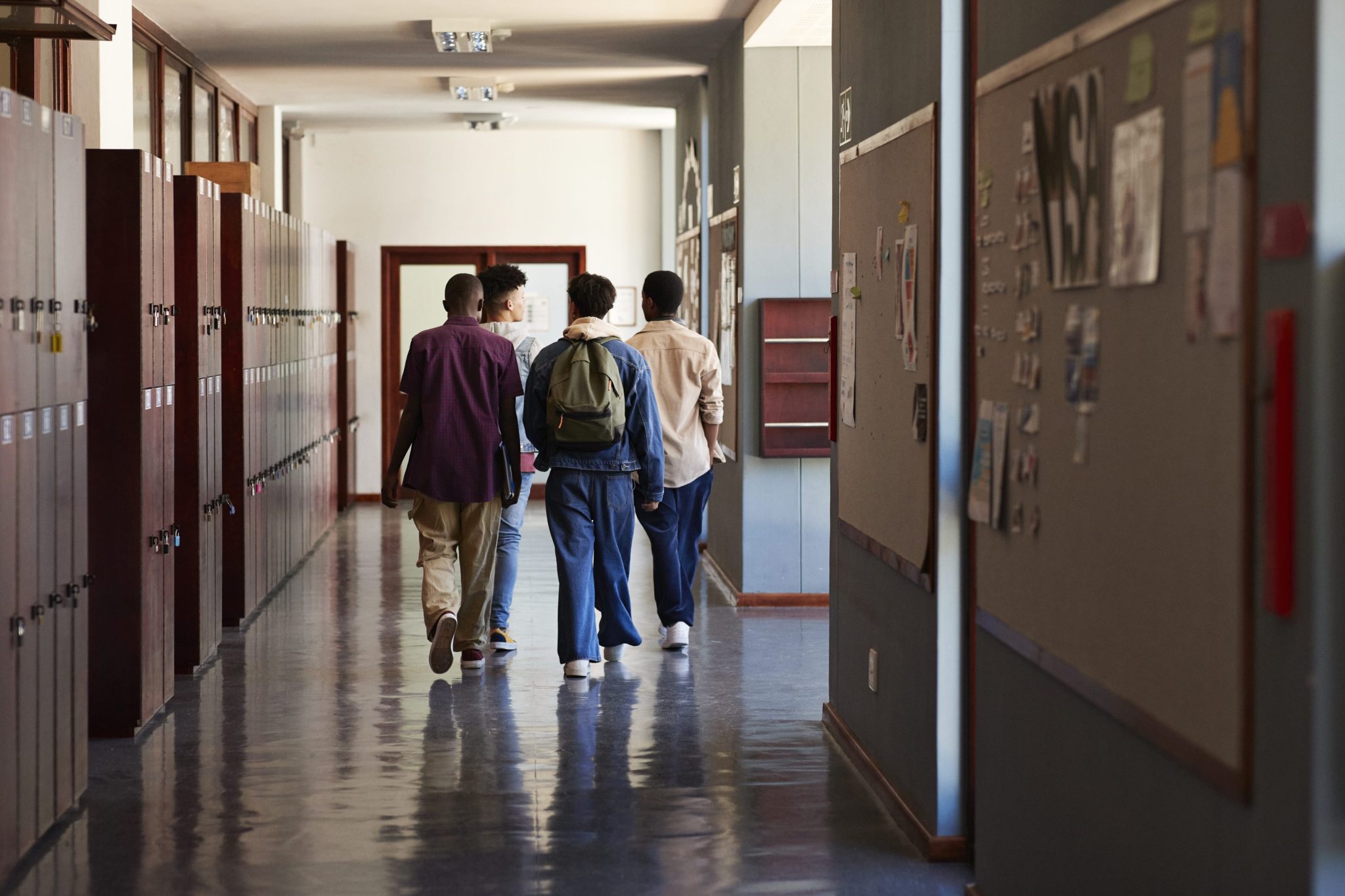
This fall, students are making their way back to school filled with the possibility that comes with a fresh academic year. Some high school seniors will dive into college applications, some will use this year to prepare to enter the workforce, and some will weigh the countless other pathways available from certifications to military service. All of them will be acutely aware of the weight their decisions will hold for their futures.
However, the stark reality is that America’s leading businesses say high school graduates aren’t as prepared as previous generations, citing that they can execute assignments but struggle to think critically and navigate ambiguity at a time when technology is rapidly reshaping work. Educators see similar gaps.
Recent research shows only 40% of hiring managers say it’s easy to find entry-level candidates with the skills they most need: the ability to communicate clearly, work in teams, solve problems, manage projects, and understand the fundamentals of financial decision-making.
These are gaps our nation can’t afford to ignore. Students are graduating from high school without a clear understanding of how organizations function, how money flows, and how ideas become opportunities. Today, fewer than 20% of high school students take a business course—and when they do, it’s often siloed as an elective or introduced as a path to a business degree rather than foundational for necessary workplace skills.
Our own personal upbringings highlight the long-standing disparity. In rural Oklahoma, Neil’s high school sorted students early into college or trades. His parents – both small business owners – understood their tradecraft but had little expertise in how to grow a business. Ultimately, Neil chose to pursue the “college track,” where college-bound students completed academic courses with few opportunities to build practical, hands-on skills, while those on the “trade track” were rarely exposed to business know-how that could help transform their expertise.
Greg’s parents worked on the assembly line in an airplane manufacturing plant in Williamsport, Penn., but had dreams for more. They tried multiple times to start businesses, including a corner store, and each effort failed because they lacked access to the tools and skills needed to build a business model and run it effectively.
These experiences are not isolated. To sustain our nation’s competitiveness and economic growth, business literacy is no longer optional—it’s critical to achieving full participation, and personal success, in today’s society.
Beyond the practical skills of budgeting, saving, and investing, students need to understand how our economy works, how organizations make decisions, how to evaluate risk, how to bring an idea from concept to execution, and how to lead a team.
For the student interested in visual arts, add business education and the same student learns how to sustain a creative enterprise. For the student interested in computer science, business education leads to an understanding of how to bring innovations to market. Add it to the skilled trades and students gain the tools to run a small business.
There are promising developments to change the status quo. Employers are raising their hands to partner with schools. States are strengthening requirements for financial literacy—the latest report from the Council for Economic Education counts 39 states that now require students to take a course in personal finance to graduate. And students are advocating for learning that feels relevant to their futures.
When students have access to this learning, the impact is clear. Business Professionals of America, DECA, and Future Business Leaders of America show what happens when students engage in business competitions and leadership development. Students build confidence, teamwork skills, and problem-solving abilities they carry into college and careers.
But too often, those opportunities depend on where a student lives, what their school offers, or even a student’s own plans.
Preparing Students for the Modern Economy
Both of us have seen firsthand how earlier exposure to business education could have changed lives.
It’s why our organizations are combining decades of education and business expertise to launch a solution to prepare high school students.
Now available in schools nationwide, AP Business with Personal Finance brings this learning to more classrooms and more students. The course combines rigorous academics with relevant, employer-informed content allowing students to earn both college credit and employer recognition. By pairing business and personal finance, students move beyond just learning how to manage money to understanding how to create opportunity. For example, students are currently working through their first “Business Canvas” projects to develop and pitch a business of their choosing.
When high-quality academic programs like Advanced Placement are made broadly available to students through new coursework, opportunities expand, especially for students who have historically been underrepresented in advanced academic programs. AP Business with Personal Finance is part of College Board’s AP Career Kickstart, a new group of courses that can be tailored to fit into existing career and technical education (CTE) programs.
No student should have to choose between mastering their craft and understanding how to translate that mastery into economic mobility. By making business and financial literacy a part of the high school experience, we can equip every student with the knowledge, skills, and confidence to navigate, adapt, and succeed.
The opinions expressed in Fortune.com commentary pieces are solely the views of their authors and do not necessarily reflect the opinions and beliefs of Fortune.
This story was originally featured on Fortune.com