

Technology leaders have spent nearly four years evangelizing about the ways AI will change every aspect of work life. One of the most measurable changes so far however has been to tech chiefs’ own paychecks.
Median reported compensation for executives with “technology” in the title reached $2.6 million in the most recent fiscal year, up a whopping 45.4% from 2021, according to data compiled for Fortune by executive pay analytics firm C-suite Comp. The rising pay for tech execs was leagues above what their peers in the C-suite saw, with median compensation increasing 18.3% for COOs, 17.2% for CEOs, 15% for CFOs, and 9.2% for chief information officers.
The gain was larger in dollars, too, which is even more unusual. Median pay for chief technology officers rose $809,587 from 2021 to 2025 while median pay for CEOs—typically the C-suite leader most likely to reap massive pay rewards—only rose $698,399. And that was from a starting point twice as high as CTOs. Operating, finance, and information chiefs gained $725,584 among all three roles combined at the median.
“Strategic CTOs are a real value-add for these companies,” said Dan Laddin, founding partner at consulting firm Compensation Advisory Partners who advises boards on pay programs. “So people who can do that, and lead that side of the business—you are seeing a dramatic increase.”
Telehealth platform Hims & Hers showed its pay priorities in a series of compensation moves last year. In May 2025, the Hims & Hers board approved two new-hire awards for incoming C-suite executives. The award to the new COO, Nader Kabbani, was 216,333 restricted stock units (RSUs) valued at $13.5 million. The award to Mohamed Elshenawy, the incoming CTO, was 1,036,339 RSUs valued at $57.2 million—more than four times as much. (Kabbani left Hims & Hers six months later.)
The board explained the difference in its annual proxy report to shareholders.
“Competition for experienced talent in the AI space during 2025 was intense,” the report states, noting that Elshenawy’s award reflected the “unique competitive circumstances for AI talent” when he was hired. No equivalent was given for Kabbani.
And Elshenawy had the bona fides to back it up. He came from Cruise, the self-driving vehicle company owned by General Motors, where he had been president and CTO. Elshenawy’s reported comp for 2025 was $60.9 million, more than 2.5x what Hims & Hers reported for CEO and co-founder Andrew Dudum at $23 million.
Note that figures reported in proxy statements are grant-date values, which are calculated when a board approves an award, not take-home pay. None of Elshenawy’s RSUs had vested by the end of 2025 and the company’s stock fell since the award, making the $57.2 million worth $33.6 million on the last trading day of the year, according to Hims & Hers.
The four year ramp for CTO pay was enough to bring a new world order to the C-suite. In fiscal 2021, the typical (median) CTO was paid about $176,000 less than the typical (median) COO. By the most recent year, CTOs were paid about $275,000 more. Compared to a typical CEO, there is still a clear hierarchy. CTOs are nowhere close to catching up to CEOs, but the outward signal about the priority of the role is clear. The typical CEO was paid $2.27 million more than the typical CTO in 2021, and about $2.16 million more in the most recent year.
The AI Talent Factor
The timing around the explosive surge in pay for CTOs tracks cleanly with the near rapid expansion of ChatGPT. That now-ubiquitous AI bot launched in November 2022 and claimed 100 million users about two months later, notching the fastest consumer adoption on record at the time. OpenAI launched an enterprise product in August 2023 and much of the Fortune 500 were piloting and experimenting with the platform features by that fall and winter. Microsoft started selling Copilot to enterprise customers in fall 2023, with Pfizer and Chevron among its earliest users. During this cycle, the technology median compensation surged 28.9%, the largest single-year move for any role in the data across the period of 2021 to 2025.
As companies began investing in AI platforms and the AI race began in earnest, it also got a lot more expensive to bring aboard new talent. While headlines focused on mega-packages granted to frontier labs competing for talent with $100 million sign-on bonuses, hiring CTOs to lead smaller, marquee Nasdaq- and NYSE-listed companies also got pricey.
James Kuffner joined warehouse robotics company Symbiotic as CTO in January 2025 with an initial equity award with a target value of $18 million, plus another $3 million to make him whole for cash awards he left behind at his previous employer. The board cited his three decades in robotics at Toyota, Google, and Carnegie Mellon in granting him the award, along with “the value his experience commands in the competitive market for such talent.” His reported pay total for 2025 was $37 million.
Human capital giant Workday hired Gerrit Kazmaier as president of product and technology in March 2025 after his predecessor retired, giving him a pay package with a target value of $31 million. The board said the package was “both competitive and necessary to attract a proven industry leader” like Kazmaier.
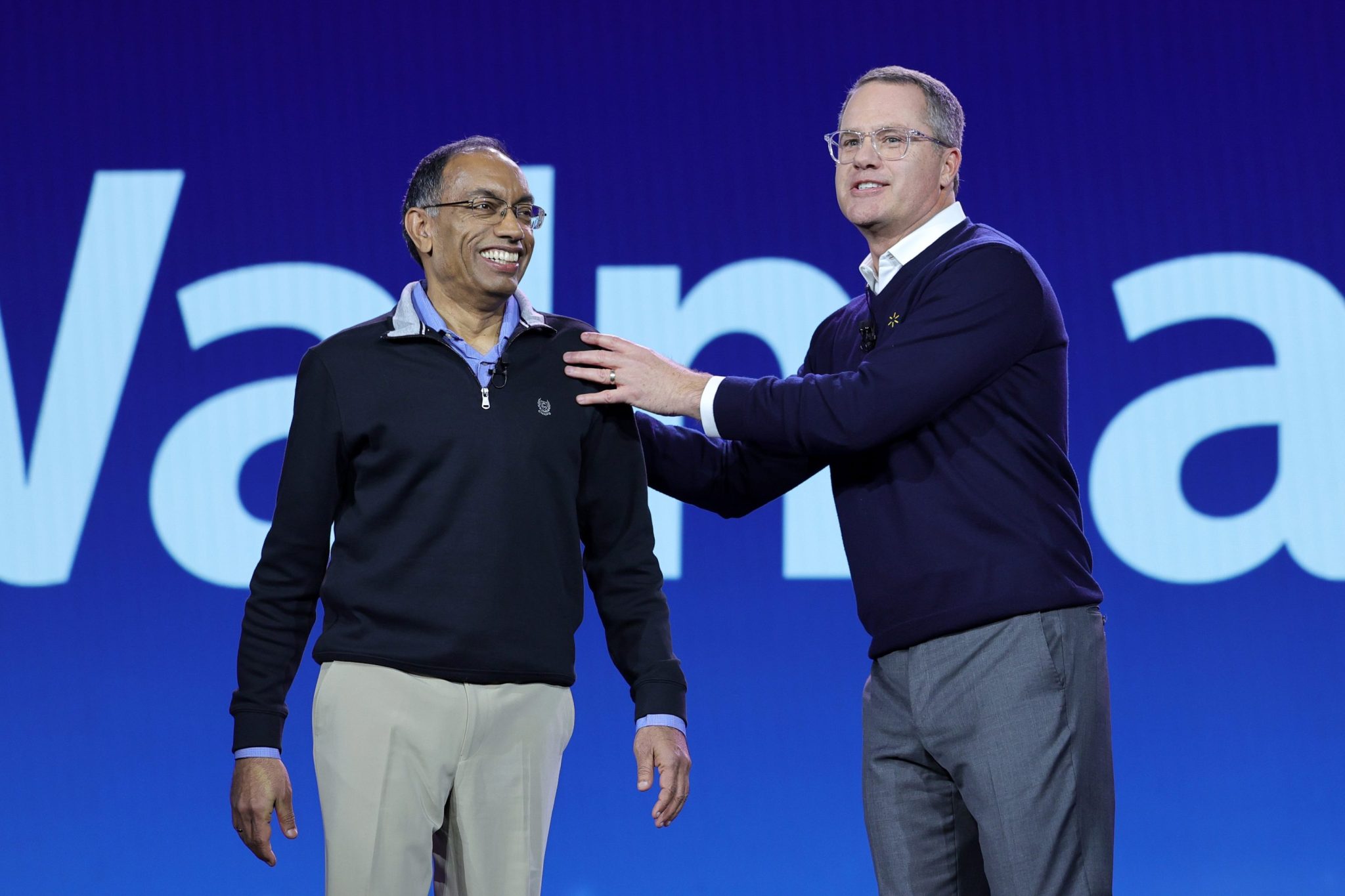
But even when companies weren’t luring in new hires to take on CTO roles, pay went up. Walmart, for instance, increased the target value of Suresh Kumar’s annual equity award by $1 million, which the company said produced a 7.1% increase to his target comp and put him slightly above the 75th percentile of his peer group. That nudge indicates to the market that Walmart thinks highly of its CTO—and it also makes Kumar more expensive for companies to try to poach.
What Boards are Buying
The rationale for the rise among the median is that the CTO role itself has changed dramatically at some companies.
“Historically, I think a lot of times [the CTO] was keeping the systems running and thinking about how we can be more efficient from a process standpoint,” said Laddin. Now, he sees the role taking on far more strategy involving workflow processes, customers, and data so that companies can leverage AI to streamline or go to market differently. Plus, companies are willing shop around outside their direct peers to get what they need, he added. And since large awards aren’t that unusual in tech, there’s been a slight “acceleration and expansion” as companies work to recruit new tech talent or keep people in house, said Laddin.
But because the role differs so much company-to-company and sector-to-sector, there is often a wider market range and more discretion applied from the board, said Kyle Eastman, a CAP partner who specializes in technology.
“Judgement plays probably more of a role in benchmarking CTO compensation than it does CFO compensation,” he said.
Tanvir Hossain, founder of C-suite Comp, which analyzed the data, attributes the increase to at least two drivers. First, tech officers had a lower baseline, so their growth appears more pronounced. But the second is in the way boards and CEOs value the role. “Technology leadership has evolved from back-office utility into a primary engine of business strategy and revenue,” said Hossain.
He described 2021 through 2023 as a period when companies were focused on cost discipline—until things blew up around AI.
“ChatGPT was the catalyst that ignited an aggressive C-suite arms race for engineering visionaries,” Hossain said. “The year 2024 was the pivot point where boards recognized that failing to capitalize on generative AI meant risking rapid obsolescence.”
This story was originally featured on Fortune.com