

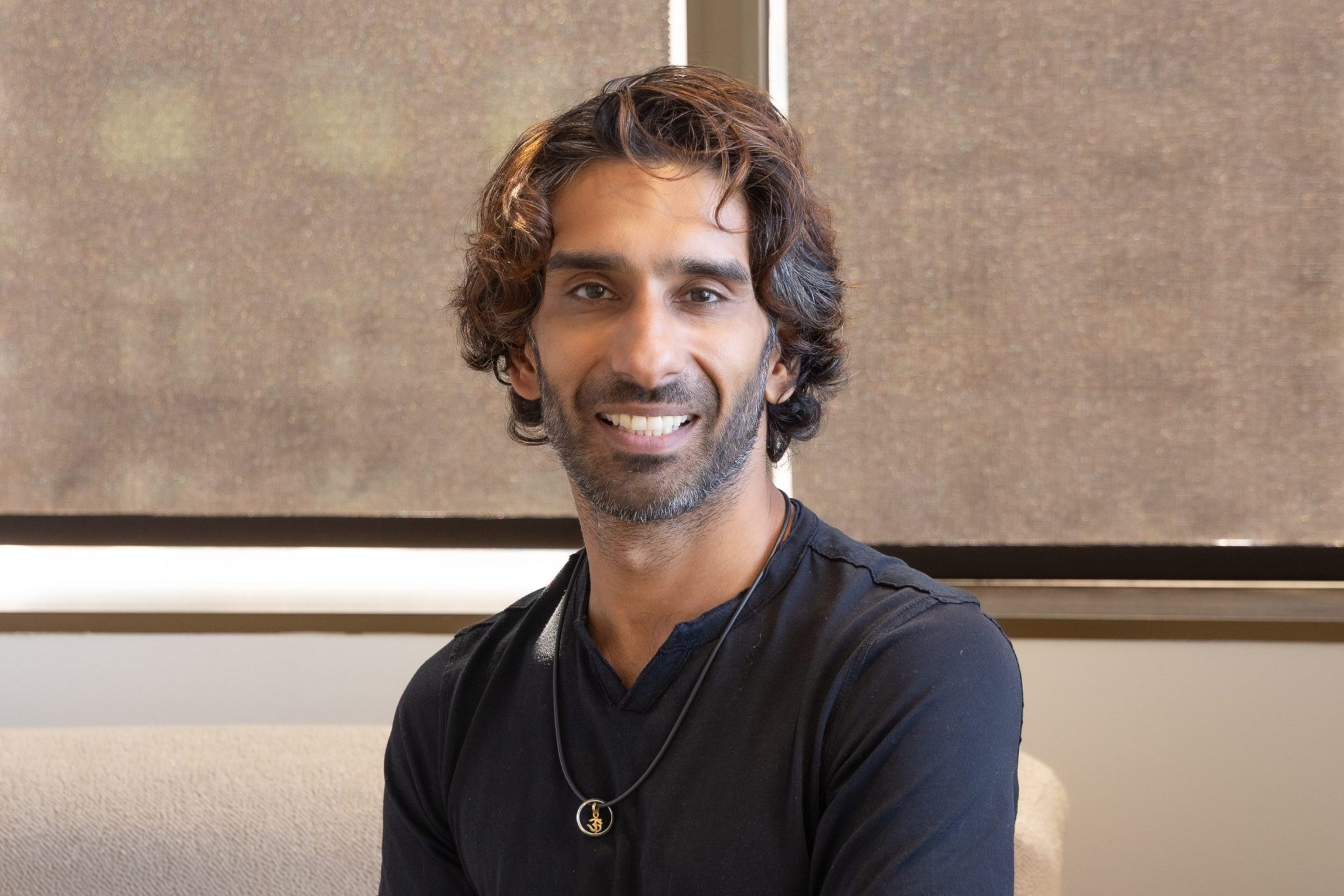
Rahul Vohra was just 27 years old when he was gearing up to sell his company to LinkedIn and add millions to his net worth. Everything looked perfect on paper: a fast-growing startup, a spot in Y Combinator, and a looming acquisition from one of Silicon Valley’s biggest companies. But just months before closing his first deal as an entrepreneur, Vohra was sent into the hospital after months of letting the stress of running a startup pile up.
It was 2011, less than two years after Vohra had cofounded Rapportive: a browser plug-in and email service. And from the outside looking in, the entrepreneur said it was the “perfect success story.” The rag-tag team of five had gone from writing its first line of code to joining Y Combinator’s summer 2010 cohort in the same year, soon building a company valuable enough to sell to LinkedIn. But in reality, the company was running out of money, and Vohra was stretching himself thin. Rapportive was ultimately acquired by LinkedIn in February 2012, with the deal reportedly valued at $15 million.
“I didn’t think I was stressed, but I think that’s just because when you’re stressed all the time, you don’t even notice it anymore,” Vohra tells Fortune.
Then it all boiled over. One morning Vohra woke up at 3 a.m. with intense nausea and discomfort, but went on with his day. By lunchtime the pain became impossible to ignore, and on a brief four-block quest to a pharmacy near his San Francisco office, he collapsed outside of a McDonald’s. One of his cofounders came to the rescue and got him painkillers to ease the pain—and “like an idiot,” Vohra says he went straight back to the grind.
Vohra didn’t go to the hospital until the next day, where he underwent a series of health tests. And as it turned out, the stress of leading his company to a sale was the main culprit. Two years of eating brownies and pizza as meals, never working out, and entrepreneurial pressure had snowballed into gastrointestinal reflux disease. A nurse told him his insides looked like they belonged to someone 10 to 20 years older than he was and advised him to “re-examine” his life. During his hospital stay and weeks recovering with family, Vohra began rethinking what it meant to build a company and how he wanted to live while doing it. It set him on the path to launching another $825 million business that sold to Grammarly—and this time, with no trips to the hospital.
“I personally find it sad and dismaying when founders in their 20s…[are] running themselves into the ground, often much worse than what I did,” Vohra said. “They’re doing what I did plus stupid hours, and they’re wearing that as a badge of honor. I hope that when people read this, that they see that there is another path.”
The health scare changed his perspective on being a founder
The 42-year-old entrepreneur, who was raised in Birmingham, England, spent a month finding his new “normal” after the terrifying health scare. After a week in the hospital, he spent the rest of his recovery time unplugged from work, resting with his family. He developed a “spiritual bond” with his aunt and uncle’s dog, and reconnected with his love of narrative video games—think The Legend of Zelda and Final Fantasy.
But perhaps the most important trick he picked up on the road to recovery was transcendental meditation. Several of his industry friends recommended that he connect with Laurent Valosek, a wellness coach and CEO of executive coaching firm Peak Leadership Institute.
Under Valosek’s tutelage, Vohra began learning transcendental meditation in the Raj tradition of India: a one-on-one teaching method in which a teacher personally guides a student through the practice and mantra. They started out with several hours-long sessions stretching out over days, and still meet in person for sessions once every two or three months even after many years of practicing.
“When I did finally get back into work, all of the games that the VCs were playing…that were really getting to me, just suddenly didn’t faze me at all,” Vohra says. “I had this new source of grit and resilience. I just straight-up called VCs who were BS-ing me out on their BS, and refused to engage with them because I had this new found source of strength, which was simply this gratitude for being alive.”
Now, he sets aside pockets of his day to meditate. The entrepreneur starts every morning with a 30-minute session: 20 minutes of repeating his mantra, and 10 minutes of laying down flat. His mental state, creativity, and happiness all get a boost from the ritual, and Vohra says he’s able to go about his day with a much “calmer” and “clearer” headspace. And around 3:30 p.m. at the office, he steps away from his desk and into the meditation room to do another brief session.
“I defend that part of my calendar and I build it into my life, and I find it’s absolutely worth it,” Vohra says.
After recovering from a health crisis and reaping millions from Rapportive’s sale to LinkedIn, Vohra had all the reason to take a breather from business. But the entrepreneur says he wasn’t done building—and this time around, he had the mindset to do things differently.
Launching his next $825 million business in a better headspace
Building and selling Rapportive was a whirlwind experience. The company made only 14 cents in revenue in its entire 20-month history. But by other metrics, it was a breakout success. Vohra says the business’ early inventors made 20 times on their investment, and the founders hit millionaire status upon the sale. Still, Vohra says he had more to give, and with a renewed sense of perspective in his back pocket, was ready to go bigger.
In 2014, just two years after selling his previous company to LinkedIn, Vohra launched Superhuman alongside Conrad Irwin and Vivek Sodera. He went back into the business of building email software, this time creating an AI productivity suite for email management. Superhuman was valued at $825 million in 2021, and ultimately acquired by Grammarly in 2025, though the acquisition price was not disclosed. The original email product was renamed to Superhuman Mail after the sale, which still Vohra remains closely involved with and publishes product updates.
Things were much different in his sale the second time around. Vohra had since revamped his diet, kept up a consistent workout schedule, carved out time for meditation, and found smarter ways of working. He’s consulted with dieticians, nutritionists, meditation coaches, and executive trainers. Plus, there were fewer stressors compared to running Rapportive; he wasn’t constantly running out of money, and got better at fundraising. Superhuman raised more than $100 million from investors before its acquisition, giving Vohra far more financial breathing room than he had at Rapportive. A better approach to work and outlook on business gave him the confidence to sell and walk away on his own terms.
“I think just being older and wiser, having more perspective, having an exercise practice, having a meditation practice, eating way better,” Vohra says. “There was no existential dread. We weren’t running out of money. We were growing faster than ever. I could have raised more money. Selling the company was really more about: Are we going to achieve our mission faster together if we do this?”
This story was originally featured on Fortune.com